
High salt supplementation of a MASH-inducing diet causes lean MASH phenotype with increased hepatic urea cycle activity and EIF5A hypusination
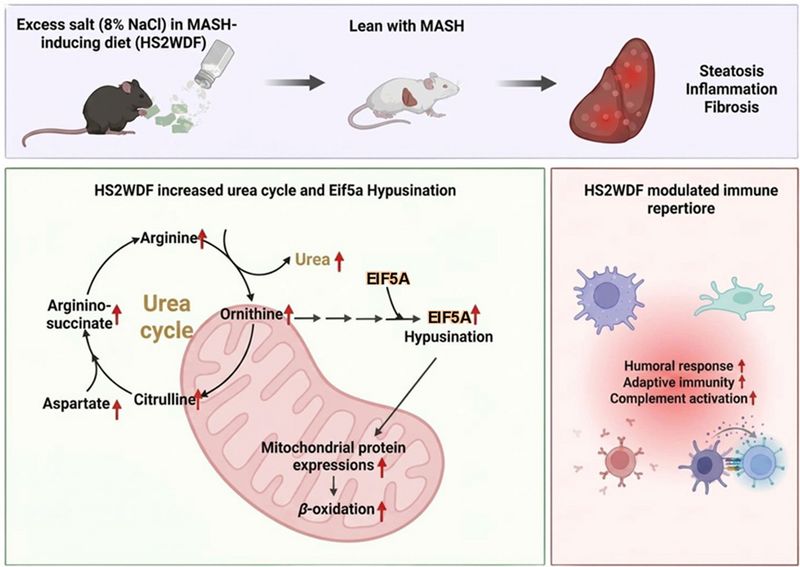
High salt supplementation of a MASH-inducing diet causes lean MASH phenotype with increased hepatic urea cycle activity and EIF5A hypusination
Background
MASLD/MASH can occur in lean individuals; however, the environmental triggers and molecular mechanisms underlying lean MASH are unclear, and suitable animal models are lacking.
Results
Mice fed a Western diet with liquid fructose (WDF) develops obesity and MASH (obese MASH). In contrast, high salt supplementation of WDF (HSWDF) produced a lean MASH phenotype with reduced steatosis but induced significant inflammation and fibrosis (lean MASH). In WDF-induced obese MASH, we observed decreased urea cycle activity and flux, along with reduced eukaryotic translation initiation factor 5 A hypusination (EIF5AH) and mitochondrial biosynthesis. High salt supplementation of WDF unexpectedly ameliorated these alterations, enhanced hepatic fatty acid oxidation and reduced hepatosteatosis. However, single-cell sequencing revealed that dietary high salt was associated with pro-inflammatory responses in hepatic immune cell subpopulations.
Conclusions
In summary, we have established a dietary mouse model of lean MASH that differs from obese-MASH in hepatic urea cycle, mitochondrial protein synthesis, and immune cell activation, providing new mechanistic insight into lean MASH.