
SAMM50 rs3761472 causes mitochondrial dysfunction and progression of metabolic dysfunction-associated steatotic liver disease
SAMM50 rs3761472 causes mitochondrial dysfunction and progression of metabolic dysfunction-associated steatotic liver disease
Objectives
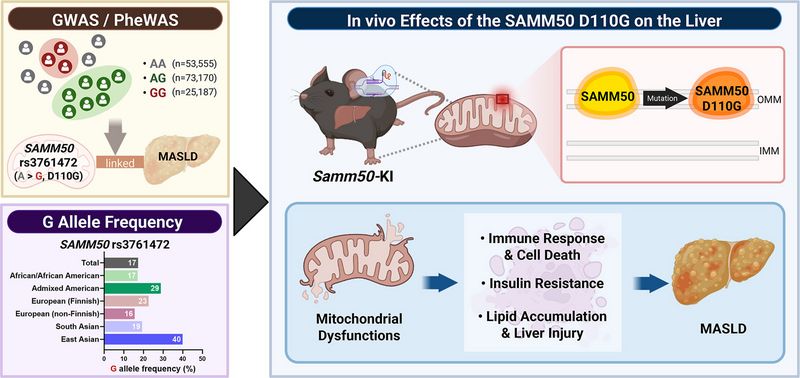
SAMM50 rs3761472 is associated with metabolic dysfunction-associated steatotic liver disease (MASLD), but its functional consequences in vivo remain unclear. We investigated whether this variant disrupts mitochondrial function and promotes MASLD progression.
Methods
Associations of rs3761472 with MASLD and liver-related traits were evaluated using Korea Biobank Array data. We generated Samm50 knock-in (KI) mice carrying the D110G substitution corresponding to human rs3761472 using CRISPR/Cas9 and assessed hepatic mitochondrial homeostasis and MASLD-related phenotypes in mice fed a normal diet or a high-fat diet.
Results
In human genetic analyses, rs3761472 was significantly associated with MASLD and higher serum levels of liver injury markers. Samm50-KI mice showed reduced hepatic SAMM50 expression, disrupted mitochondrial organization, impaired mitochondrial respiration and ATP production, increased mitochondrial oxidative stress, inflammatory activation, apoptosis, and liver injury. Following high-fat diet feeding, Samm50-KI mice exhibited greater hepatic lipid accumulation and liver injury, together with more pronounced insulin resistance and glucose intolerance, than wild-type mice.
Conclusions
Our findings establish rs3761472 as a functional genetic variant linking mitochondrial architecture to metabolic liver disease pathogenesis, with potential relevance as a genetic biomarker for MASLD susceptibility.