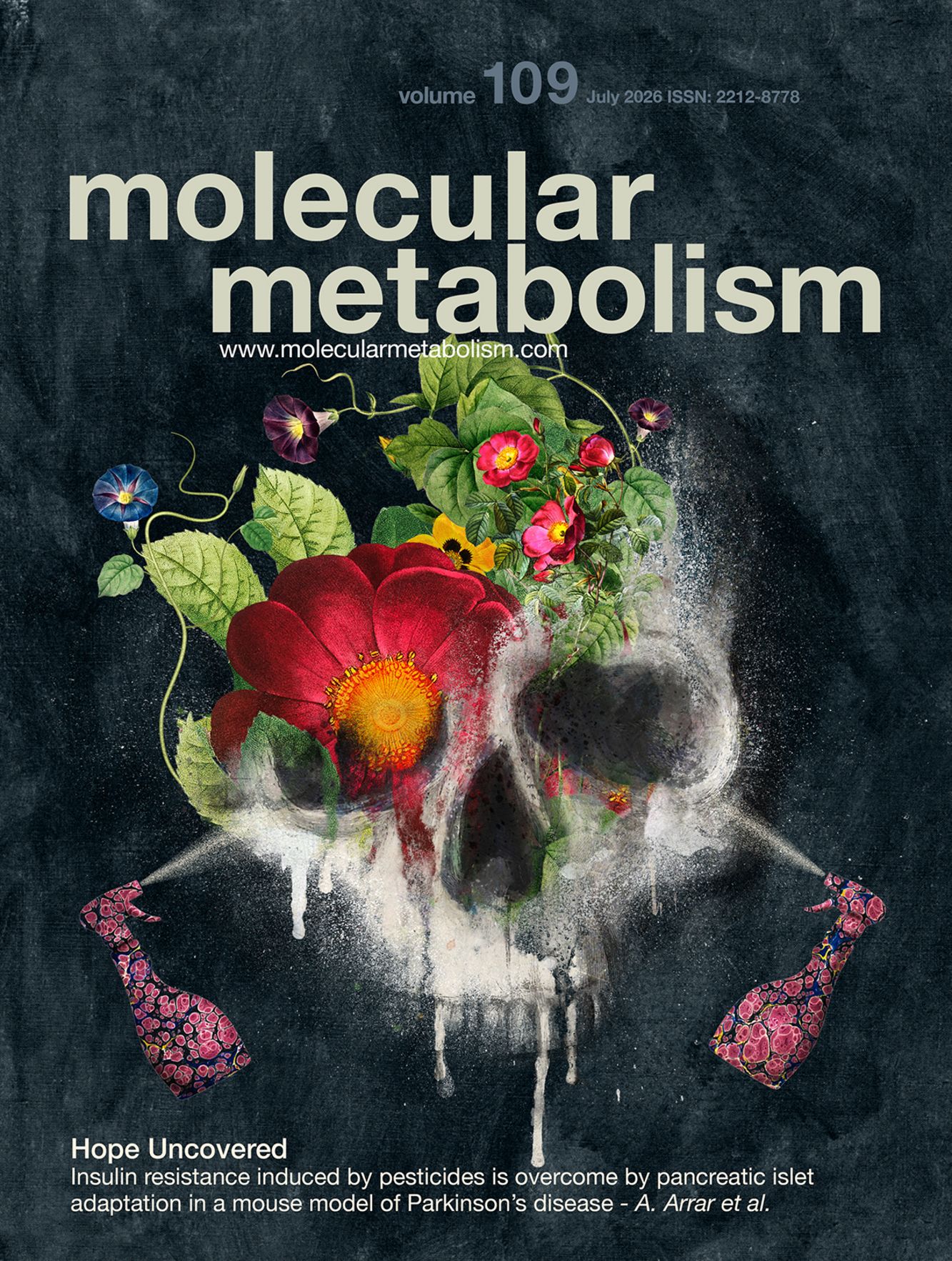
Cover Story Current Issue

Glucose is a ubiquitous and essential source of energy for all living organisms. Although mammals have evolved ways to convert other nutritional molecules to ATP, the preference for dietary glucose appears to be preserved. In rodents, the immediate detection of ingested glucose potently reinforces intake, hierarchically organizing behaviors towards glucose-yielding substances, and away from other types of food including other sugars. Taste is the primary sense linked to nutrient selection. Until recently, it was thought that most mammalian species utilize a single broadly tuned receptor to detect all simple sugars. Indeed, this “sweet” receptor, which comprises a heterodimer of the T1R2 and T1R3 proteins, binds multiple natural sugars (e.g., glucose, fructose, sucrose, maltose), as well as various other chemicals that yield little to no energy (e.g., low calorie sweeteners, sugar alcohols) and some d-amino acids. The neural signal originating from the sweet receptor is hardwired into brain circuits that drive eating and drinking behaviors, but it is an unreliable indicator of nutrient quality and quantity.

Full text


Current Issue

Effect of free fatty acids on TGF-β1 mediated fibrogenesis in hepatic stellate cells

William De Nardo, Jacqueline Bayliss, Sheik Nadeem Elahee Doomun, Olivia Lee, ... Matthew J. Watt

Metabolic associated steatotic liver disease (MASLD) is the most prevalent liver disorder and a major risk factor for hepatic fibrosis. Activated hepatic stellate cells (HSCs) are the primary source of collagen production in the liver, contributing to fibrosis. However, the mechanisms by which HSCs reprogram their metabolism to support sustained collagen production, particularly in a lipid-rich environment such as MASLD, remain inadequately understood. In this study, we investigated the effect of extracellular fatty acids on HSC substrate metabolism, HSC activation, and collagen synthesis.

Methods

Immortalized human HSCs (LX-2 cells) were cultured with or without transforming growth factor-beta 1 (TGF-β1) and varying concentrations of palmitate or oleate. Cellular lipid composition was assessed by mass spectrometry lipidomics. Fatty acid metabolism was assessed using radiometric techniques and isotopic labelling experiments using 13C-glucose or 13C-palmitate. HSC activation was assessed by measuring ACTA2, TGFB1, and COL1A1 mRNA levels and collagen secretion by ELISA.

Results

TGF-β1 reduced the abundance of many lipid types in LX-2 cells. Exogenous palmitate did not increase HSC activation, as determined by ACTA2, TGFB1, COL1A1 mRNA levels. Palmitate potentiated TGF-β1 induced collagen secretion but not in the presence of oleate. Palmitate reduced glucose incorporation into glycine in activated HSCs and induced a reciprocal increase in palmitate incorporation into glycine, most likely via carbons derived from TCA cycle intermediates. Pharmacological inhibition of fatty acid uptake reduced TGF-β1-mediated collagen secretion.

Conclusions

These results suggest that in activated HSCs, palmitate oxidation is reduced and that TCA cycle intermediates derived from palmitate are used as carbon sources for amino acid production that supports collagen synthesis and secretion.

Articles in Press

Effect of free fatty acids on TGF-β1 mediated fibrogenesis in hepatic stellate cells

William De Nardo, Jacqueline Bayliss, Sheik Nadeem Elahee Doomun, Olivia Lee, ... Matthew J. Watt

Metabolic associated steatotic liver disease (MASLD) is the most prevalent liver disorder and a major risk factor for hepatic fibrosis. Activated hepatic stellate cells (HSCs) are the primary source of collagen production in the liver, contributing to fibrosis. However, the mechanisms by which HSCs reprogram their metabolism to support sustained collagen production, particularly in a lipid-rich environment such as MASLD, remain inadequately understood. In this study, we investigated the effect of extracellular fatty acids on HSC substrate metabolism, HSC activation, and collagen synthesis.

Methods

Immortalized human HSCs (LX-2 cells) were cultured with or without transforming growth factor-beta 1 (TGF-β1) and varying concentrations of palmitate or oleate. Cellular lipid composition was assessed by mass spectrometry lipidomics. Fatty acid metabolism was assessed using radiometric techniques and isotopic labelling experiments using 13C-glucose or 13C-palmitate. HSC activation was assessed by measuring ACTA2, TGFB1, and COL1A1 mRNA levels and collagen secretion by ELISA.

Results

TGF-β1 reduced the abundance of many lipid types in LX-2 cells. Exogenous palmitate did not increase HSC activation, as determined by ACTA2, TGFB1, COL1A1 mRNA levels. Palmitate potentiated TGF-β1 induced collagen secretion but not in the presence of oleate. Palmitate reduced glucose incorporation into glycine in activated HSCs and induced a reciprocal increase in palmitate incorporation into glycine, most likely via carbons derived from TCA cycle intermediates. Pharmacological inhibition of fatty acid uptake reduced TGF-β1-mediated collagen secretion.

Conclusions

These results suggest that in activated HSCs, palmitate oxidation is reduced and that TCA cycle intermediates derived from palmitate are used as carbon sources for amino acid production that supports collagen synthesis and secretion.

SAVE THE DATE!

13th
Helmholtz Diabetes Conference 

Munich, 21-23. Sep 2026

2024 impact factor: 6.6

You are what you eat

Here is a video of Vimeo. When the iframes is activated, a connection to Vimeo is established and, if necessary, cookies from Vimeo are also used. For further information on cookies policy click here.

Auf Werbeinhalte, die vor, während oder nach Videos von WEBSITE-URL eingeblendet werden, hat WEBSITE-URL keinen Einfluss. Wir übernehmen keine Gewähr für diese Inhalte. Weitere Informationen finden Sie hier.