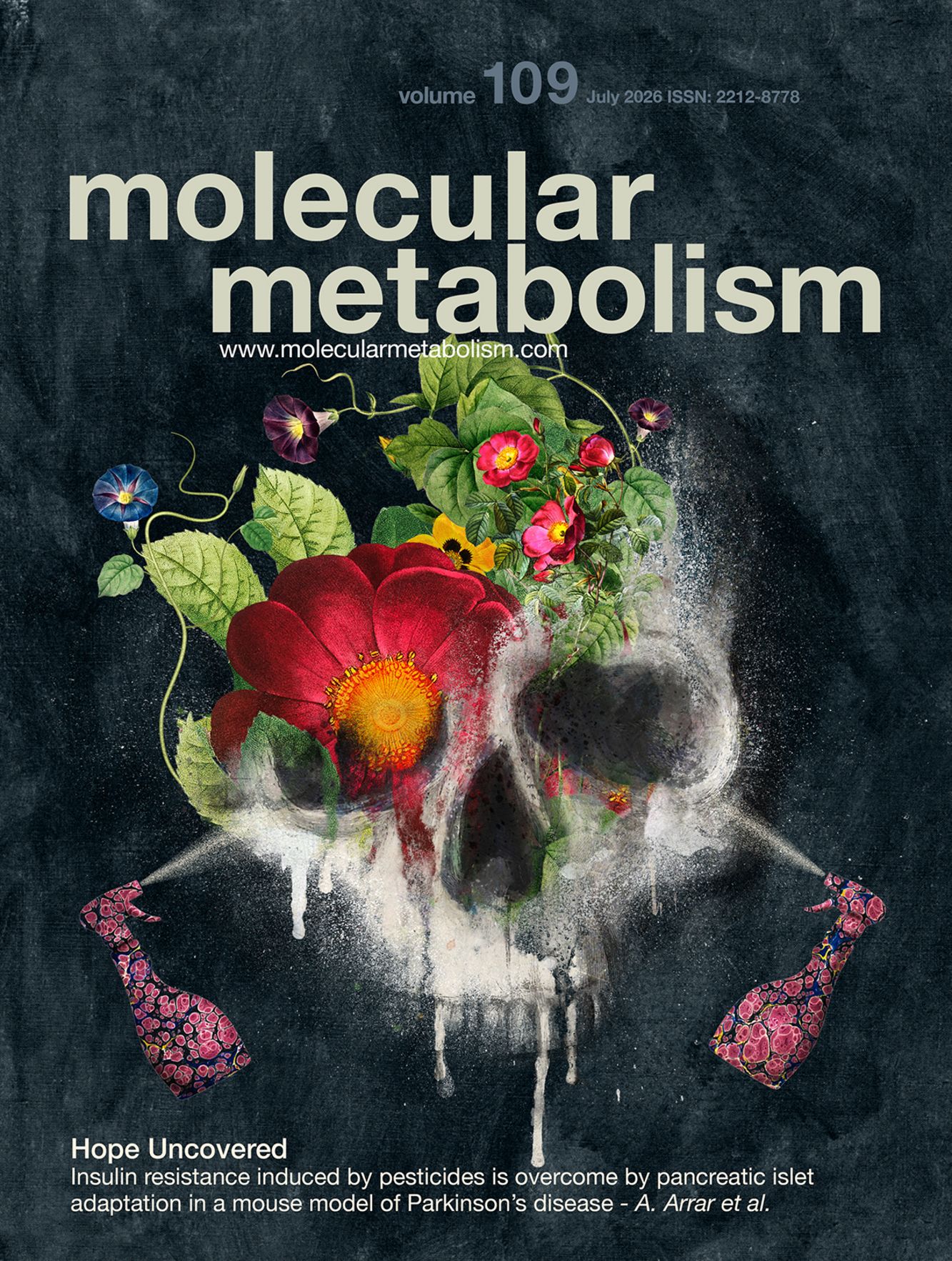
Cover Story Current Issue

Brown adipose tissue (BAT) is a specialized fat tissue that is rich in mitochondria and promotes non-shivering thermogenesis by expressing the uncoupling protein 1 (UCP1). Unlike white adipose tissue, it burns calories to produce heat and therefore plays a key role in energy regulation and controlling metabolic health. Increasing energy expenditure by BAT activation is an intriguing therapeutic approach to combat the overwhelming obesity pandemic, either alone or to complement the current pharmacotherapy that mainly addresses energy intake based on the incretin-mimetic poly-agonist class of drugs. With this in mind it is not surprising that a lot of research was conducted to understand the molecular underpinnings of BAT regulation specifically addressing environmental cues. Cold exposure is the most powerful inducer of BAT activation leading to the upregulation of thermogenic gene program and adrenergic receptor-mediated activation of lipolysis and metabolism. BAT activation also occurs post-prandially, especially after acute overfeeding, to trigger diet-induced thermogenesis. However, this compensatory component of energy-expenditure is impaired during chronic overfeeding, a phenomenon that was termed adaptive thermogenesis, and is believed to further drive weight gain and obesity.

Full text


Current Issue

Sodium-glucose cotransporter-specific substrate αMG stimulates endogenous glucagon secretion and ameliorates obesity-associated metabolic disorders in mice

Takayoshi Suga, Yoko Tabei, Osamu Kikuchi, Daisuke Kohno, ... Tadahiro Kitamura

Objectives

While glucagon raises blood glucose levels, it also promotes lipolysis and energy expenditure, and suppresses food intake and gastrointestinal motility, thereby resulting in weight loss. We previously reported that sodium-glucose cotransporter 1 (SGLT1) is highly expressed in pancreatic α cells. The present study aimed to investigate the effects of α-methyl D-glucopyranoside (αMG), an SGLT-specific substrate, on endogenous glucagon secretion and metabolic parameters in obese diabetic mice.

Methods

We injected αMG intraperitoneally daily into high fat, high sucrose diet (HFHSD)-fed mice and db/db mice, and measured metabolic parameters including plasma glucagon concentration. During the treatment with αMG, we evaluated various metabolic conditions, such as body weight, glucose tolerance and hepatic steatosis, in these mice. We also used SGLT1-specific inhibitor and liver-specific glucagon receptor knockout mice to elucidate the underlying mechanism.

Results

We showed that αMG stimulates endogenous glucagon secretion, and that chronic injection of αMG led to dramatic weight loss, improved glucose intolerance, and ameliorated hepatic steatosis, by reducing food intake and increasing energy expenditure and fat utilization, among obese diabetic mice. Interestingly amelioration of hepatic steatosis was abolished in liver-specific glucagon receptor knockout mice, but body weight reduction was not abolished. In addition, αMG, although to a modest extent, distinctly enhanced urinary glucose excretion.

Conclusions

These results in this study suggest that αMG stimulates endogenous glucagon secretion and may lead to a therapeutic strategy for obesity-associated metabolic diseases.

Articles in Press

Sodium-glucose cotransporter-specific substrate αMG stimulates endogenous glucagon secretion and ameliorates obesity-associated metabolic disorders in mice

Takayoshi Suga, Yoko Tabei, Osamu Kikuchi, Daisuke Kohno, ... Tadahiro Kitamura

Objectives

While glucagon raises blood glucose levels, it also promotes lipolysis and energy expenditure, and suppresses food intake and gastrointestinal motility, thereby resulting in weight loss. We previously reported that sodium-glucose cotransporter 1 (SGLT1) is highly expressed in pancreatic α cells. The present study aimed to investigate the effects of α-methyl D-glucopyranoside (αMG), an SGLT-specific substrate, on endogenous glucagon secretion and metabolic parameters in obese diabetic mice.

Methods

We injected αMG intraperitoneally daily into high fat, high sucrose diet (HFHSD)-fed mice and db/db mice, and measured metabolic parameters including plasma glucagon concentration. During the treatment with αMG, we evaluated various metabolic conditions, such as body weight, glucose tolerance and hepatic steatosis, in these mice. We also used SGLT1-specific inhibitor and liver-specific glucagon receptor knockout mice to elucidate the underlying mechanism.

Results

We showed that αMG stimulates endogenous glucagon secretion, and that chronic injection of αMG led to dramatic weight loss, improved glucose intolerance, and ameliorated hepatic steatosis, by reducing food intake and increasing energy expenditure and fat utilization, among obese diabetic mice. Interestingly amelioration of hepatic steatosis was abolished in liver-specific glucagon receptor knockout mice, but body weight reduction was not abolished. In addition, αMG, although to a modest extent, distinctly enhanced urinary glucose excretion.

Conclusions

These results in this study suggest that αMG stimulates endogenous glucagon secretion and may lead to a therapeutic strategy for obesity-associated metabolic diseases.

SAVE THE DATE!

13th
Helmholtz Diabetes Conference 

Munich, 21-23. Sep 2026                                                                                                                             

2024 impact factor: 6.6

You are what you eat

Here is a video of Vimeo. When the iframes is activated, a connection to Vimeo is established and, if necessary, cookies from Vimeo are also used. For further information on cookies policy click here.

Auf Werbeinhalte, die vor, während oder nach Videos von WEBSITE-URL eingeblendet werden, hat WEBSITE-URL keinen Einfluss. Wir übernehmen keine Gewähr für diese Inhalte. Weitere Informationen finden Sie hier.