
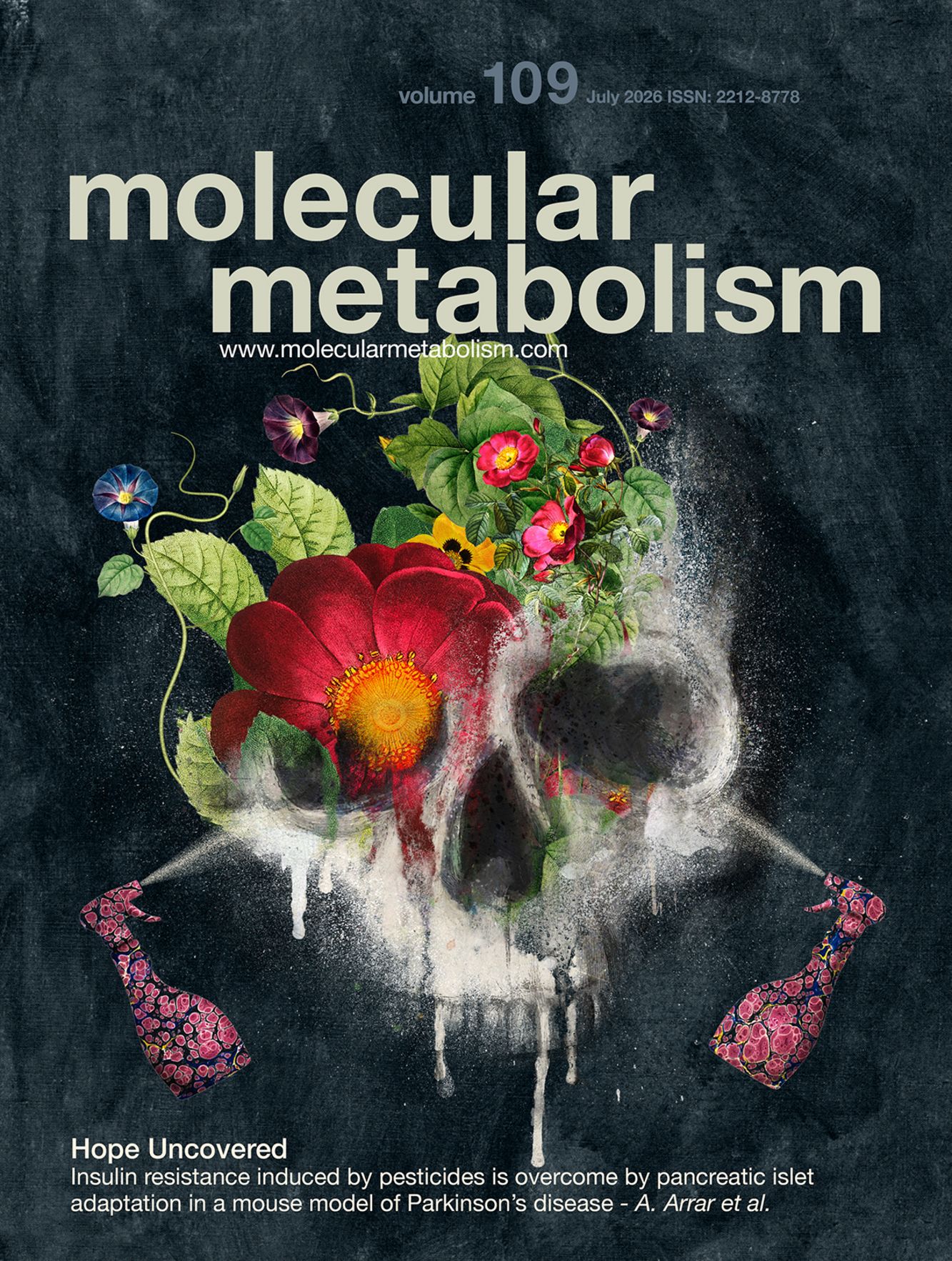


Cover Story Current Issue

Epidemiological evidences provide proof of concept that certain pesticides are involved in metabolic disorders, but also in the pathophysiology of Parkinson's disease (PD). In addition, large prospective cohort studies reported that type 2 diabetes (T2D) and PD are epidemiologically associated, including an elevated risk of developing PD in patients with T2D.
Current Issue
A novel mouse model for cardiovascular-kidney-metabolic syndrome: Bridging metabolic, renal and cardiac dysfunction

A novel mouse model for cardiovascular-kidney-metabolic syndrome: Bridging metabolic, renal and cardiac dysfunction
Background
CKM syndrome involves obesity, type 2 diabetes (T2D), chronic kidney disease (CKD) and cardiovascular disease (CVD). However, most preclinical models fail to reproduce the progressive renal and cardiac dysfunction characteristic of advanced CKM syndrome, limiting their ability to accurately reflect human disease.
Methods
Male uninephrectomized (UNx) KK-Ay mice received a high-fat diet (HFD) with or without the vasoconstrictor L-NNA for 13–16 weeks.
Results
UNx + HFD + L-NNA resulted in obesity, hyperglycemia and progressive kidney failure, indicated by a rapid increase in albuminuria and transient hyperfiltration followed by progressive glomerular filtration rate (GFR) decline over three months. Histopathological analysis revealed severe glomerular damage, fibrosis, inflammation and basement membrane thickening, most pronounced in UNx + HFD + L-NNA mice. Renal transcriptomics analysis revealed robust activation of inflammatory and fibrotic pathways, again most pronounced in UNx + HFD + L-NNA mice.
In the heart, UNx + HFD + L-NNA resulted in increased ejection fraction and fractional shortening, reduced end-systolic volume and increased left ventricular posterior wall thickness. Alongside pronounced right ventricular fibrosis, this phenotype points toward a phenotype of heart failure with preserved ejection fraction (HFpEF).
Conclusions
The UNx + HFD + L-NNA KK-Ay model reproduces key metabolic, renal and cardiac components of CKM syndrome. While obesity and hyperglycemia contribute substantially to disease burden, L-NNA-induced hypertension further exacerbates both renal decline and cardiac remodeling. Therefore, this model enables mechanistic investigation and evaluation of therapeutic strategies for CKM syndrome.
Graphical abstract
A multifactorial mouse model of cardiovascular-kidney-metabolic (CKM) syndrome. The model combines the KK-Ay genotype with uninephrectomy (UNx), high fat diet (HFD) and vasoconstriction (by L-NNA) to induce integrated dysfunction across three organ systems. At the cardiovascular level, a phenotype resembling heart failure with preserved ejection fraction (HFpEF) is observed, characterized by maintained cardiac output, increased fractional shortening, elevated ejection fraction and cardiac fibrosis. At the kidney level, there is a progressive decline in glomerular filtration rate (GFR) accompanied by marked albuminuria, glomerular damage, inflammation and fibrosis. Metabolically, the model develops obesity, hyperglycemia and mild hyperlipidemia develop in this mouse model. This multifactorial approach enables mechanistic studies of diabetic kidney disease progression within the CKM syndrome context.
Articles in Press
A novel mouse model for cardiovascular-kidney-metabolic syndrome: Bridging metabolic, renal and cardiac dysfunction
A novel mouse model for cardiovascular-kidney-metabolic syndrome: Bridging metabolic, renal and cardiac dysfunction
Background
CKM syndrome involves obesity, type 2 diabetes (T2D), chronic kidney disease (CKD) and cardiovascular disease (CVD). However, most preclinical models fail to reproduce the progressive renal and cardiac dysfunction characteristic of advanced CKM syndrome, limiting their ability to accurately reflect human disease.
Methods
Male uninephrectomized (UNx) KK-Ay mice received a high-fat diet (HFD) with or without the vasoconstrictor L-NNA for 13–16 weeks.
Results
UNx + HFD + L-NNA resulted in obesity, hyperglycemia and progressive kidney failure, indicated by a rapid increase in albuminuria and transient hyperfiltration followed by progressive glomerular filtration rate (GFR) decline over three months. Histopathological analysis revealed severe glomerular damage, fibrosis, inflammation and basement membrane thickening, most pronounced in UNx + HFD + L-NNA mice. Renal transcriptomics analysis revealed robust activation of inflammatory and fibrotic pathways, again most pronounced in UNx + HFD + L-NNA mice.
In the heart, UNx + HFD + L-NNA resulted in increased ejection fraction and fractional shortening, reduced end-systolic volume and increased left ventricular posterior wall thickness. Alongside pronounced right ventricular fibrosis, this phenotype points toward a phenotype of heart failure with preserved ejection fraction (HFpEF).
Conclusions
The UNx + HFD + L-NNA KK-Ay model reproduces key metabolic, renal and cardiac components of CKM syndrome. While obesity and hyperglycemia contribute substantially to disease burden, L-NNA-induced hypertension further exacerbates both renal decline and cardiac remodeling. Therefore, this model enables mechanistic investigation and evaluation of therapeutic strategies for CKM syndrome.
Graphical abstract
A multifactorial mouse model of cardiovascular-kidney-metabolic (CKM) syndrome. The model combines the KK-Ay genotype with uninephrectomy (UNx), high fat diet (HFD) and vasoconstriction (by L-NNA) to induce integrated dysfunction across three organ systems. At the cardiovascular level, a phenotype resembling heart failure with preserved ejection fraction (HFpEF) is observed, characterized by maintained cardiac output, increased fractional shortening, elevated ejection fraction and cardiac fibrosis. At the kidney level, there is a progressive decline in glomerular filtration rate (GFR) accompanied by marked albuminuria, glomerular damage, inflammation and fibrosis. Metabolically, the model develops obesity, hyperglycemia and mild hyperlipidemia develop in this mouse model. This multifactorial approach enables mechanistic studies of diabetic kidney disease progression within the CKM syndrome context.
Registration & Abstract Submission are open!

13th
Helmholtz Diabetes Conference
Munich, 21-23. Sep 2026

2024 impact factor: 6.6
You are what you eat
Here is a video of Vimeo. When the iframes is activated, a connection to Vimeo is established and, if necessary, cookies from Vimeo are also used. For further information on cookies policy click here.