
 Volume 109, Current Issue
 Vol 28, October 2019
 Vol 27, September 2019
 Vol 26, August 2019
 Vol 25, July 2019
 Vol 24, June 2019
 Vol 23, May 2019
 Vol 22, April 2019
 Vol 21, March 2019
 Vol 20, February 2019
 Vol 19, January 2019
 Vol 18, December 2018
 Vol 17, November 2018
 Vol 16, October 2018
 Vol 15, September 2018
 Vol 14, August 2018
 Vol 13, July 2018
 Vol 12, June 2018
 Vol 11, May 2018
 Vol 10, April 2018
 Vol 9, March 2018
 Vol 8, February 2018
 Vol 7, January 2018
 Vol 6 No 12, December 2017
 Vol 6 No 11, November 2017
 Vol 6 No 10, October 2017
 Vol 6 No 9, September 2017
 Vol 6 No 8, August 2017
 Vol 6 No 7, July 2017
 Vol 6 No 6, June 2017
 Vol 6 No 5, May 2017
 Vol 6 No 4, April 2017
 Vol 6 No 3, March 2017
 Vol 6 No 2, February 2017
 Vol 6 No 1, January 2017
 Vol 5 No 12, December 2016
 Vol 5 No 11, November 2016
 Vol 5 No 10, October 2016
 Vol 5 No 9, September 2016
 Vol 5 No 8, August 2016
 Vol 5 No 7, July 2016
 Vol 5 No 6, June 2016
 Vol 5 No 5, May 2016
 Vol 5 No 4, April 2016
 Vol 5 No 3, March 2016
 Vol 5 No 2, February 2016
 Vol 5 No 1, January 2016
 Vol 4 No 12, December 2015
 Vol 4 No 11, November 2015
 Vol 4 No 10, October 2015


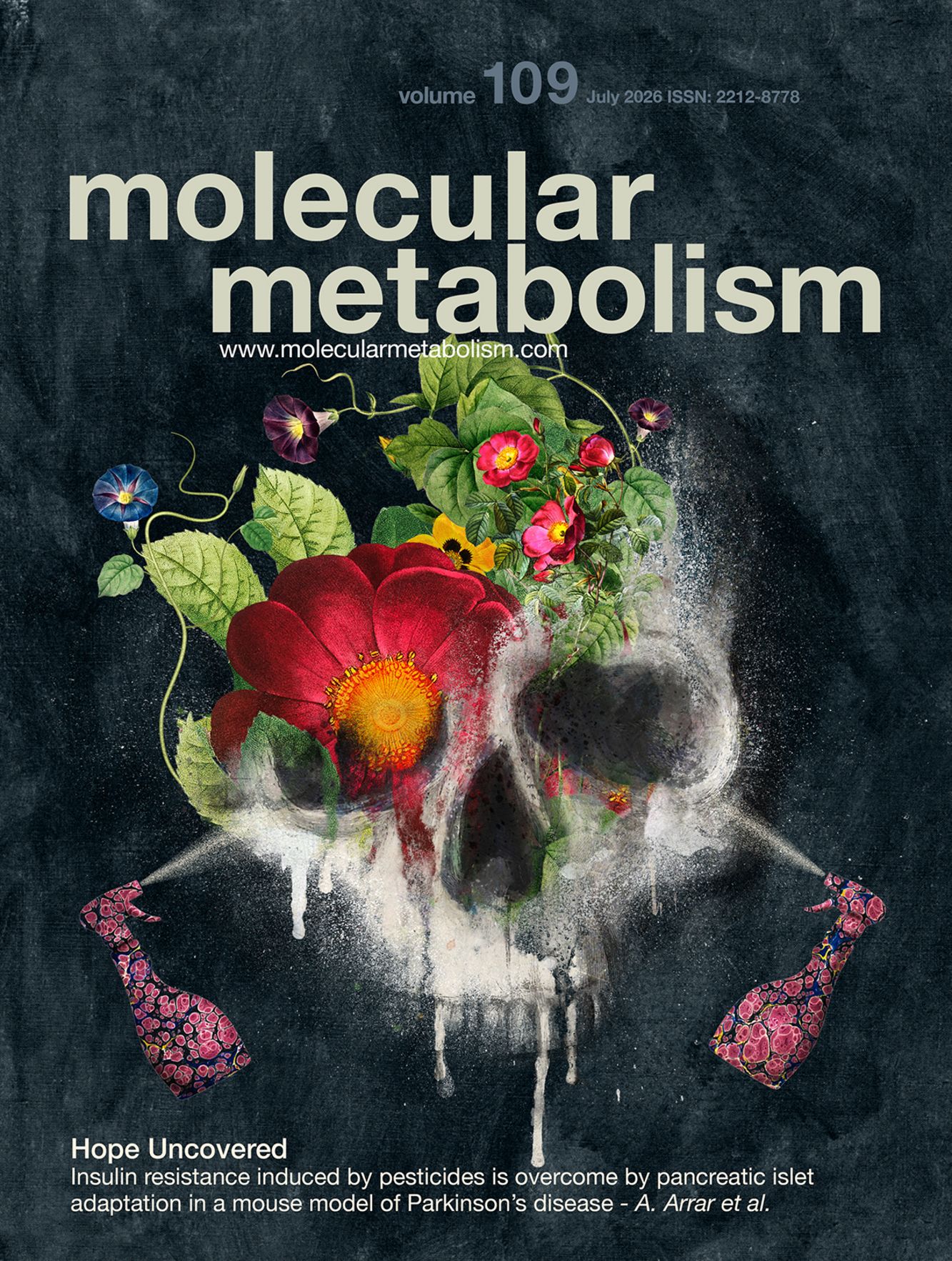
Cover Story Current Issue

Epidemiological evidences provide proof of concept that certain pesticides are involved in metabolic disorders, but also in the pathophysiology of Parkinson's disease (PD). In addition, large prospective cohort studies reported that type 2 diabetes (T2D) and PD are epidemiologically associated, including an elevated risk of developing PD in patients with T2D.
Current Issue
Blocking β-alanine synthesis triggers widespread perturbations of energy and lipid metabolism in the brain
- Abstract
Blocking β-alanine synthesis triggers widespread perturbations of energy and lipid metabolism in the brain
Background
Glutamate decarboxylase-like 1 (GADL1) decarboxylates aspartic acid to β-alanine in several mammalian tissues, particularly in the brain and skeletal muscle. β-alanine is a precursor to the antioxidant and osmoregulatory dipeptide carnosine (β-alanyl-l-histidine), as well as pantothenic acid and coenzyme A. Deletion of GADL1 reduces carnosine and anserine levels in multiple tissues, but the consequences for brain metabolism remain unclear. This study aimed to explore sex-specific metabolic and cellular effects of GADL1 and β-alanine depletion in different areas of the brain.
Methods and results
We conducted a metabolomic screening of seven mouse tissues, followed by a detailed transcriptomic, proteomic, and metabolomic analysis of cerebrum, cerebellum, and olfactory bulb tissues from male and female GADL1 knockout and wild-type mice to explore sex-, age-, and region-specific molecular alterations. Loss of GADL1 induced distinct, sex-dependent metabolic responses across brain regions. Metabolomic data showed increased oxidative stress and possible synaptic remodeling in the cerebrum of mature females, whereas males exhibited massive lipid accumulation in multiple tissues. A similar pattern appeared in the developing olfactory bulb, where both sexes displayed lipid accumulation, but only males showed signs of inflammatory activation and altered energy metabolism, as supported by transcriptomic and proteomic analyses.
Conclusions
GADL1 loss and consequent β-alanine depletion trigger widespread metabolic remodeling in brain tissue. Even modest β-alanine reduction leads to region, age, and sex-specific perturbations of energy metabolism and cellular homeostasis. These findings highlight the multifaceted biochemical roles of β-alanine and suggest that its physiological and therapeutic effects may differ by tissue, sex, and developmental stage.
Articles in Press
Blocking β-alanine synthesis triggers widespread perturbations of energy and lipid metabolism in the brain
- Abstract
Blocking β-alanine synthesis triggers widespread perturbations of energy and lipid metabolism in the brain
Background
Glutamate decarboxylase-like 1 (GADL1) decarboxylates aspartic acid to β-alanine in several mammalian tissues, particularly in the brain and skeletal muscle. β-alanine is a precursor to the antioxidant and osmoregulatory dipeptide carnosine (β-alanyl-l-histidine), as well as pantothenic acid and coenzyme A. Deletion of GADL1 reduces carnosine and anserine levels in multiple tissues, but the consequences for brain metabolism remain unclear. This study aimed to explore sex-specific metabolic and cellular effects of GADL1 and β-alanine depletion in different areas of the brain.
Methods and results
We conducted a metabolomic screening of seven mouse tissues, followed by a detailed transcriptomic, proteomic, and metabolomic analysis of cerebrum, cerebellum, and olfactory bulb tissues from male and female GADL1 knockout and wild-type mice to explore sex-, age-, and region-specific molecular alterations. Loss of GADL1 induced distinct, sex-dependent metabolic responses across brain regions. Metabolomic data showed increased oxidative stress and possible synaptic remodeling in the cerebrum of mature females, whereas males exhibited massive lipid accumulation in multiple tissues. A similar pattern appeared in the developing olfactory bulb, where both sexes displayed lipid accumulation, but only males showed signs of inflammatory activation and altered energy metabolism, as supported by transcriptomic and proteomic analyses.
Conclusions
GADL1 loss and consequent β-alanine depletion trigger widespread metabolic remodeling in brain tissue. Even modest β-alanine reduction leads to region, age, and sex-specific perturbations of energy metabolism and cellular homeostasis. These findings highlight the multifaceted biochemical roles of β-alanine and suggest that its physiological and therapeutic effects may differ by tissue, sex, and developmental stage.
Registration & Abstract Submission are open!

13th
Helmholtz Diabetes Conference
Munich, 21-23. Sep 2026

2024 impact factor: 6.6
You are what you eat
Here is a video of Vimeo. When the iframes is activated, a connection to Vimeo is established and, if necessary, cookies from Vimeo are also used. For further information on cookies policy click here.