
 Volume 111, Current Issue
 Vol 28, October 2019
 Vol 27, September 2019
 Vol 26, August 2019
 Vol 25, July 2019
 Vol 24, June 2019
 Vol 23, May 2019
 Vol 22, April 2019
 Vol 21, March 2019
 Vol 20, February 2019
 Vol 19, January 2019
 Vol 18, December 2018
 Vol 17, November 2018
 Vol 16, October 2018
 Vol 15, September 2018
 Vol 14, August 2018
 Vol 13, July 2018
 Vol 12, June 2018
 Vol 11, May 2018
 Vol 10, April 2018
 Vol 9, March 2018
 Vol 8, February 2018
 Vol 7, January 2018
 Vol 6 No 12, December 2017
 Vol 6 No 11, November 2017
 Vol 6 No 10, October 2017
 Vol 6 No 9, September 2017
 Vol 6 No 8, August 2017
 Vol 6 No 7, July 2017
 Vol 6 No 6, June 2017
 Vol 6 No 5, May 2017
 Vol 6 No 4, April 2017
 Vol 6 No 3, March 2017
 Vol 6 No 2, February 2017
 Vol 6 No 1, January 2017
 Vol 5 No 12, December 2016
 Vol 5 No 11, November 2016
 Vol 5 No 10, October 2016
 Vol 5 No 9, September 2016
 Vol 5 No 8, August 2016
 Vol 5 No 7, July 2016
 Vol 5 No 6, June 2016
 Vol 5 No 5, May 2016
 Vol 5 No 4, April 2016
 Vol 5 No 3, March 2016
 Vol 5 No 2, February 2016
 Vol 5 No 1, January 2016
 Vol 4 No 12, December 2015
 Vol 4 No 11, November 2015
 Vol 4 No 10, October 2015


Cover Story Current Issue
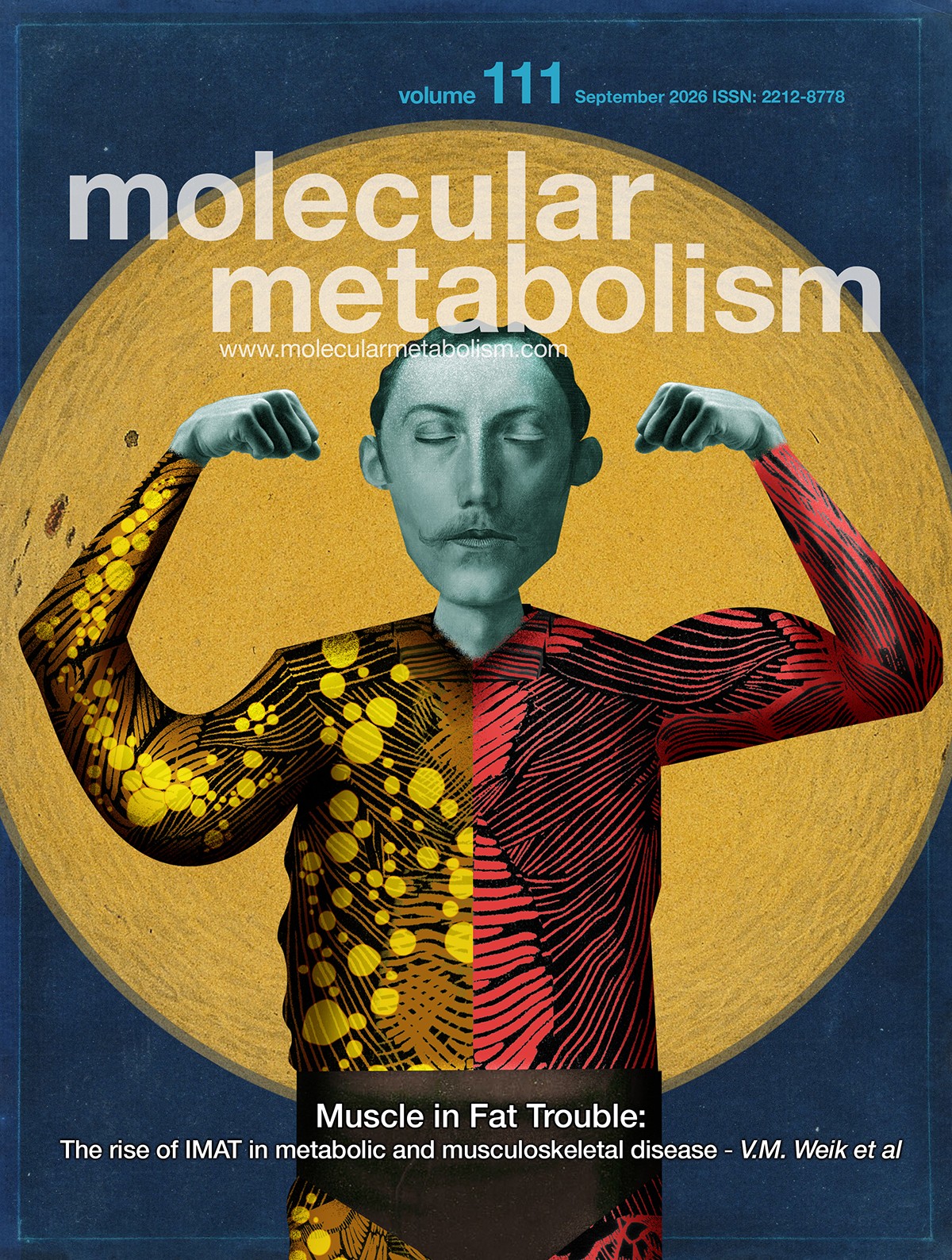
Skeletal muscle is the largest organ in the human body by mass, making up approximately 40 % of total body weight. Furthermore, it accounts for the majority of insulin-stimulated glucose uptake and is also highly involved in lipid metabolism. Lipids can accumulate in muscle through different distinct depots: as intramyocellular lipids (IMCL), stored as triglyceride-containing droplets within muscle cells and as intermuscular adipose tissue (IMAT), located between muscle fiber bundles beneath the deep muscle fascia. The muscular fat depots have been positively correlated with an increased body fat content in obesity, just like subcutaneous and visceral adipose tissue (SAT and VAT, respectively). IMCL, IMAT, VAT and SAT have additionally been linked to insulin resistance and type 2 diabetes mellitus (T2D).
Current Issue
Developmental metformin exposure does not rescue physiological impairments derived from early exposure to altered maternal metabolic state in offspring mice
- Abstract
Developmental metformin exposure does not rescue physiological impairments derived from early exposure to altered maternal metabolic state in offspring mice
Objective
The incidence of gestational diabetes mellitus (GDM) and metabolic disorders during pregnancy are increasing globally. This has resulted in increased use of therapeutic interventions such as metformin to aid in glycemic control during pregnancy. Even though metformin can cross the placental barrier, its impact on offspring brain development remains poorly understood. As metformin promotes AMPK signaling, which plays a key role in axonal growth during development, we hypothesized that it may have an impact on hypothalamic signaling and the formation of neuronal projections in the hypothalamus, the key regulator of energy homeostasis. We further hypothesized that this is dependent on the metabolic and nutritional status of the mother at the time of metformin intervention. Using mouse models of maternal overnutrition, we aimed to assess the effects of metformin exposure on offspring physiology and hypothalamic neuronal circuits during key periods of development.
Methods
Female C57BL/6N mice received either a control diet or a high-fat diet (HFD) during pregnancy and lactation periods. A subset of dams was fed a HFD exclusively during the lactation. Anti-diabetic treatments were given during the first postnatal weeks. Body weights of male and female offspring were monitored daily until weaning. Circulating metabolic factors and molecular changes in the hypothalamus were assessed at postnatal day 16 using ELISA and Western Blot, respectively. Hypothalamic innervation was assessed by immunostaining at postnatal days 16 and 21.
Results
We identified alterations in weight gain and circulating hormones in male and female offspring induced by anti-diabetic treatment during the early postnatal period, which were critically dependent on the maternal metabolic state. Furthermore, hypothalamic agouti-related peptide (AgRP) and proopiomelanocortin (POMC) neuronal innervation outcomes in response to anti-diabetic treatment were also modulated by maternal metabolic state. We also identified sex-specific changes in hypothalamic AMPK signaling in response to metformin exposure.
Conclusion
We demonstrate a unique interaction between anti-diabetic treatment and maternal metabolic state, resulting in sex-specific effects on offspring brain development and physiological outcomes. Overall, based on our findings, no positive effect of metformin intervention was observed in the offspring, despite ameliorating effects on maternal metabolic outcomes. In fact, the metabolic state of the mother drives the most dramatic differences in offspring physiology and metformin had no rescuing effect. Our results therefore highlight the need for a deeper understanding of how maternal metabolic state (excessive weight gain versus stable weight during GDM treatment) affects the developing offspring. Further, these results emphasize that the interventions to treat alterations in maternal metabolism during pregnancy need to be reassessed from the perspective of the offspring physiology.
Articles in Press
Developmental metformin exposure does not rescue physiological impairments derived from early exposure to altered maternal metabolic state in offspring mice
- Abstract
Developmental metformin exposure does not rescue physiological impairments derived from early exposure to altered maternal metabolic state in offspring mice
Objective
The incidence of gestational diabetes mellitus (GDM) and metabolic disorders during pregnancy are increasing globally. This has resulted in increased use of therapeutic interventions such as metformin to aid in glycemic control during pregnancy. Even though metformin can cross the placental barrier, its impact on offspring brain development remains poorly understood. As metformin promotes AMPK signaling, which plays a key role in axonal growth during development, we hypothesized that it may have an impact on hypothalamic signaling and the formation of neuronal projections in the hypothalamus, the key regulator of energy homeostasis. We further hypothesized that this is dependent on the metabolic and nutritional status of the mother at the time of metformin intervention. Using mouse models of maternal overnutrition, we aimed to assess the effects of metformin exposure on offspring physiology and hypothalamic neuronal circuits during key periods of development.
Methods
Female C57BL/6N mice received either a control diet or a high-fat diet (HFD) during pregnancy and lactation periods. A subset of dams was fed a HFD exclusively during the lactation. Anti-diabetic treatments were given during the first postnatal weeks. Body weights of male and female offspring were monitored daily until weaning. Circulating metabolic factors and molecular changes in the hypothalamus were assessed at postnatal day 16 using ELISA and Western Blot, respectively. Hypothalamic innervation was assessed by immunostaining at postnatal days 16 and 21.
Results
We identified alterations in weight gain and circulating hormones in male and female offspring induced by anti-diabetic treatment during the early postnatal period, which were critically dependent on the maternal metabolic state. Furthermore, hypothalamic agouti-related peptide (AgRP) and proopiomelanocortin (POMC) neuronal innervation outcomes in response to anti-diabetic treatment were also modulated by maternal metabolic state. We also identified sex-specific changes in hypothalamic AMPK signaling in response to metformin exposure.
Conclusion
We demonstrate a unique interaction between anti-diabetic treatment and maternal metabolic state, resulting in sex-specific effects on offspring brain development and physiological outcomes. Overall, based on our findings, no positive effect of metformin intervention was observed in the offspring, despite ameliorating effects on maternal metabolic outcomes. In fact, the metabolic state of the mother drives the most dramatic differences in offspring physiology and metformin had no rescuing effect. Our results therefore highlight the need for a deeper understanding of how maternal metabolic state (excessive weight gain versus stable weight during GDM treatment) affects the developing offspring. Further, these results emphasize that the interventions to treat alterations in maternal metabolism during pregnancy need to be reassessed from the perspective of the offspring physiology.
Registration still open - sign up now!

13th
Helmholtz Diabetes Conference
Munich, 21-23. Sep 2026

2024 impact factor: 6.6
You are what you eat
Here is a video of Vimeo. When the iframes is activated, a connection to Vimeo is established and, if necessary, cookies from Vimeo are also used. For further information on cookies policy click here.