
 Volume 109, Current Issue
 Vol 28, October 2019
 Vol 27, September 2019
 Vol 26, August 2019
 Vol 25, July 2019
 Vol 24, June 2019
 Vol 23, May 2019
 Vol 22, April 2019
 Vol 21, March 2019
 Vol 20, February 2019
 Vol 19, January 2019
 Vol 18, December 2018
 Vol 17, November 2018
 Vol 16, October 2018
 Vol 15, September 2018
 Vol 14, August 2018
 Vol 13, July 2018
 Vol 12, June 2018
 Vol 11, May 2018
 Vol 10, April 2018
 Vol 9, March 2018
 Vol 8, February 2018
 Vol 7, January 2018
 Vol 6 No 12, December 2017
 Vol 6 No 11, November 2017
 Vol 6 No 10, October 2017
 Vol 6 No 9, September 2017
 Vol 6 No 8, August 2017
 Vol 6 No 7, July 2017
 Vol 6 No 6, June 2017
 Vol 6 No 5, May 2017
 Vol 6 No 4, April 2017
 Vol 6 No 3, March 2017
 Vol 6 No 2, February 2017
 Vol 6 No 1, January 2017
 Vol 5 No 12, December 2016
 Vol 5 No 11, November 2016
 Vol 5 No 10, October 2016
 Vol 5 No 9, September 2016
 Vol 5 No 8, August 2016
 Vol 5 No 7, July 2016
 Vol 5 No 6, June 2016
 Vol 5 No 5, May 2016
 Vol 5 No 4, April 2016
 Vol 5 No 3, March 2016
 Vol 5 No 2, February 2016
 Vol 5 No 1, January 2016
 Vol 4 No 12, December 2015
 Vol 4 No 11, November 2015
 Vol 4 No 10, October 2015


Cover Story Current Issue
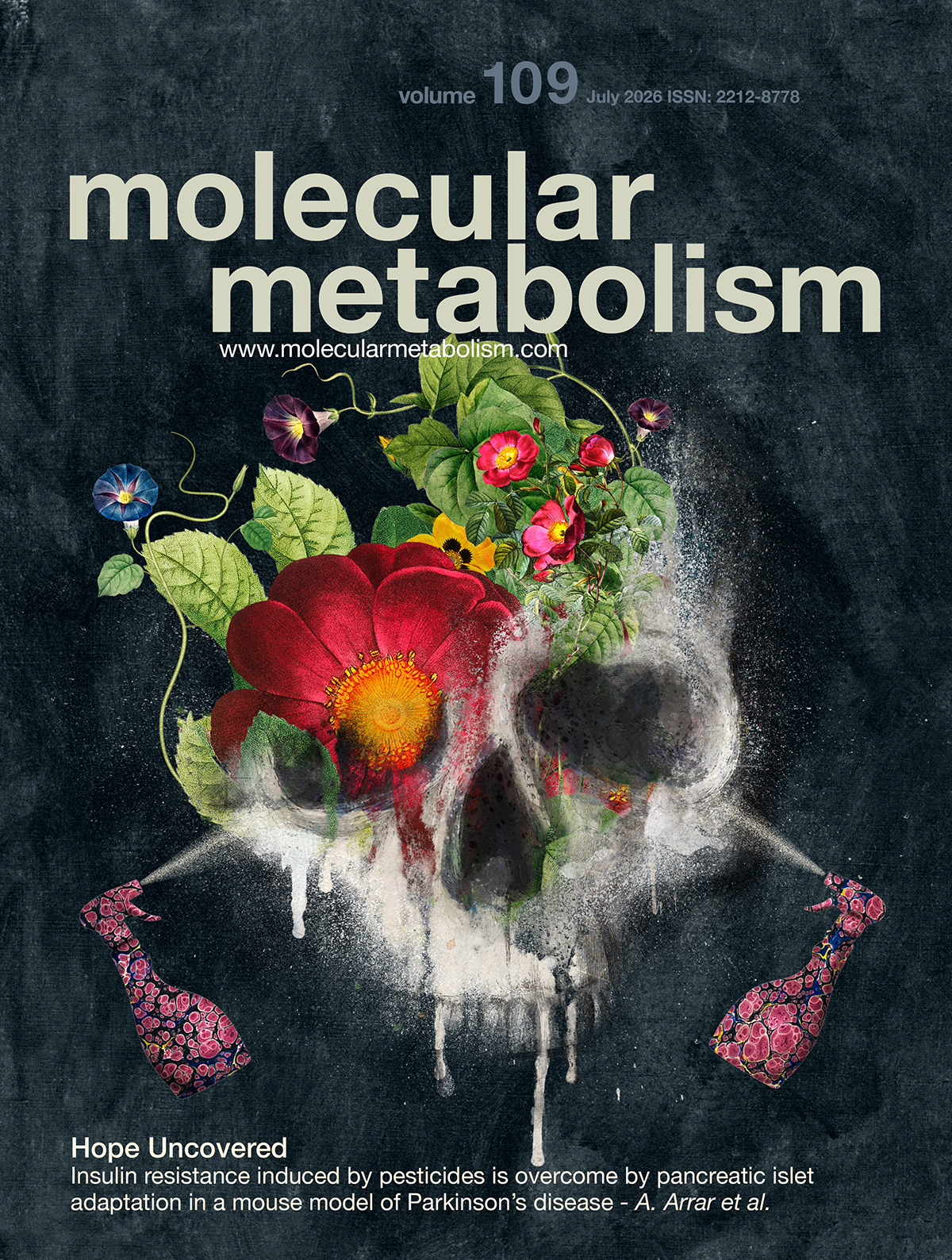
Epidemiological evidences provide proof of concept that certain pesticides are involved in metabolic disorders, but also in the pathophysiology of Parkinson's disease (PD). In addition, large prospective cohort studies reported that type 2 diabetes (T2D) and PD are epidemiologically associated, including an elevated risk of developing PD in patients with T2D.
Current Issue
Mitochondrial-targeted plastoquinone therapy prevents early onset muscle weakness that occurs before atrophy during ovarian cancer
- Abstract
Mitochondrial-targeted plastoquinone therapy prevents early onset muscle weakness that occurs before atrophy during ovarian cancer
Objective
Muscle loss with cancer causes weakness, worsens quality of life, and predicts reduced overall survival rates. Recently, muscle weakness was identified during early-stage cancer before atrophy develops. This discovery indicates that mechanisms independent of muscle loss must contribute to progressive weakness. While mitochondrial stress responses are associated with early-stage ‘pre-cachexia’ weakness, a causal relationship has not been established.
Methods and Results
Here, using a mouse model of metastatic ovarian cancer cachexia, we identified that the well-established mitochondrial-targeted plastoquinone SkQ1 partially prevents muscle weakness occurring before the development of atrophy in the diaphragm. Furthermore, SkQ1 improved force production during atrophy without preventing atrophy itself in the tibialis anterior and diaphragm. These findings indicate that atrophy-independent mechanisms of muscle weakness occur in different muscle types throughout ovarian cancer. Ovarian cancer reduced flexor digitorum brevis (FDB) whole muscle force production and myoplasmic free calcium ([Ca2+]i) during contraction in intact single muscle fibers, both of which were prevented by SkQ1. Remarkably, changes in mitochondrial reactive oxygen species and pyruvate metabolism were heterogeneous across time and between muscle types which highlights a considerable complexity in the relationships between mitochondria and muscle remodeling throughout ovarian cancer.
Conclusions
These discoveries identify that muscle weakness can occur independent of atrophy throughout ovarian cancer in a manner that is linked to improved calcium handling. The findings also demonstrate that mitochondrial-targeted therapies exert a robust effect in preserving muscle force early during ovarian cancer during the pre-atrophy period and in late stages once cachexia has become severe.
Articles in Press
Mitochondrial-targeted plastoquinone therapy prevents early onset muscle weakness that occurs before atrophy during ovarian cancer
- Abstract
Mitochondrial-targeted plastoquinone therapy prevents early onset muscle weakness that occurs before atrophy during ovarian cancer
Objective
Muscle loss with cancer causes weakness, worsens quality of life, and predicts reduced overall survival rates. Recently, muscle weakness was identified during early-stage cancer before atrophy develops. This discovery indicates that mechanisms independent of muscle loss must contribute to progressive weakness. While mitochondrial stress responses are associated with early-stage ‘pre-cachexia’ weakness, a causal relationship has not been established.
Methods and Results
Here, using a mouse model of metastatic ovarian cancer cachexia, we identified that the well-established mitochondrial-targeted plastoquinone SkQ1 partially prevents muscle weakness occurring before the development of atrophy in the diaphragm. Furthermore, SkQ1 improved force production during atrophy without preventing atrophy itself in the tibialis anterior and diaphragm. These findings indicate that atrophy-independent mechanisms of muscle weakness occur in different muscle types throughout ovarian cancer. Ovarian cancer reduced flexor digitorum brevis (FDB) whole muscle force production and myoplasmic free calcium ([Ca2+]i) during contraction in intact single muscle fibers, both of which were prevented by SkQ1. Remarkably, changes in mitochondrial reactive oxygen species and pyruvate metabolism were heterogeneous across time and between muscle types which highlights a considerable complexity in the relationships between mitochondria and muscle remodeling throughout ovarian cancer.
Conclusions
These discoveries identify that muscle weakness can occur independent of atrophy throughout ovarian cancer in a manner that is linked to improved calcium handling. The findings also demonstrate that mitochondrial-targeted therapies exert a robust effect in preserving muscle force early during ovarian cancer during the pre-atrophy period and in late stages once cachexia has become severe.
Registration & Abstract Submission are open!

13th
Helmholtz Diabetes Conference
Munich, 21-23. Sep 2026

2024 impact factor: 6.6
You are what you eat
Here is a video of Vimeo. When the iframes is activated, a connection to Vimeo is established and, if necessary, cookies from Vimeo are also used. For further information on cookies policy click here.