Cover Story Current Issue

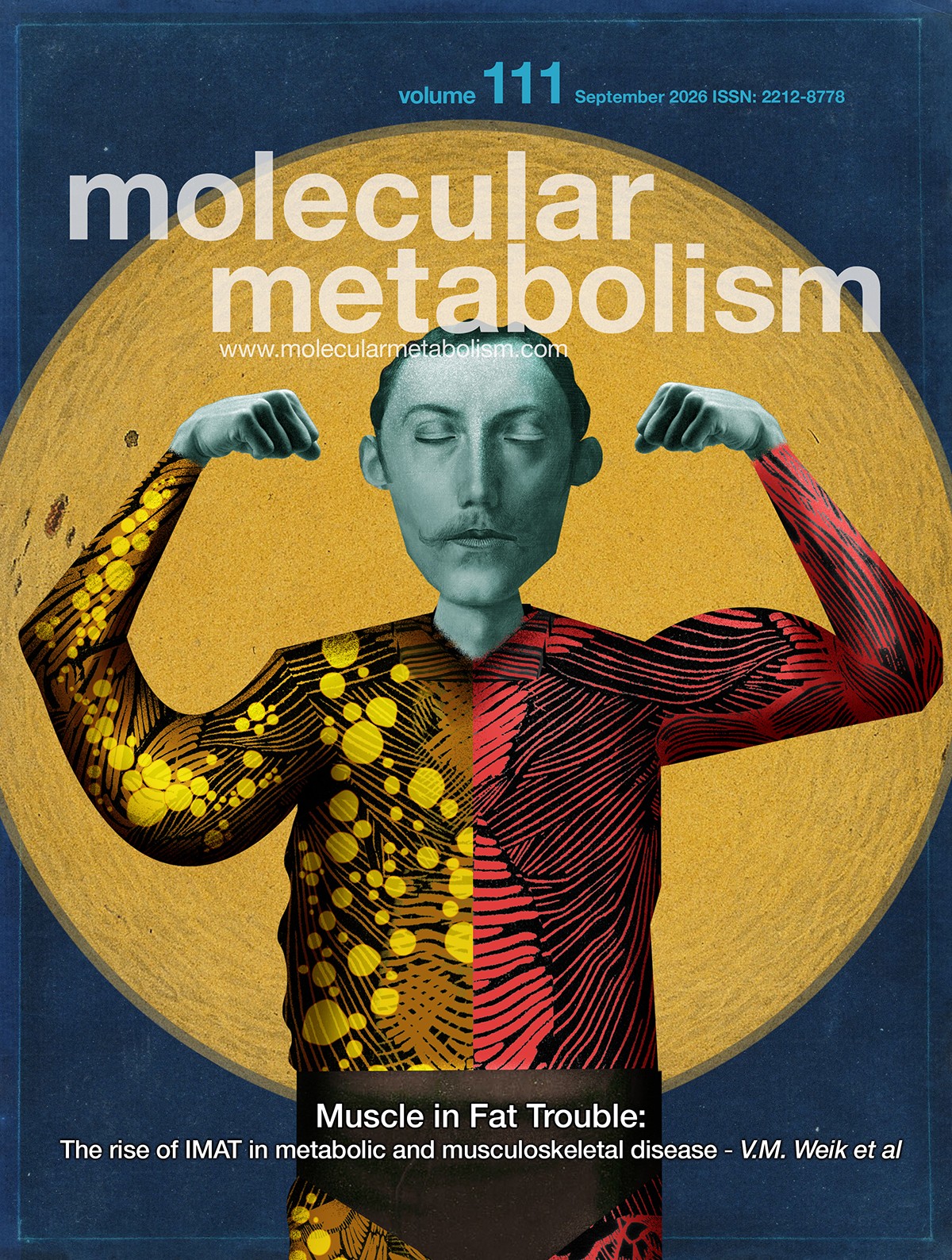
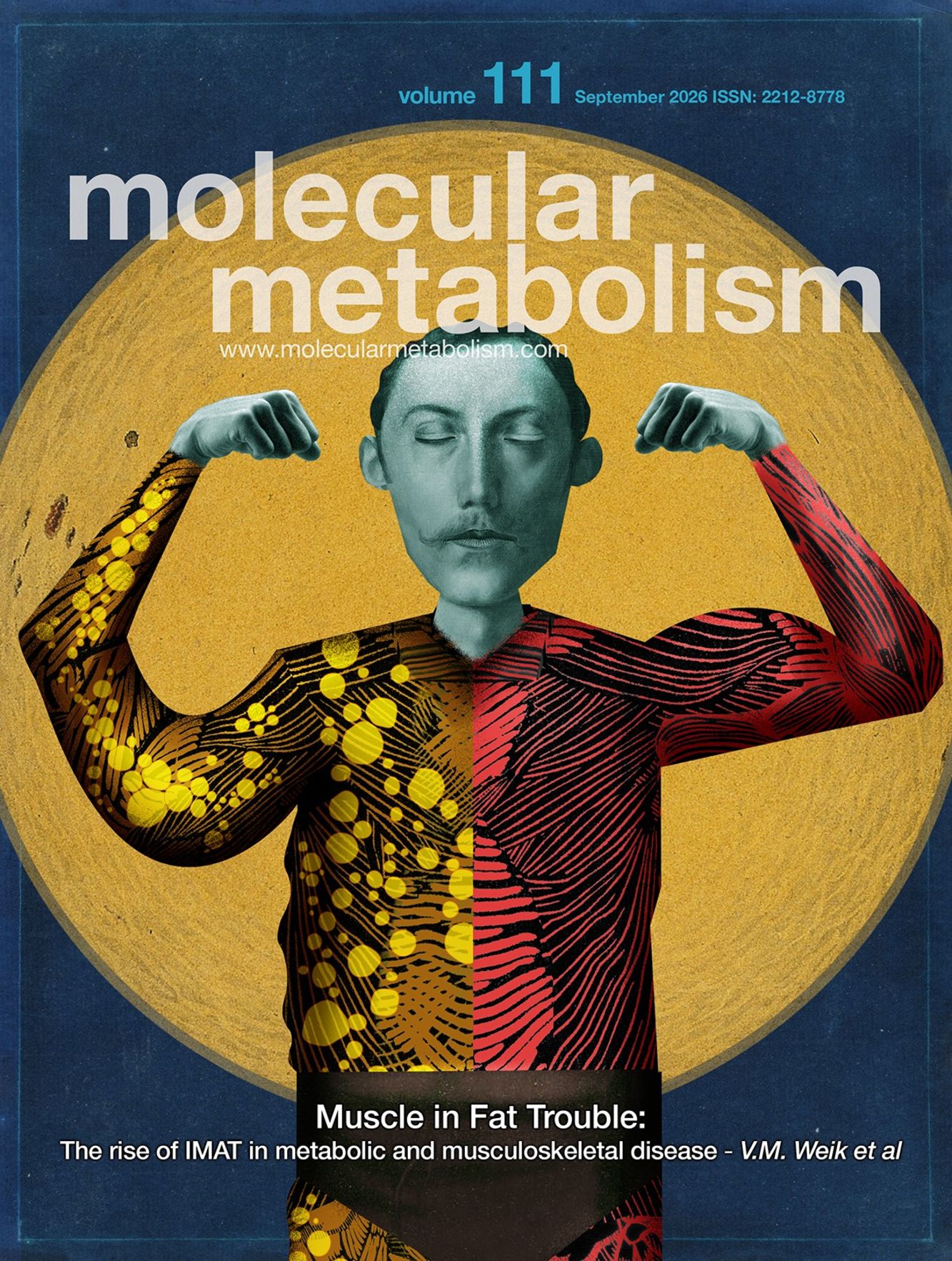
Skeletal muscle is the largest organ in the human body by mass, making up approximately 40 % of total body weight. Furthermore, it accounts for the majority of insulin-stimulated glucose uptake and is also highly involved in lipid metabolism. Lipids can accumulate in muscle through different distinct depots: as intramyocellular lipids (IMCL), stored as triglyceride-containing droplets within muscle cells and as intermuscular adipose tissue (IMAT), located between muscle fiber bundles beneath the deep muscle fascia. The muscular fat depots have been positively correlated with an increased body fat content in obesity, just like subcutaneous and visceral adipose tissue (SAT and VAT, respectively). IMCL, IMAT, VAT and SAT have additionally been linked to insulin resistance and type 2 diabetes mellitus (T2D).

Full text


Current Issue

Novel NPY2R agonist BI 1820237 provides synergistic anti-obesity efficacy when combined with the GCGR/GLP-1R dual agonist survodutide

Robert Augustin, Anouk Oldenburger, Tamara Baader-Pagler, Tina Zimmermann, ... Peter Haebel

Novel NPY2R agonist BI 1820237 provides synergistic anti-obesity efficacy when combined with the GCGR/GLP-1R dual agonist survodutide


Objective

Nutrient-stimulated gut hormone peptide YY3–36 (PYY3–36) selectively activates the neuropeptide Y2 receptor (NPY2R) and reduces energy intake in humans. We describe the discovery and pharmacology of the long-acting NPY2R agonist BI 1820237 and its potential bodyweight-lowering efficacy alone and in combination with the glucagon receptor (GCGR)/glucagon-like peptide-1 receptor (GLP-1R) dual agonist survodutide.

Methods & Results

BI 1820237 dose-dependently reduced food intake and gastric emptying in lean mice. Significant bodyweight reductions were not observed with BI 1820237 alone in diet-induced obese mice, however combination with survodutide led to bodyweight reduction of 22% which was significantly (p < 0.01) greater than the 17% bodyweight reduction with survodutide alone. Regression-based interaction analysis demonstrated that BI 1820237 increased the efficacy of survodutide by 265% at an ED50 of 11.7 nmol/kg over a range of dose combinations.

Conclusion

Synergistic NPY2R and GCGR/GLP-1R agonism provides an attractive mode of action for clinically relevant weight loss in patients with obesity.


Articles in Press

Novel NPY2R agonist BI 1820237 provides synergistic anti-obesity efficacy when combined with the GCGR/GLP-1R dual agonist survodutide

Robert Augustin, Anouk Oldenburger, Tamara Baader-Pagler, Tina Zimmermann, ... Peter Haebel

Novel NPY2R agonist BI 1820237 provides synergistic anti-obesity efficacy when combined with the GCGR/GLP-1R dual agonist survodutide


Objective

Nutrient-stimulated gut hormone peptide YY3–36 (PYY3–36) selectively activates the neuropeptide Y2 receptor (NPY2R) and reduces energy intake in humans. We describe the discovery and pharmacology of the long-acting NPY2R agonist BI 1820237 and its potential bodyweight-lowering efficacy alone and in combination with the glucagon receptor (GCGR)/glucagon-like peptide-1 receptor (GLP-1R) dual agonist survodutide.

Methods & Results

BI 1820237 dose-dependently reduced food intake and gastric emptying in lean mice. Significant bodyweight reductions were not observed with BI 1820237 alone in diet-induced obese mice, however combination with survodutide led to bodyweight reduction of 22% which was significantly (p < 0.01) greater than the 17% bodyweight reduction with survodutide alone. Regression-based interaction analysis demonstrated that BI 1820237 increased the efficacy of survodutide by 265% at an ED50 of 11.7 nmol/kg over a range of dose combinations.

Conclusion

Synergistic NPY2R and GCGR/GLP-1R agonism provides an attractive mode of action for clinically relevant weight loss in patients with obesity.


Registration still open - sign up now!

13th
Helmholtz Diabetes Conference 

Munich, 21-23. Sep 2026                                                                                                                             

2024 impact factor: 6.6

You are what you eat

Here is a video of Vimeo. When the iframes is activated, a connection to Vimeo is established and, if necessary, cookies from Vimeo are also used. For further information on cookies policy click here.

Auf Werbeinhalte, die vor, während oder nach Videos von WEBSITE-URL eingeblendet werden, hat WEBSITE-URL keinen Einfluss. Wir übernehmen keine Gewähr für diese Inhalte. Weitere Informationen finden Sie hier.