


Cover Story Current Issue
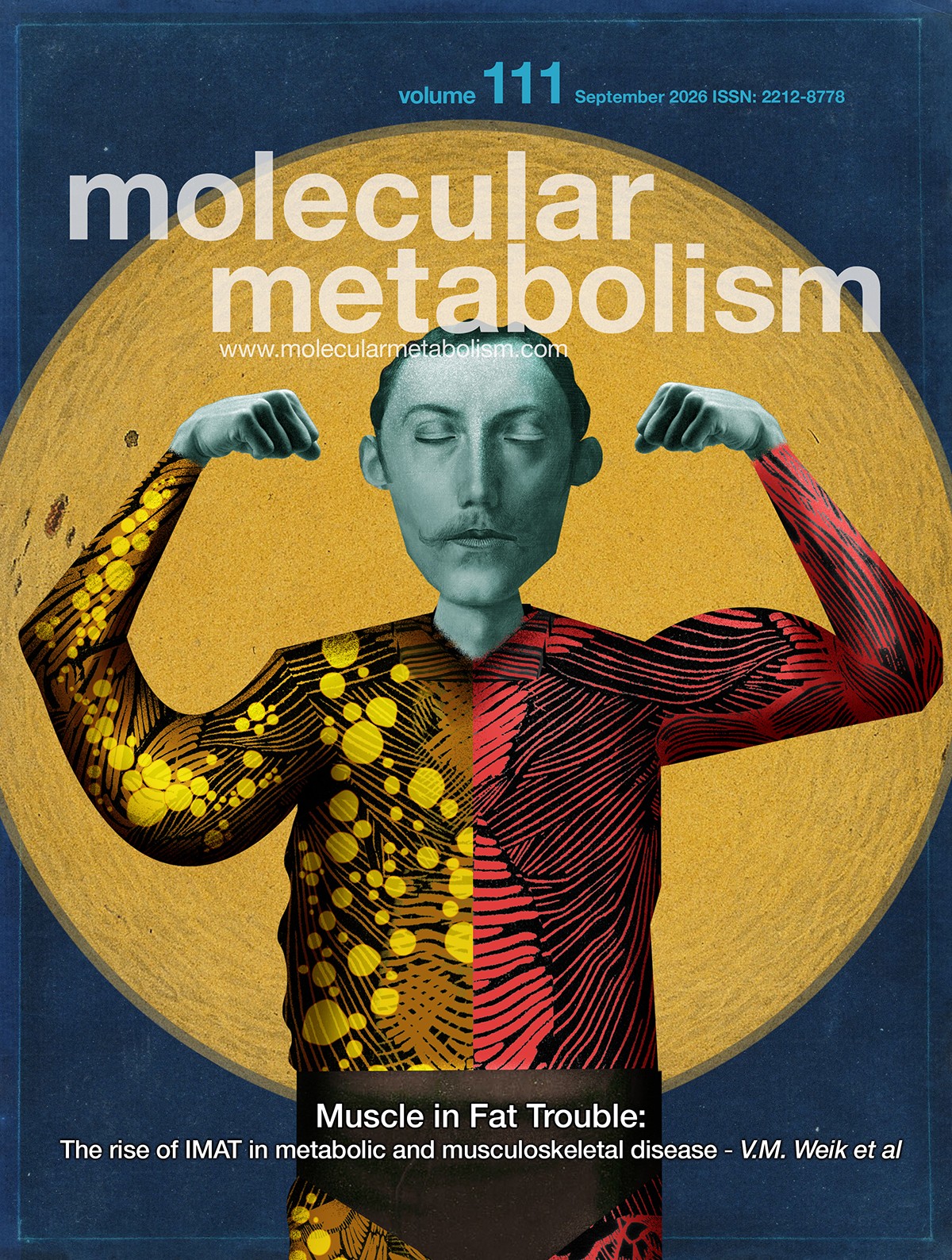
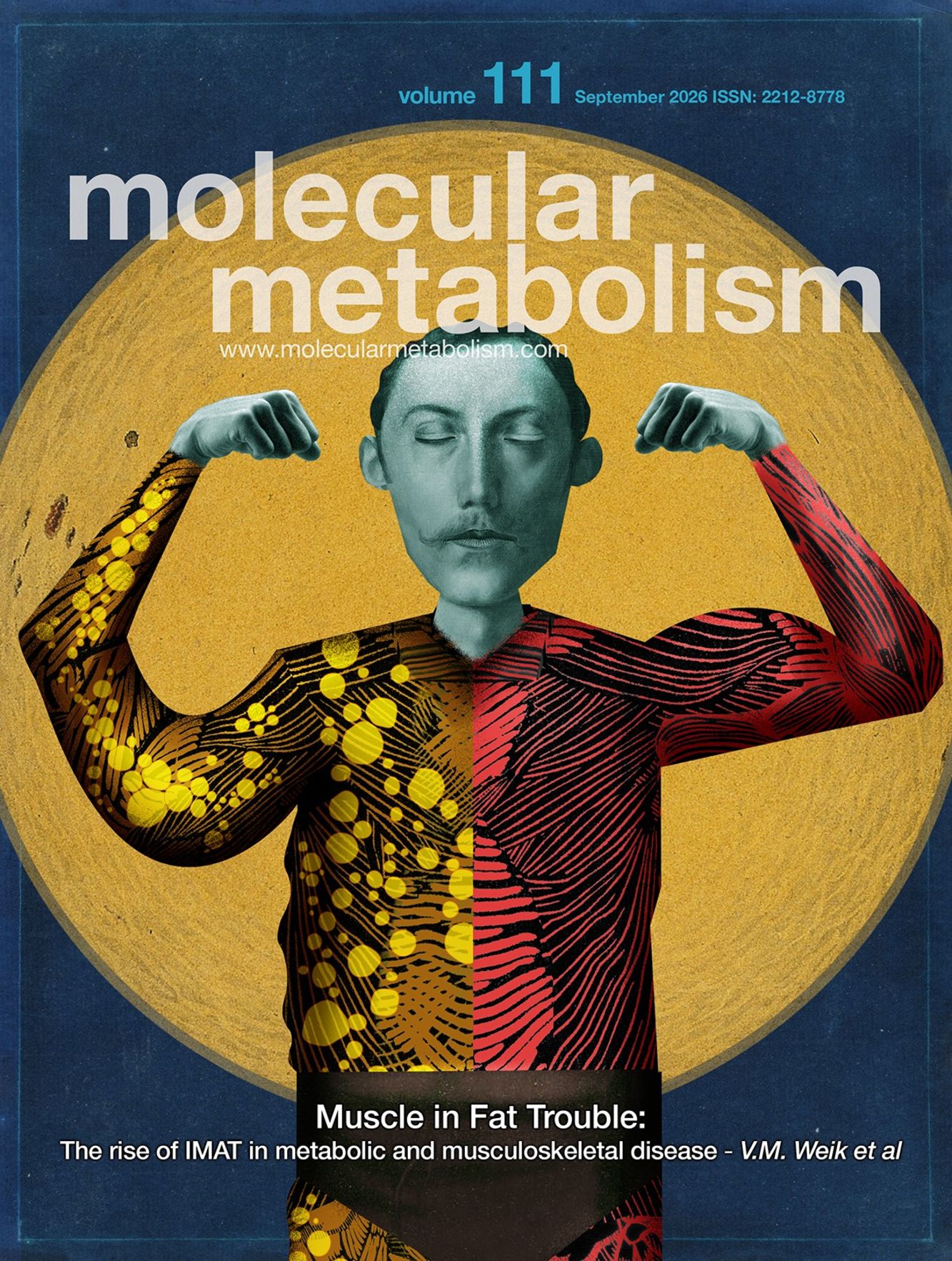
Skeletal muscle is the largest organ in the human body by mass, making up approximately 40 % of total body weight. Furthermore, it accounts for the majority of insulin-stimulated glucose uptake and is also highly involved in lipid metabolism. Lipids can accumulate in muscle through different distinct depots: as intramyocellular lipids (IMCL), stored as triglyceride-containing droplets within muscle cells and as intermuscular adipose tissue (IMAT), located between muscle fiber bundles beneath the deep muscle fascia. The muscular fat depots have been positively correlated with an increased body fat content in obesity, just like subcutaneous and visceral adipose tissue (SAT and VAT, respectively). IMCL, IMAT, VAT and SAT have additionally been linked to insulin resistance and type 2 diabetes mellitus (T2D).
Current Issue
Kynurenic acid derived from mesentery regulates mesenteritis and colitis via inducing white adipose browning in Crohn’s disease

Kynurenic acid derived from mesentery regulates mesenteritis and colitis via inducing white adipose browning in Crohn’s disease
Objective
Hypertrophied mesenteric adipose tissue (MAT) wrapped around the inflamed intestine, also known as creeping fat (CrF), is a classic pathological characteristic of Crohn’s disease (CD). Recent studies revealed that the abnormal mesentery in CD exhibits a white-to-beige transformation (known as white adipose browning), which may be a compensatory mechanism for disease attenuation. However, its underlying causes and mechanisms remain unknown.
Methods
The beige MAT samples from patients with CD and normal white MAT samples from patients without CD were collected, and targeted metabolome analysis was performed. Interleukin-10 gene knockout (IL-10−/−) and 2,4,6-trinitrobenzenesulphonic acid solution (TNBS)-induced colitis mice were used to evaluate the effects of kynurenic acid (KYNA) on mesenteritis and colitis. Mesenteric explants and adipocytes were collected and cultured to assess the effects of KYNA on adipose tissue browning and macrophage inflammation.
Results
Targeted metabolomic sequencing revealed that KYNA exhibited the highest level of upregulation in the beige MAT of CD, which was tightly correlated with the browning marker UCP-1, inflammatory factors, and adipokines. In vivo experiments demonstrated that KYNA triggered the white-to-beige transformation of MAT in IL-10−/− and TNBS-induced colitis mice, which further alleviated mesenteritis and colitis. Additionally, mesenteric explants and adipocytes displayed a browning phenotype with KYNA co-incubation, and their supernatants significantly induced M2 macrophage polarization and inhibited inflammation. Mechanistically, KYNA induced MAT browning and regulated disease procession of CD via GPR35-ERK1/2-PGC-1α signaling pathway.
Conclusions
This study provides novel insights into the browning transformation of the mesentery in CD and suggests a potential approach for clinical therapy.
Articles in Press
Kynurenic acid derived from mesentery regulates mesenteritis and colitis via inducing white adipose browning in Crohn’s disease
Kynurenic acid derived from mesentery regulates mesenteritis and colitis via inducing white adipose browning in Crohn’s disease
Objective
Hypertrophied mesenteric adipose tissue (MAT) wrapped around the inflamed intestine, also known as creeping fat (CrF), is a classic pathological characteristic of Crohn’s disease (CD). Recent studies revealed that the abnormal mesentery in CD exhibits a white-to-beige transformation (known as white adipose browning), which may be a compensatory mechanism for disease attenuation. However, its underlying causes and mechanisms remain unknown.
Methods
The beige MAT samples from patients with CD and normal white MAT samples from patients without CD were collected, and targeted metabolome analysis was performed. Interleukin-10 gene knockout (IL-10−/−) and 2,4,6-trinitrobenzenesulphonic acid solution (TNBS)-induced colitis mice were used to evaluate the effects of kynurenic acid (KYNA) on mesenteritis and colitis. Mesenteric explants and adipocytes were collected and cultured to assess the effects of KYNA on adipose tissue browning and macrophage inflammation.
Results
Targeted metabolomic sequencing revealed that KYNA exhibited the highest level of upregulation in the beige MAT of CD, which was tightly correlated with the browning marker UCP-1, inflammatory factors, and adipokines. In vivo experiments demonstrated that KYNA triggered the white-to-beige transformation of MAT in IL-10−/− and TNBS-induced colitis mice, which further alleviated mesenteritis and colitis. Additionally, mesenteric explants and adipocytes displayed a browning phenotype with KYNA co-incubation, and their supernatants significantly induced M2 macrophage polarization and inhibited inflammation. Mechanistically, KYNA induced MAT browning and regulated disease procession of CD via GPR35-ERK1/2-PGC-1α signaling pathway.
Conclusions
This study provides novel insights into the browning transformation of the mesentery in CD and suggests a potential approach for clinical therapy.
Registration still open - sign up now!

13th
Helmholtz Diabetes Conference
Munich, 21-23. Sep 2026

2024 impact factor: 6.6
You are what you eat
Here is a video of Vimeo. When the iframes is activated, a connection to Vimeo is established and, if necessary, cookies from Vimeo are also used. For further information on cookies policy click here.