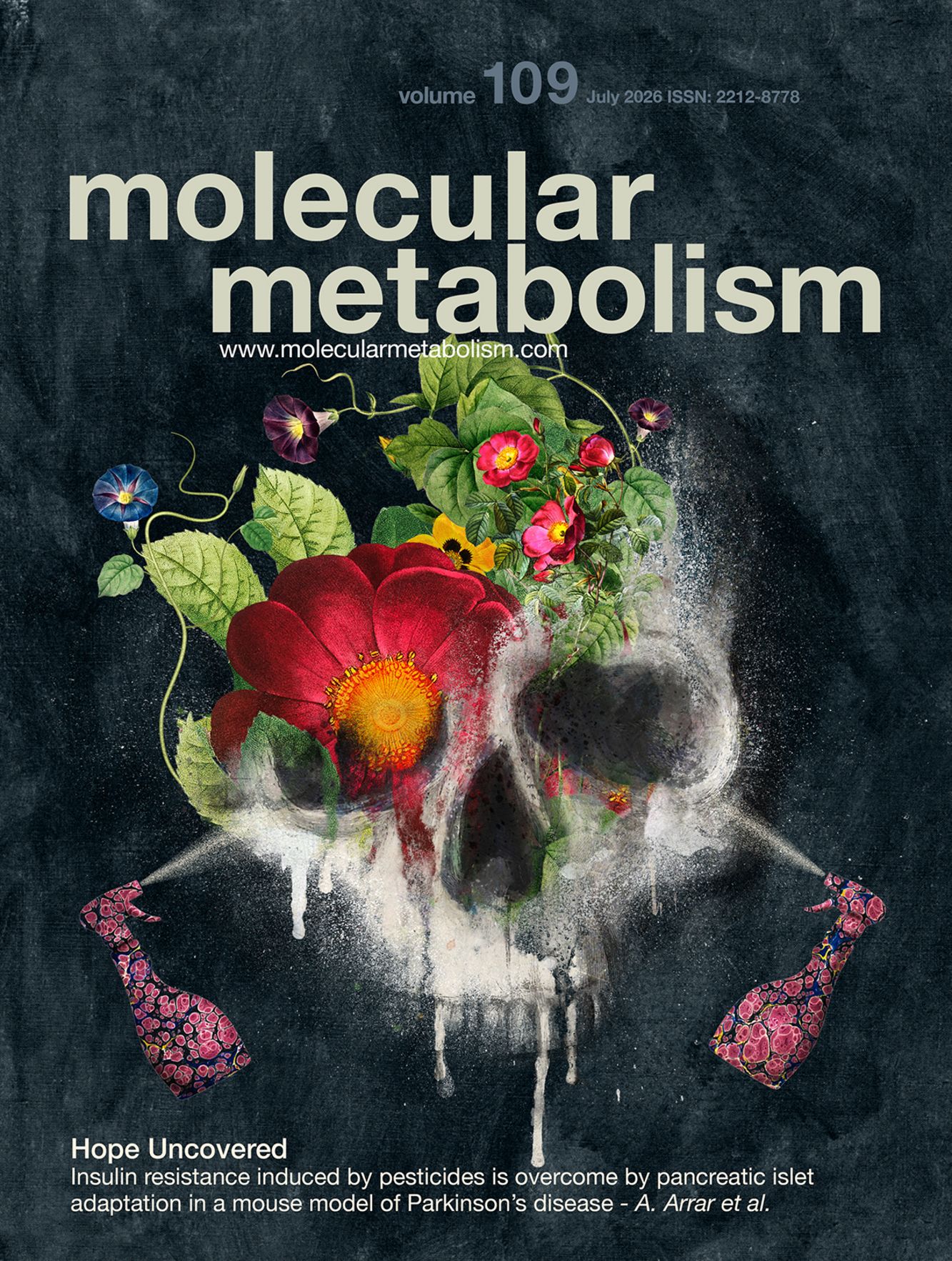
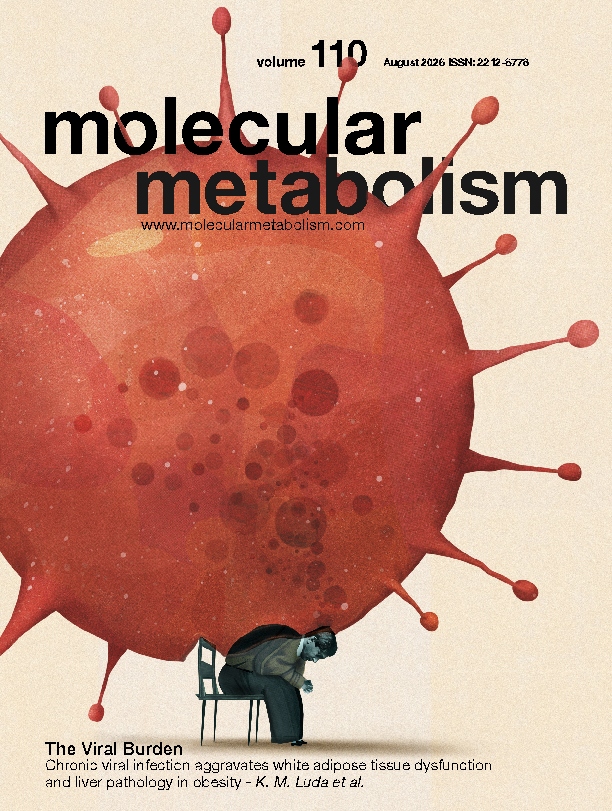
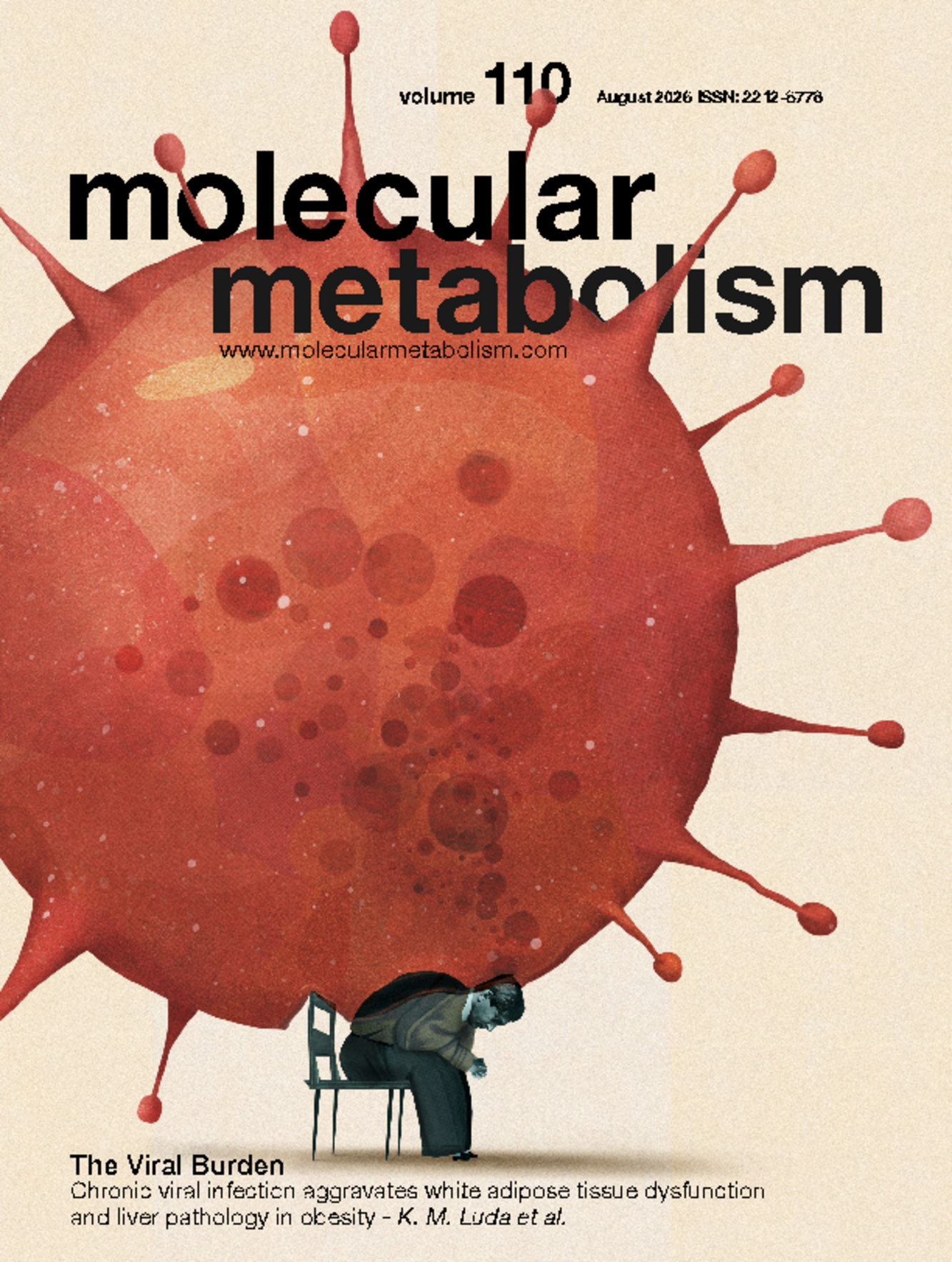
Cover Story Current Issue

Viral infections are recognized as contributing factors in the pathogenesis of metabolic diseases. Viruses causing chronic infection are particularly important due to their capacity to induce sustained inflammation. Especially individuals with obesity - who exhibit preexisting metabolic abnormalities, low-grade inflammation, and altered antiviral responses - are at increased risk of viral infection-induced metabolic complications. Despite these associations, the specific metabolic consequences of chronic viral infections in obesity remain insufficiently characterized.

Full text


Current Issue

Mice harboring the obesity-associated SNP rs1421085 exhibit increased body weight and reveal an IRX3 neuronal circuit regulating body weight

Andrew I. Sullivan, Kyle H. Flippo, Iltan Aklan, Kristin E. Claflin, ... Matthew J. Potthoff

Mice harboring the obesity-associated SNP rs1421085 exhibit increased body weight and reveal an IRX3 neuronal circuit regulating body weight


Objective

The single nucleotide polymorphism (SNP) rs1421085 has one of the highest associated risks with obesity of any SNP in the human genome. Through the generation of a novel mouse model harboring rs1421085 (OA-SNPrs142/rs142), we examined the impact of this SNP on energy balance. Furthermore, we investigated the role of IRX3, a potential mediator of the metabolic effects of rs1421085, in multiple brain regions.

Methods

To explore the impact and mechanisms of rs1421085, we monitored body weight, food intake, energy expenditure, and other metabolic parameters of OA-SNPrs142/rs142 mice under metabolic conditions similar to human obesogenic conditions (thermoneutral housing and 45% high fat diet). We additionally leveraged this model to investigate the impact of rs1421085 on genes that have been suggested to mediate the effects of this SNP on obesity. Finally, we used Irx3-Cre mice in combination with Cre-dependent AAV-Irx3 to determine if localized induction of IRX3 in neurons was sufficient to drive the energetic effects of rs1421085.

Results

OA-SNPrs142/rs142 mice are more susceptible to diet-induced obesity and have increased food intake and decreased energy expenditure under human obesogenic conditions. Additionally, OA-SNPrs142/rs142 mice have elevated Irx3 mRNA expression in the brain with prominent expression in metabolically relevant regions such as the posterior hypothalamus (PH) and dorsal vagal complex (DVC). Increased IRX3 in the PH, but not the DVC, resulted in a significant increase in body weight and food intake. Finally, we found that increased expression of IRX3, specifically in IRX3+ neurons, decreases excitability and activity of IRX3+ neurons in the PH but not the DVC. Interestingly, inhibition of IRX3+ PH neurons led to increased body weight and food intake.

Conclusions

These data demonstrate that OA-SNPrs142/rs142 mice recapitulate the body weight phenotype associated with rs1421085 in humans and that increased IRX3 in the posterior hypothalamus, as seen in OA-SNPrs142/rs142 mice, is sufficient to drive some of the metabolic effects of the SNP.


Articles in Press

Mice harboring the obesity-associated SNP rs1421085 exhibit increased body weight and reveal an IRX3 neuronal circuit regulating body weight

Andrew I. Sullivan, Kyle H. Flippo, Iltan Aklan, Kristin E. Claflin, ... Matthew J. Potthoff

Mice harboring the obesity-associated SNP rs1421085 exhibit increased body weight and reveal an IRX3 neuronal circuit regulating body weight


Objective

The single nucleotide polymorphism (SNP) rs1421085 has one of the highest associated risks with obesity of any SNP in the human genome. Through the generation of a novel mouse model harboring rs1421085 (OA-SNPrs142/rs142), we examined the impact of this SNP on energy balance. Furthermore, we investigated the role of IRX3, a potential mediator of the metabolic effects of rs1421085, in multiple brain regions.

Methods

To explore the impact and mechanisms of rs1421085, we monitored body weight, food intake, energy expenditure, and other metabolic parameters of OA-SNPrs142/rs142 mice under metabolic conditions similar to human obesogenic conditions (thermoneutral housing and 45% high fat diet). We additionally leveraged this model to investigate the impact of rs1421085 on genes that have been suggested to mediate the effects of this SNP on obesity. Finally, we used Irx3-Cre mice in combination with Cre-dependent AAV-Irx3 to determine if localized induction of IRX3 in neurons was sufficient to drive the energetic effects of rs1421085.

Results

OA-SNPrs142/rs142 mice are more susceptible to diet-induced obesity and have increased food intake and decreased energy expenditure under human obesogenic conditions. Additionally, OA-SNPrs142/rs142 mice have elevated Irx3 mRNA expression in the brain with prominent expression in metabolically relevant regions such as the posterior hypothalamus (PH) and dorsal vagal complex (DVC). Increased IRX3 in the PH, but not the DVC, resulted in a significant increase in body weight and food intake. Finally, we found that increased expression of IRX3, specifically in IRX3+ neurons, decreases excitability and activity of IRX3+ neurons in the PH but not the DVC. Interestingly, inhibition of IRX3+ PH neurons led to increased body weight and food intake.

Conclusions

These data demonstrate that OA-SNPrs142/rs142 mice recapitulate the body weight phenotype associated with rs1421085 in humans and that increased IRX3 in the posterior hypothalamus, as seen in OA-SNPrs142/rs142 mice, is sufficient to drive some of the metabolic effects of the SNP.


Early Bird Registration extended until 16 Aug!

13th
Helmholtz Diabetes Conference 

Munich, 21-23. Sep 2026                                                                                                                             

2024 impact factor: 6.6

You are what you eat

Here is a video of Vimeo. When the iframes is activated, a connection to Vimeo is established and, if necessary, cookies from Vimeo are also used. For further information on cookies policy click here.

Auf Werbeinhalte, die vor, während oder nach Videos von WEBSITE-URL eingeblendet werden, hat WEBSITE-URL keinen Einfluss. Wir übernehmen keine Gewähr für diese Inhalte. Weitere Informationen finden Sie hier.