
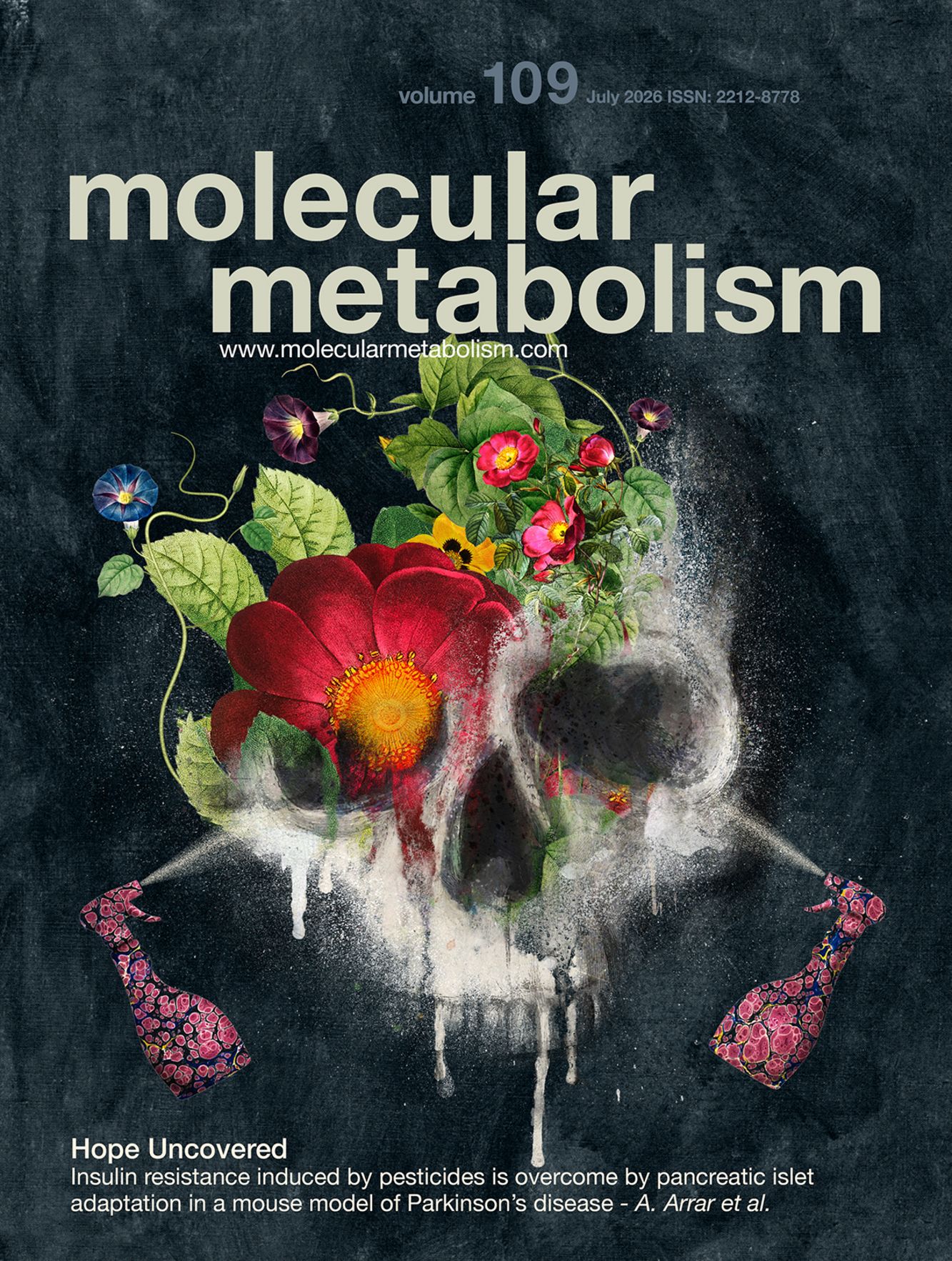


Cover Story Current Issue
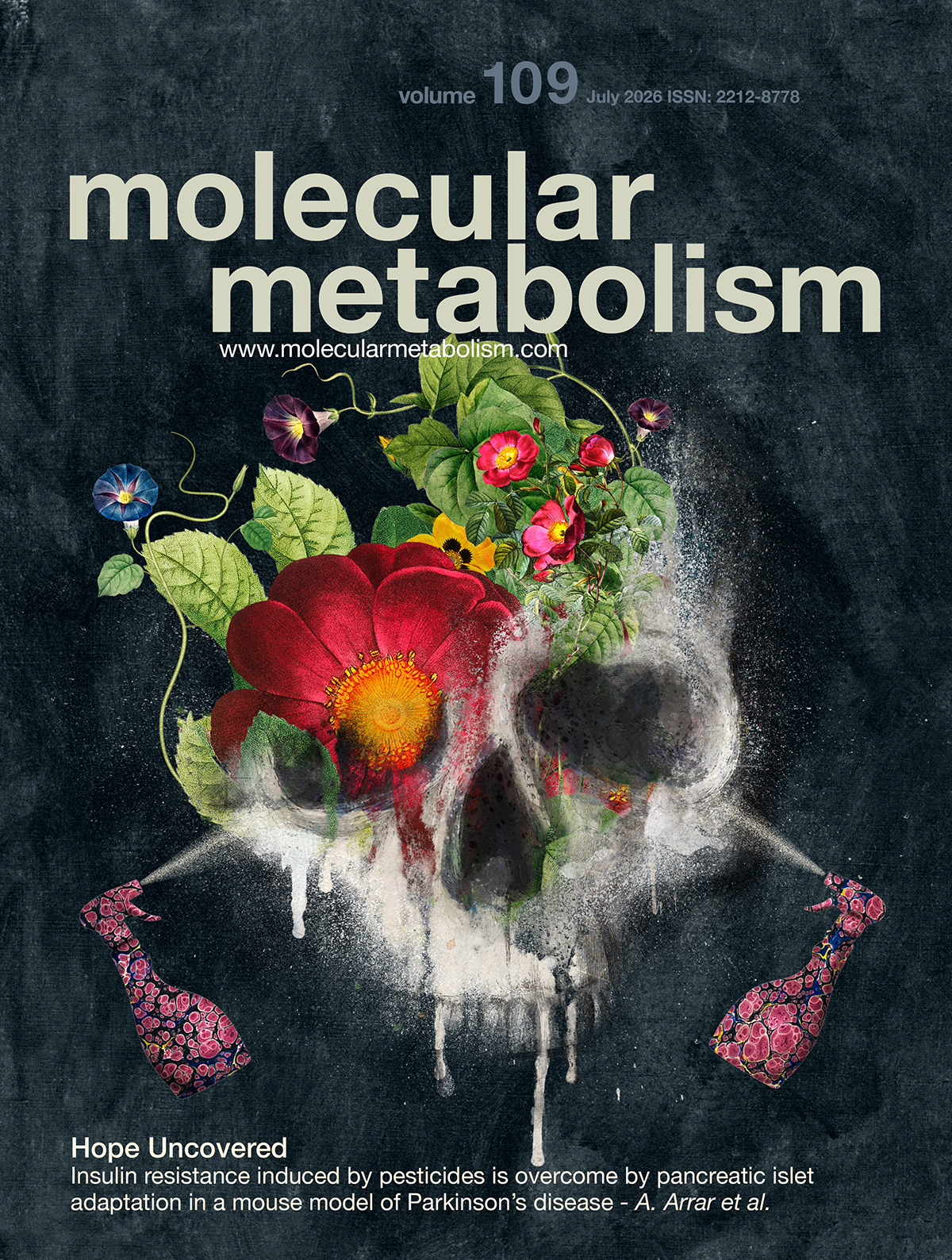
Epidemiological evidences provide proof of concept that certain pesticides are involved in metabolic disorders, but also in the pathophysiology of Parkinson's disease (PD). In addition, large prospective cohort studies reported that type 2 diabetes (T2D) and PD are epidemiologically associated, including an elevated risk of developing PD in patients with T2D.
Current Issue
Insulin evokes release of endozepines from astrocytes of the NTS to modulate glucose metabolism in male rats

Insulin evokes release of endozepines from astrocytes of the NTS to modulate glucose metabolism in male rats
The central nervous system (CNS) plays a key role in regulating metabolic functions, but conditions like obesity and diabetes can disrupt this balance. Within the CNS, the nucleus of the solitary tract (NTS) in the dorsal vagal complex (DVC) senses insulin and regulates feeding behaviour and hepatic glucose production. However, we still know little about which cells in the NTS are sensitive to insulin. We show that in male rats insulin receptors in astrocytes are crucial for the NTS's ability to regulate glucose production in the liver. We demonstrate that insulin evokes the release of endozepines from primary astrocytes and direct infusion of endozepines into the NTS mimics the effects of insulin. Inhibition of the benzodiazepine binding site of GABAA receptors prevents action of both insulin and endozepines. The effect of endozepines within the NTS is mimicked by GABAA antagonists and prevented by an agonist, suggesting that insulin prompts astrocytes to release endozepines, which then attenuate GABAA receptor activity, ultimately reducing glucose production in the liver. We also show that high-fat-diet-induced insulin resistance in the NTS can be circumvented by endozepine administration.
Our study is the first to show that insulin–dependent release of endozepines from NTS-astrocytes is fundamental to control blood glucose levels.
Articles in Press
Insulin evokes release of endozepines from astrocytes of the NTS to modulate glucose metabolism in male rats
Insulin evokes release of endozepines from astrocytes of the NTS to modulate glucose metabolism in male rats
The central nervous system (CNS) plays a key role in regulating metabolic functions, but conditions like obesity and diabetes can disrupt this balance. Within the CNS, the nucleus of the solitary tract (NTS) in the dorsal vagal complex (DVC) senses insulin and regulates feeding behaviour and hepatic glucose production. However, we still know little about which cells in the NTS are sensitive to insulin. We show that in male rats insulin receptors in astrocytes are crucial for the NTS's ability to regulate glucose production in the liver. We demonstrate that insulin evokes the release of endozepines from primary astrocytes and direct infusion of endozepines into the NTS mimics the effects of insulin. Inhibition of the benzodiazepine binding site of GABAA receptors prevents action of both insulin and endozepines. The effect of endozepines within the NTS is mimicked by GABAA antagonists and prevented by an agonist, suggesting that insulin prompts astrocytes to release endozepines, which then attenuate GABAA receptor activity, ultimately reducing glucose production in the liver. We also show that high-fat-diet-induced insulin resistance in the NTS can be circumvented by endozepine administration.
Our study is the first to show that insulin–dependent release of endozepines from NTS-astrocytes is fundamental to control blood glucose levels.
Registration & Abstract Submission are open!

13th
Helmholtz Diabetes Conference
Munich, 21-23. Sep 2026

2024 impact factor: 6.6
You are what you eat
Here is a video of Vimeo. When the iframes is activated, a connection to Vimeo is established and, if necessary, cookies from Vimeo are also used. For further information on cookies policy click here.