


Cover Story Current Issue
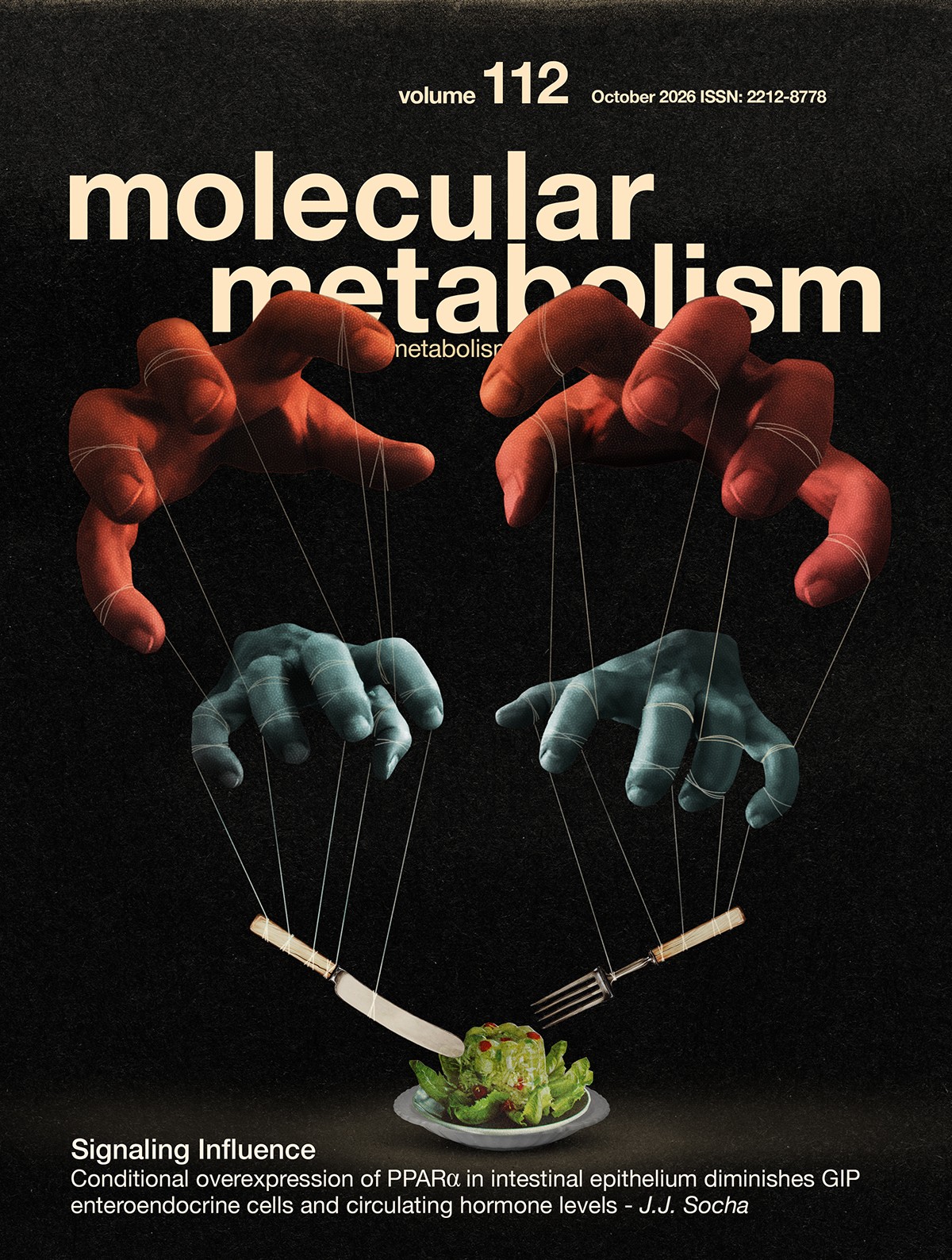
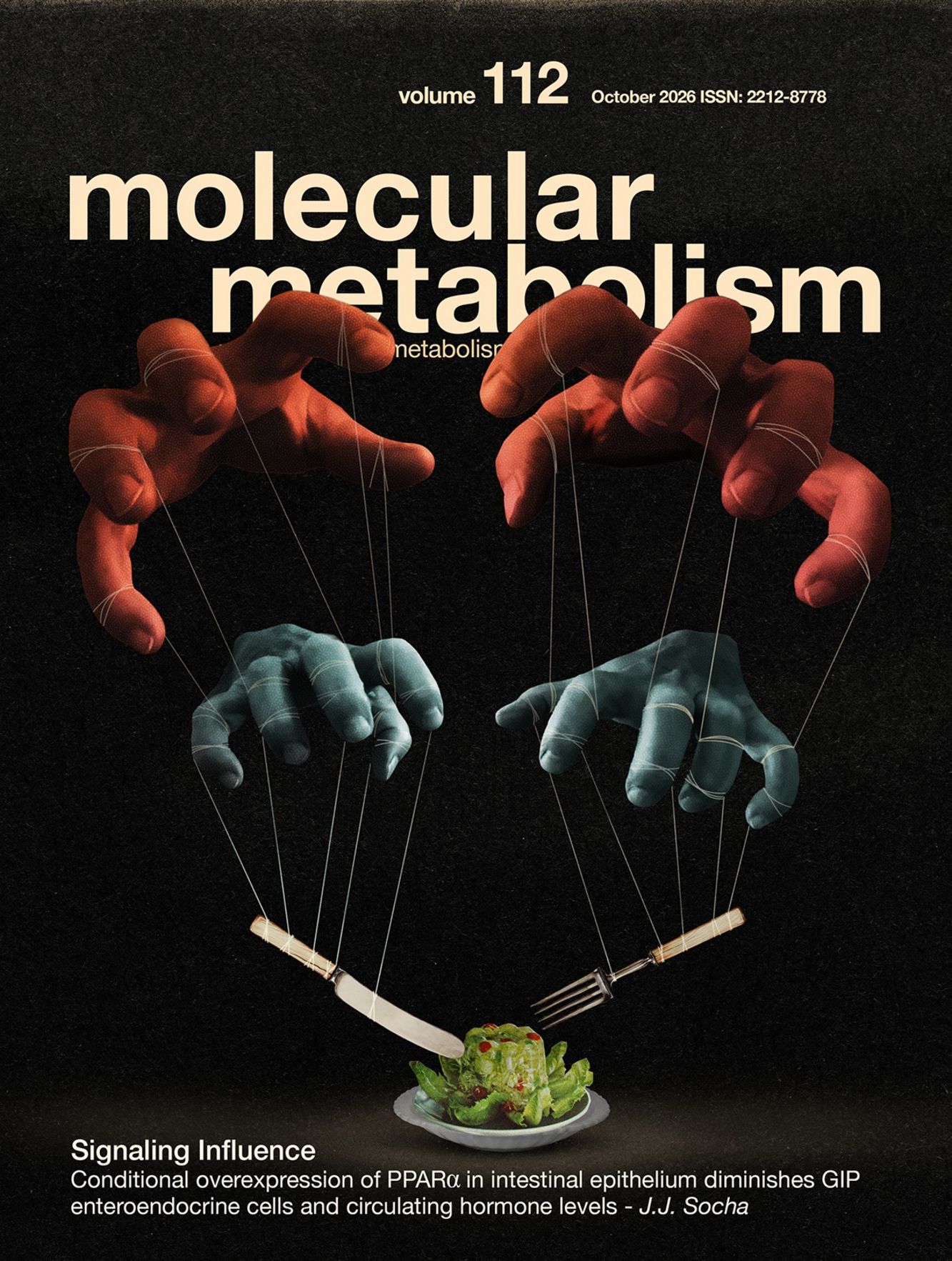
The small intestine, as the primary site of nutrient absorption, integrates signals from dietary components and gut microbiota to coordinate systemic energy balance, metabolism, and glucose homeostasis alongside other tissues such as the pancreas, liver, and brain. Nuclear receptors represent one mechanism by which the intestinal epithelium senses and respond to dietary signals via transcriptional regulation of metabolic programs. The Peroxisome Proliferator Activated Receptors (PPARs), including PPARα, PPARδ, and PPARγ, are lipid-responsive nuclear hormone receptors. PPAR transcriptional activity is highly context-dependent, shaped by the availability and affinity of their lipid ligands and co-regulators as well as by cell and tissue types. Whereas PPARγ and PPARδ are established regulators of glucose homeostasis, acting in white adipose tissue, skeletal muscle, and liver to improve insulin sensitivity, PPARα has been primarily associated with hepatic lipid metabolism, where it promotes fatty acid transport, β-oxidation, and ketogenesis. Due to their roles in lipid metabolism and anti-inflammatory processes, selective PPAR agonists are being actively pursued as therapies in clinical and pre-clinical studies for metabolic diseases. Thus, it is critical to improve our understanding of the context-specific and tissue-specific effects of PPAR signaling.
Current Issue
Suppression of adipocyte ABHD6 favors anti-inflammatory and adipogenic programs to preserve adipose tissue fitness in obesity

Suppression of adipocyte ABHD6 favors anti-inflammatory and adipogenic programs to preserve adipose tissue fitness in obesity
Some individuals exhibit metabolically healthy obesity, characterized by the expansion of white adipose tissue (WAT) without associated complications. The monoacylglycerol (MAG) hydrolase α/β-hydrolase domain-containing 6 (ABHD6) has been implicated in energy metabolism, with its global deletion conferring protection against obesity. However, the immunometabolic roles of adipocyte ABHD6 in WAT remodeling in response to nutri-stress and obesity are not known. Here, we demonstrate that in insulin resistant women, ABHD6 mRNA expression is elevated in visceral fat and positively correlates with obesity and metabolic dysregulation. ABHD6 expression is also elevated in the WATs of diet-induced obese and db/db mice. Although adipocyte-specific ABHD6 knockout (AA-KO) mice become obese under high-fat diet, they show higher plasma adiponectin, reduced circulating insulin and inflammatory markers, improved insulin sensitivity, and lower plasma and liver triglycerides. They also show enhanced insulin action in various tissues, but normal glucose tolerance. In addition, AA-KO mice display healthier and less inflamed expansion of visceral fat, with smaller adipocytes and higher stimulated lipolysis and fatty acid oxidation levels. Similar but less prominent phenotype was found in the subcutaneous and brown fat depots. Thus, adipocyte ABHD6 suppression prevents most of the metabolic and inflammatory complications of obesity, but not obesity per se. Mechanistically, this beneficial process involves a rise in MAG levels in mature adipocytes, and their secretion, resulting in a crosstalk among adipocytes, preadipocytes and macrophages in the adipose microenvironment. Elevated intracellular MAG causes PPARs activation in adipocytes, and MAG secreted from adipocytes curtails the inflammatory polarization of macrophages and promotes preadipocyte differentiation. Hence, adipocyte ABHD6 and MAG hydrolysis contribute to unhealthy WAT remodeling and expansion in obesity, and its suppression represents a candidate strategy to uncouple obesity from many of its immunometabolic complications.
Articles in Press
Suppression of adipocyte ABHD6 favors anti-inflammatory and adipogenic programs to preserve adipose tissue fitness in obesity
Suppression of adipocyte ABHD6 favors anti-inflammatory and adipogenic programs to preserve adipose tissue fitness in obesity
Some individuals exhibit metabolically healthy obesity, characterized by the expansion of white adipose tissue (WAT) without associated complications. The monoacylglycerol (MAG) hydrolase α/β-hydrolase domain-containing 6 (ABHD6) has been implicated in energy metabolism, with its global deletion conferring protection against obesity. However, the immunometabolic roles of adipocyte ABHD6 in WAT remodeling in response to nutri-stress and obesity are not known. Here, we demonstrate that in insulin resistant women, ABHD6 mRNA expression is elevated in visceral fat and positively correlates with obesity and metabolic dysregulation. ABHD6 expression is also elevated in the WATs of diet-induced obese and db/db mice. Although adipocyte-specific ABHD6 knockout (AA-KO) mice become obese under high-fat diet, they show higher plasma adiponectin, reduced circulating insulin and inflammatory markers, improved insulin sensitivity, and lower plasma and liver triglycerides. They also show enhanced insulin action in various tissues, but normal glucose tolerance. In addition, AA-KO mice display healthier and less inflamed expansion of visceral fat, with smaller adipocytes and higher stimulated lipolysis and fatty acid oxidation levels. Similar but less prominent phenotype was found in the subcutaneous and brown fat depots. Thus, adipocyte ABHD6 suppression prevents most of the metabolic and inflammatory complications of obesity, but not obesity per se. Mechanistically, this beneficial process involves a rise in MAG levels in mature adipocytes, and their secretion, resulting in a crosstalk among adipocytes, preadipocytes and macrophages in the adipose microenvironment. Elevated intracellular MAG causes PPARs activation in adipocytes, and MAG secreted from adipocytes curtails the inflammatory polarization of macrophages and promotes preadipocyte differentiation. Hence, adipocyte ABHD6 and MAG hydrolysis contribute to unhealthy WAT remodeling and expansion in obesity, and its suppression represents a candidate strategy to uncouple obesity from many of its immunometabolic complications.

2025 Impact Factor: 6.3
You are what you eat
Here is a video of Vimeo. When the iframes is activated, a connection to Vimeo is established and, if necessary, cookies from Vimeo are also used. For further information on cookies policy click here.