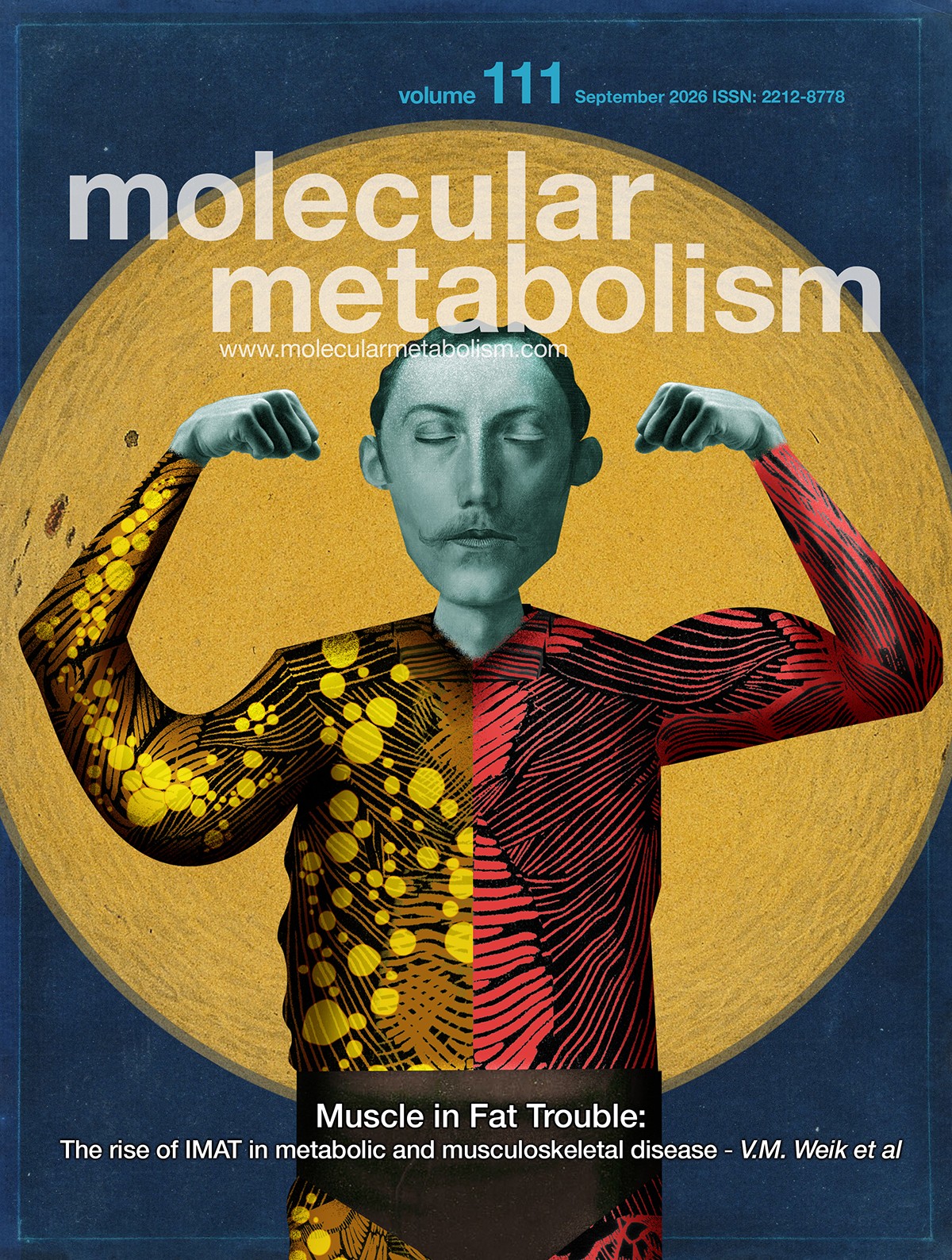
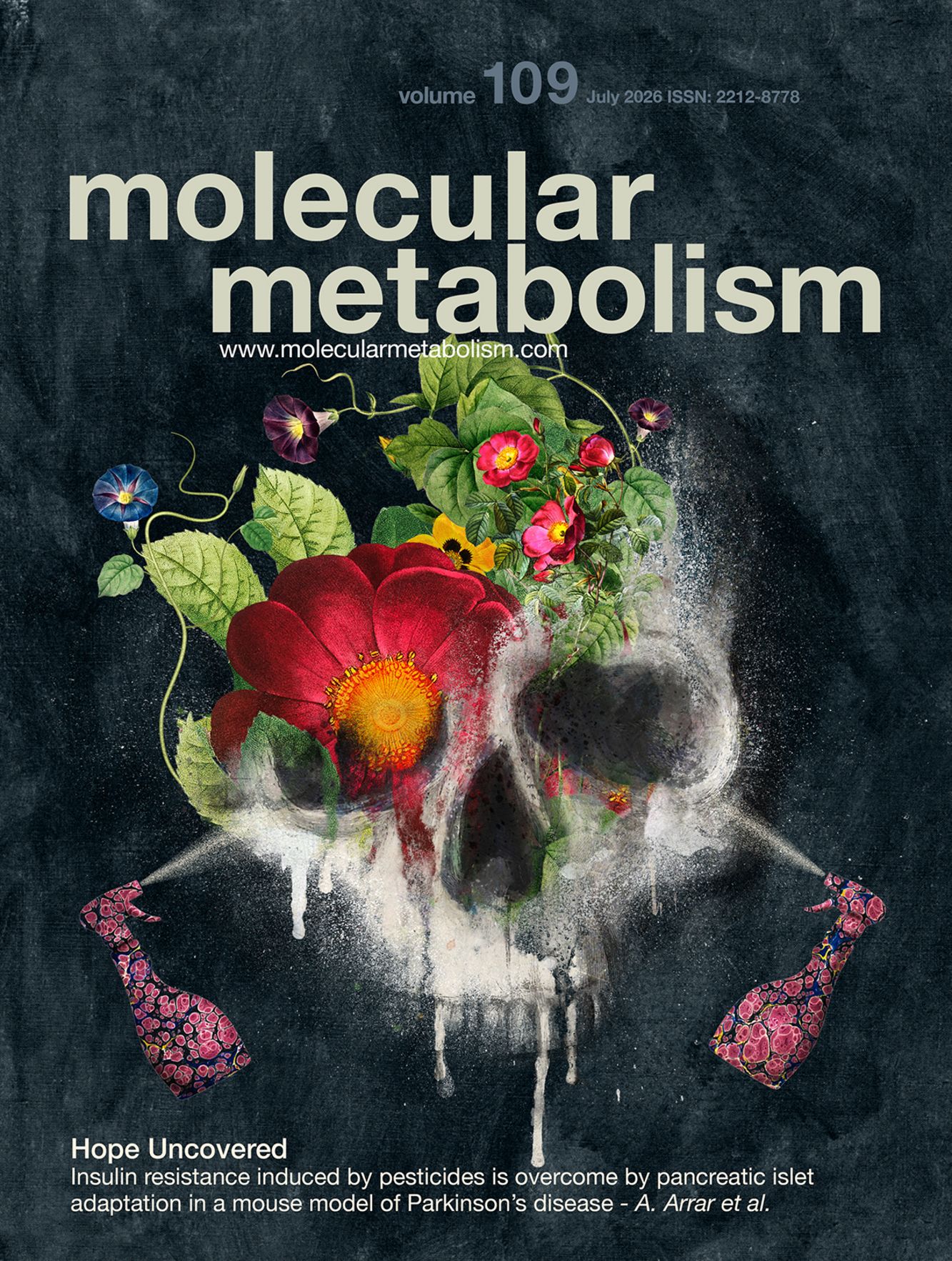
Cover Story Current Issue

The pancreas is a mixed gland primarily composed of exocrine tissue, which secretes digestive enzymes into the digestive tract, and an endocrine component organized into small clusters known as islets of Langerhans, constituting approximately 1% of the pancreatic mass. Each adult islet contains an average of 1,500 cells, including beta-, alpha- and delta-cells, which produce and secrete insulin (INS), glucagon (GCG), and somatostatin (SST) respectively. The destruction of insulin-producing beta-cells or the defective insulin secretion give rise to type 1 and type 2 diabetes mellitus, respectively. These chronic metabolic disorders are characterized by the dysregulation of glucose homeostasis. 

Full text


Current Issue

Constructing chimeric mouse islets to study alpha- and delta-cell influence on beta-cell feature

Alexis Fouque, Masaya Oshima, Nina Mode, Romain Ducellier, ... Raphaël Scharfmann

Constructing chimeric mouse islets to study alpha- and delta-cell influence on beta-cell feature


Objectives

This study aimed to evaluate the role of alpha- and delta-cell signals on beta-cells within pancreatic mouse islets. Specifically, we investigated how these signals regulate glucose sensitivity, gene expression and function in beta-cells.

Methods

We first implemented our previous protocol to FACS purify alpha-, beta-, and delta-cells by adding CD81 as a positive marker for alpha-cells. We next developed an approach to reaggregate these sorted cell populations, creating chimeric islets with different proportions of each endocrine cell type. We used these chimeric islets to study the effect of alpha- and delta-cells on glucose sensitivity, gene expression and function in beta-cells.

Results

We generated chimeric islets containing either all three endocrine cell types, alpha- + beta-cells or only beta-cells. We demonstrate that beta-cell glucose sensitivity and identity are independent of signals from alpha- and delta-cells. We identified a subset of genes including Pro-dynorphin, Fumarate hydratase and Txnip whose expression in beta-cells depends on alpha-cells signals acting through the glucagon- and glucagon-like peptide receptors. Finally, we demonstrated that in mouse beta-cell, KCl-mediated insulin secretion relies on an activation of the glucagon-receptor, while glucose-stimulated insulin secretion depends on glucagon-like peptide receptor activation.

Conclusions

We developed an innovative and easy-to-use model to reconstruct chimeric islets containing different frequencies of alpha-, beta- and delta-cells. Through this approach, we provide new insights into the complex regulatory mechanisms governing the role of alpha and delta cells on beta-cell features within islets.


Articles in Press

Constructing chimeric mouse islets to study alpha- and delta-cell influence on beta-cell feature

Alexis Fouque, Masaya Oshima, Nina Mode, Romain Ducellier, ... Raphaël Scharfmann

Constructing chimeric mouse islets to study alpha- and delta-cell influence on beta-cell feature


Objectives

This study aimed to evaluate the role of alpha- and delta-cell signals on beta-cells within pancreatic mouse islets. Specifically, we investigated how these signals regulate glucose sensitivity, gene expression and function in beta-cells.

Methods

We first implemented our previous protocol to FACS purify alpha-, beta-, and delta-cells by adding CD81 as a positive marker for alpha-cells. We next developed an approach to reaggregate these sorted cell populations, creating chimeric islets with different proportions of each endocrine cell type. We used these chimeric islets to study the effect of alpha- and delta-cells on glucose sensitivity, gene expression and function in beta-cells.

Results

We generated chimeric islets containing either all three endocrine cell types, alpha- + beta-cells or only beta-cells. We demonstrate that beta-cell glucose sensitivity and identity are independent of signals from alpha- and delta-cells. We identified a subset of genes including Pro-dynorphin, Fumarate hydratase and Txnip whose expression in beta-cells depends on alpha-cells signals acting through the glucagon- and glucagon-like peptide receptors. Finally, we demonstrated that in mouse beta-cell, KCl-mediated insulin secretion relies on an activation of the glucagon-receptor, while glucose-stimulated insulin secretion depends on glucagon-like peptide receptor activation.

Conclusions

We developed an innovative and easy-to-use model to reconstruct chimeric islets containing different frequencies of alpha-, beta- and delta-cells. Through this approach, we provide new insights into the complex regulatory mechanisms governing the role of alpha and delta cells on beta-cell features within islets.


2022 impact factor: 6.6

You are what you eat

Here is a video of Vimeo. When the iframes is activated, a connection to Vimeo is established and, if necessary, cookies from Vimeo are also used. For further information on cookies policy click here.

Auf Werbeinhalte, die vor, während oder nach Videos von WEBSITE-URL eingeblendet werden, hat WEBSITE-URL keinen Einfluss. Wir übernehmen keine Gewähr für diese Inhalte. Weitere Informationen finden Sie hier.