



Cover Story Current Issue
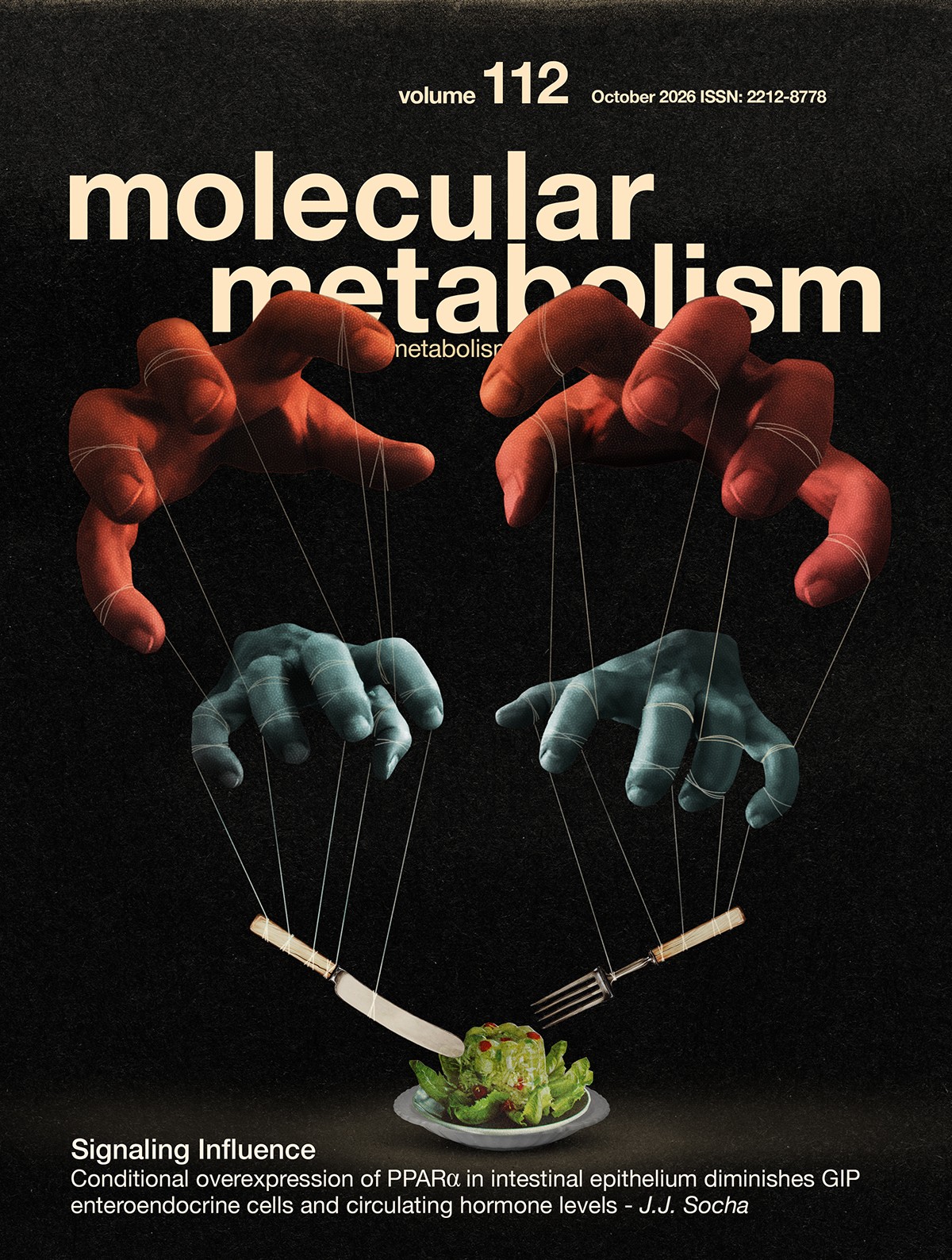
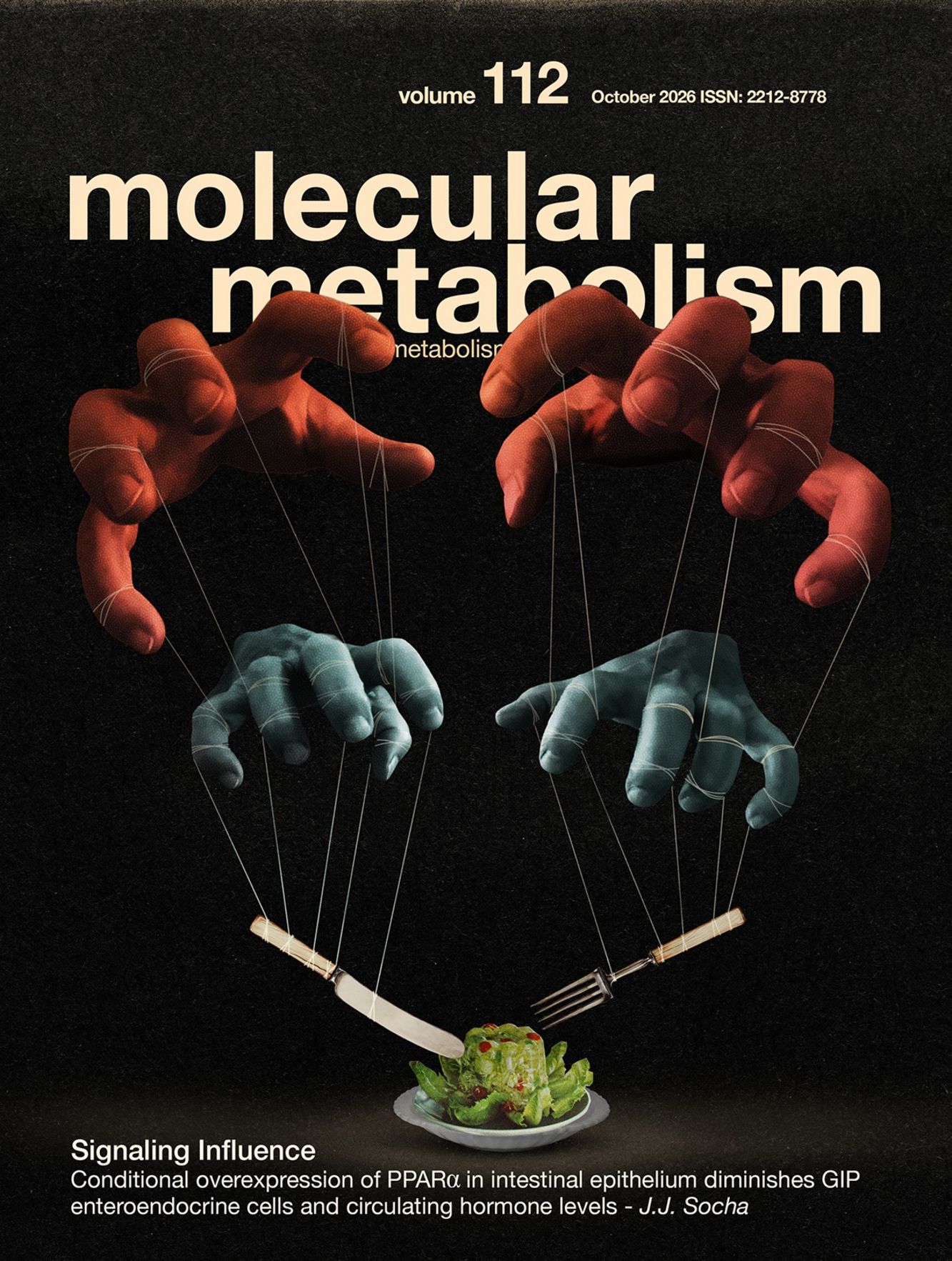
The small intestine, as the primary site of nutrient absorption, integrates signals from dietary components and gut microbiota to coordinate systemic energy balance, metabolism, and glucose homeostasis alongside other tissues such as the pancreas, liver, and brain. Nuclear receptors represent one mechanism by which the intestinal epithelium senses and respond to dietary signals via transcriptional regulation of metabolic programs. The Peroxisome Proliferator Activated Receptors (PPARs), including PPARα, PPARδ, and PPARγ, are lipid-responsive nuclear hormone receptors. PPAR transcriptional activity is highly context-dependent, shaped by the availability and affinity of their lipid ligands and co-regulators as well as by cell and tissue types. Whereas PPARγ and PPARδ are established regulators of glucose homeostasis, acting in white adipose tissue, skeletal muscle, and liver to improve insulin sensitivity, PPARα has been primarily associated with hepatic lipid metabolism, where it promotes fatty acid transport, β-oxidation, and ketogenesis. Due to their roles in lipid metabolism and anti-inflammatory processes, selective PPAR agonists are being actively pursued as therapies in clinical and pre-clinical studies for metabolic diseases. Thus, it is critical to improve our understanding of the context-specific and tissue-specific effects of PPAR signaling.
Current Issue
Cross-species studies implicate the melanocortin 3 receptor more strongly in the control of pubertal development than energy balance

Cross-species studies implicate the melanocortin 3 receptor more strongly in the control of pubertal development than energy balance
Hypothalamic neurons expressing either POMC or AGRP sense nutritional state directly and indirectly and transmit these neuropeptide signals to other brain centres through the melanocortin 3 and 4 receptors. MC4R is primarily concerned with the control of appetite and energy expenditure while MC3R is more closely related to the control of linear growth and the timing of puberty. The role of MC3R in the long-term control of energy balance and body composition is less clear, particularly in humans. We have undertaken studies in humans, domestic dogs and mice with the goal of clarifying the relative impact of MC3R deficiency on energy balance, growth and sexual development. By studying three large consanguineously enriched cohorts, totalling approximately 300K people, we identified nine individuals who are homozygous for functionally null MC3R variants. The body mass index (BMI) of the homozygous MC3R variant carriers was not significantly different from that of age, sex and demographically matched controls, with six of the nine homozygotes having a BMI <30 kg/m2.
We detected a canine MC3R missense variant (p.M320I) which is common in labrador retrievers and showed that this significantly impairs receptor signalling. Dogs homozygous for p.M320I were lighter and showed delayed pubertal development but were not significantly more obese than wild-type or heterozygous dogs. We also established that the lack of Mc3r delayed pubertal development in both male and female mice.
Finally, we studied growth and pubertal trajectories of individuals carrying rare loss-of-function MC3R variants and found that male carriers had delayed peak weight velocity and genital development but had no evidence for excess body fat compared to non-carriers.
Our results support MC3R having a conserved role across mammals in controlling growth and pubertal timing. While MC3R deficiency may influence linear growth and body composition, complete loss of MC3R does not result in a penetrant human obesity syndrome.
Articles in Press
Cross-species studies implicate the melanocortin 3 receptor more strongly in the control of pubertal development than energy balance
Cross-species studies implicate the melanocortin 3 receptor more strongly in the control of pubertal development than energy balance
Hypothalamic neurons expressing either POMC or AGRP sense nutritional state directly and indirectly and transmit these neuropeptide signals to other brain centres through the melanocortin 3 and 4 receptors. MC4R is primarily concerned with the control of appetite and energy expenditure while MC3R is more closely related to the control of linear growth and the timing of puberty. The role of MC3R in the long-term control of energy balance and body composition is less clear, particularly in humans. We have undertaken studies in humans, domestic dogs and mice with the goal of clarifying the relative impact of MC3R deficiency on energy balance, growth and sexual development. By studying three large consanguineously enriched cohorts, totalling approximately 300K people, we identified nine individuals who are homozygous for functionally null MC3R variants. The body mass index (BMI) of the homozygous MC3R variant carriers was not significantly different from that of age, sex and demographically matched controls, with six of the nine homozygotes having a BMI <30 kg/m2.
We detected a canine MC3R missense variant (p.M320I) which is common in labrador retrievers and showed that this significantly impairs receptor signalling. Dogs homozygous for p.M320I were lighter and showed delayed pubertal development but were not significantly more obese than wild-type or heterozygous dogs. We also established that the lack of Mc3r delayed pubertal development in both male and female mice.
Finally, we studied growth and pubertal trajectories of individuals carrying rare loss-of-function MC3R variants and found that male carriers had delayed peak weight velocity and genital development but had no evidence for excess body fat compared to non-carriers.
Our results support MC3R having a conserved role across mammals in controlling growth and pubertal timing. While MC3R deficiency may influence linear growth and body composition, complete loss of MC3R does not result in a penetrant human obesity syndrome.

2025 Impact Factor: 6.3
You are what you eat
Here is a video of Vimeo. When the iframes is activated, a connection to Vimeo is established and, if necessary, cookies from Vimeo are also used. For further information on cookies policy click here.