


Cover Story Current Issue
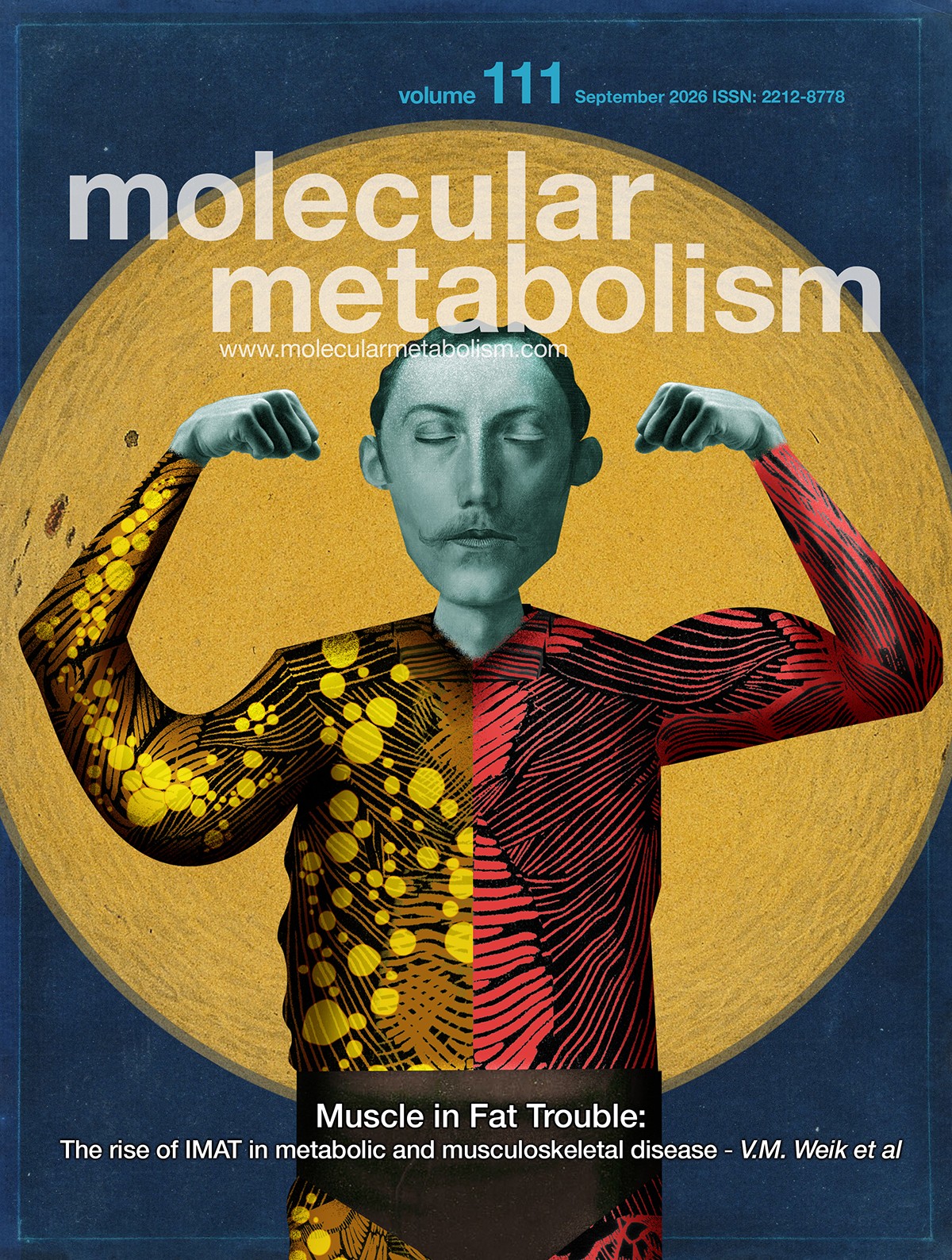
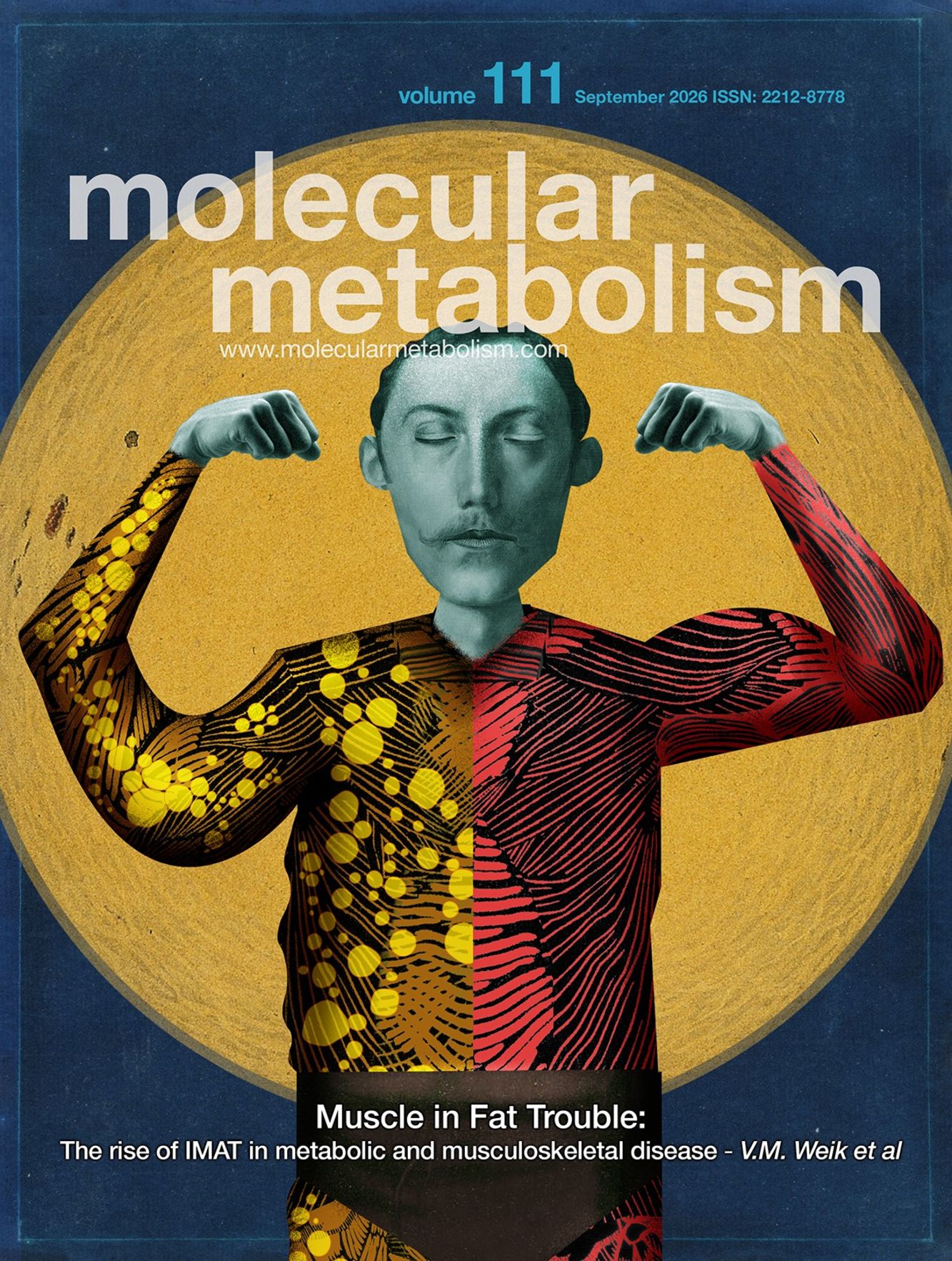
Skeletal muscle is the largest organ in the human body by mass, making up approximately 40 % of total body weight. Furthermore, it accounts for the majority of insulin-stimulated glucose uptake and is also highly involved in lipid metabolism. Lipids can accumulate in muscle through different distinct depots: as intramyocellular lipids (IMCL), stored as triglyceride-containing droplets within muscle cells and as intermuscular adipose tissue (IMAT), located between muscle fiber bundles beneath the deep muscle fascia. The muscular fat depots have been positively correlated with an increased body fat content in obesity, just like subcutaneous and visceral adipose tissue (SAT and VAT, respectively). IMCL, IMAT, VAT and SAT have additionally been linked to insulin resistance and type 2 diabetes mellitus (T2D).
Current Issue
Protein kinase D deficiency induces a senescence-like phenotype in β-cells and improves glucose and insulin tolerance under high-fat diet conditions

Protein kinase D deficiency induces a senescence-like phenotype in β-cells and improves glucose and insulin tolerance under high-fat diet conditions
Insulin secretion from pancreatic β-cells is essential for maintaining glucose homeostasis and preventing type 2 diabetes, a condition closely associated with aging. Although previous studies in mice have shown that both basal and glucose-stimulated insulin secretion increase with age, the underlying mechanisms remained poorly understood. In this study, we identify protein kinase D (PKD) as a critical regulator of β-cell function during aging through its control of cellular senescence. Using β-cell–specific expression of dominant-negative PKDkd-EGFP and the selective PKD inhibitor CRT0066101, we demonstrate that inhibition of PKD activity in mature adult mice induced a senescent-like β-cell phenotype characterized by enlarged cell size and elevated β-galactosidase activity. These changes were associated with decreased expression of the antioxidant enzyme superoxide dismutase 2 and increased levels of reactive oxygen species. Surprisingly, despite promoting a senescent-like phenotype, PKD inhibition significantly improved glucose tolerance, enhanced glucose-stimulated insulin secretion, and protected against high-fat diet–induced glucose and insulin intolerance. These findings highlight the importance of PKD in preserving β-cell function under aging and metabolic stress conditions.
Articles in Press
Protein kinase D deficiency induces a senescence-like phenotype in β-cells and improves glucose and insulin tolerance under high-fat diet conditions
Protein kinase D deficiency induces a senescence-like phenotype in β-cells and improves glucose and insulin tolerance under high-fat diet conditions
Insulin secretion from pancreatic β-cells is essential for maintaining glucose homeostasis and preventing type 2 diabetes, a condition closely associated with aging. Although previous studies in mice have shown that both basal and glucose-stimulated insulin secretion increase with age, the underlying mechanisms remained poorly understood. In this study, we identify protein kinase D (PKD) as a critical regulator of β-cell function during aging through its control of cellular senescence. Using β-cell–specific expression of dominant-negative PKDkd-EGFP and the selective PKD inhibitor CRT0066101, we demonstrate that inhibition of PKD activity in mature adult mice induced a senescent-like β-cell phenotype characterized by enlarged cell size and elevated β-galactosidase activity. These changes were associated with decreased expression of the antioxidant enzyme superoxide dismutase 2 and increased levels of reactive oxygen species. Surprisingly, despite promoting a senescent-like phenotype, PKD inhibition significantly improved glucose tolerance, enhanced glucose-stimulated insulin secretion, and protected against high-fat diet–induced glucose and insulin intolerance. These findings highlight the importance of PKD in preserving β-cell function under aging and metabolic stress conditions.
Registration still open - sign up now!

13th
Helmholtz Diabetes Conference
Munich, 21-23. Sep 2026

2024 impact factor: 6.6
You are what you eat
Here is a video of Vimeo. When the iframes is activated, a connection to Vimeo is established and, if necessary, cookies from Vimeo are also used. For further information on cookies policy click here.