
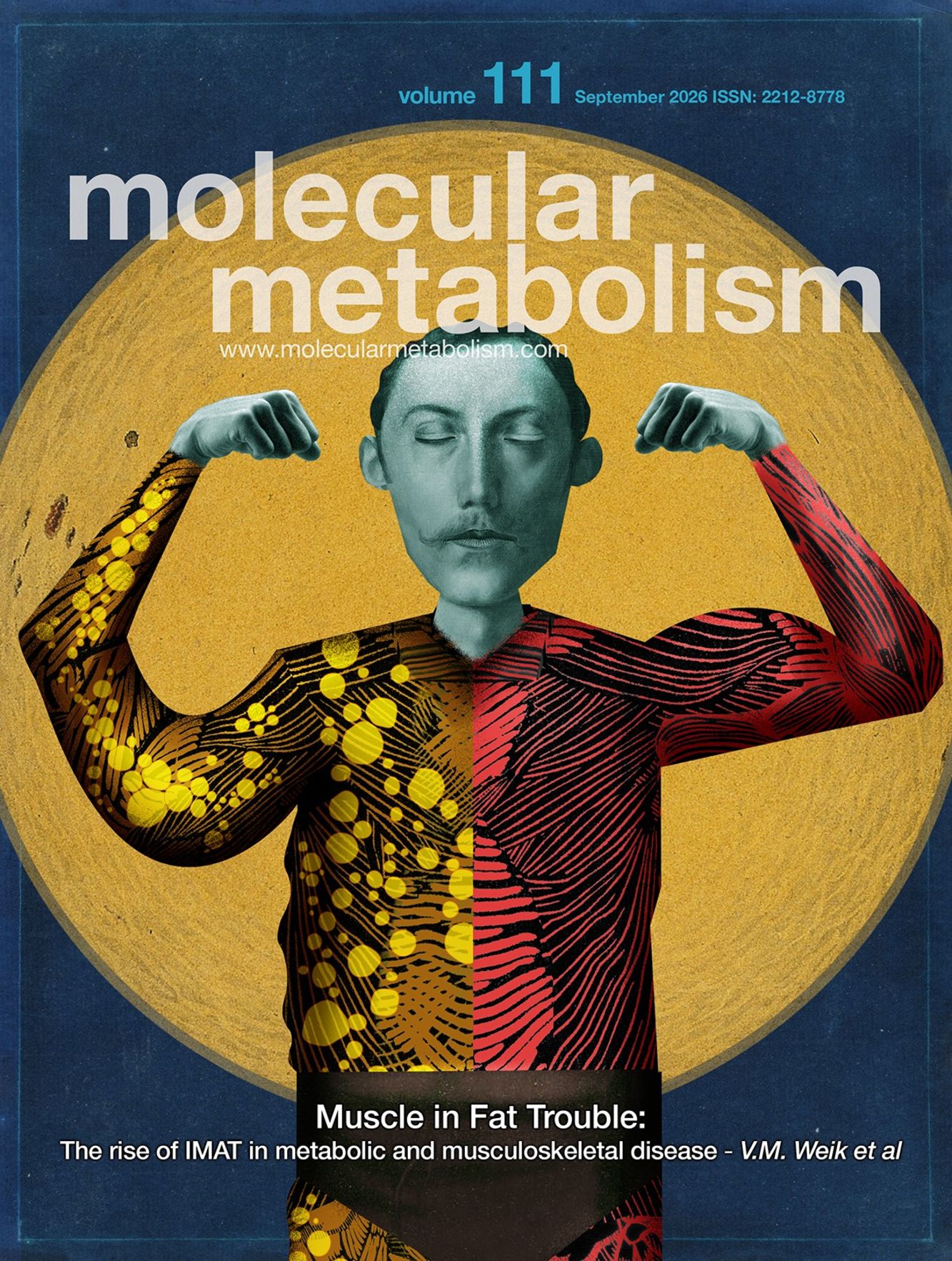




Cover Story Current Issue
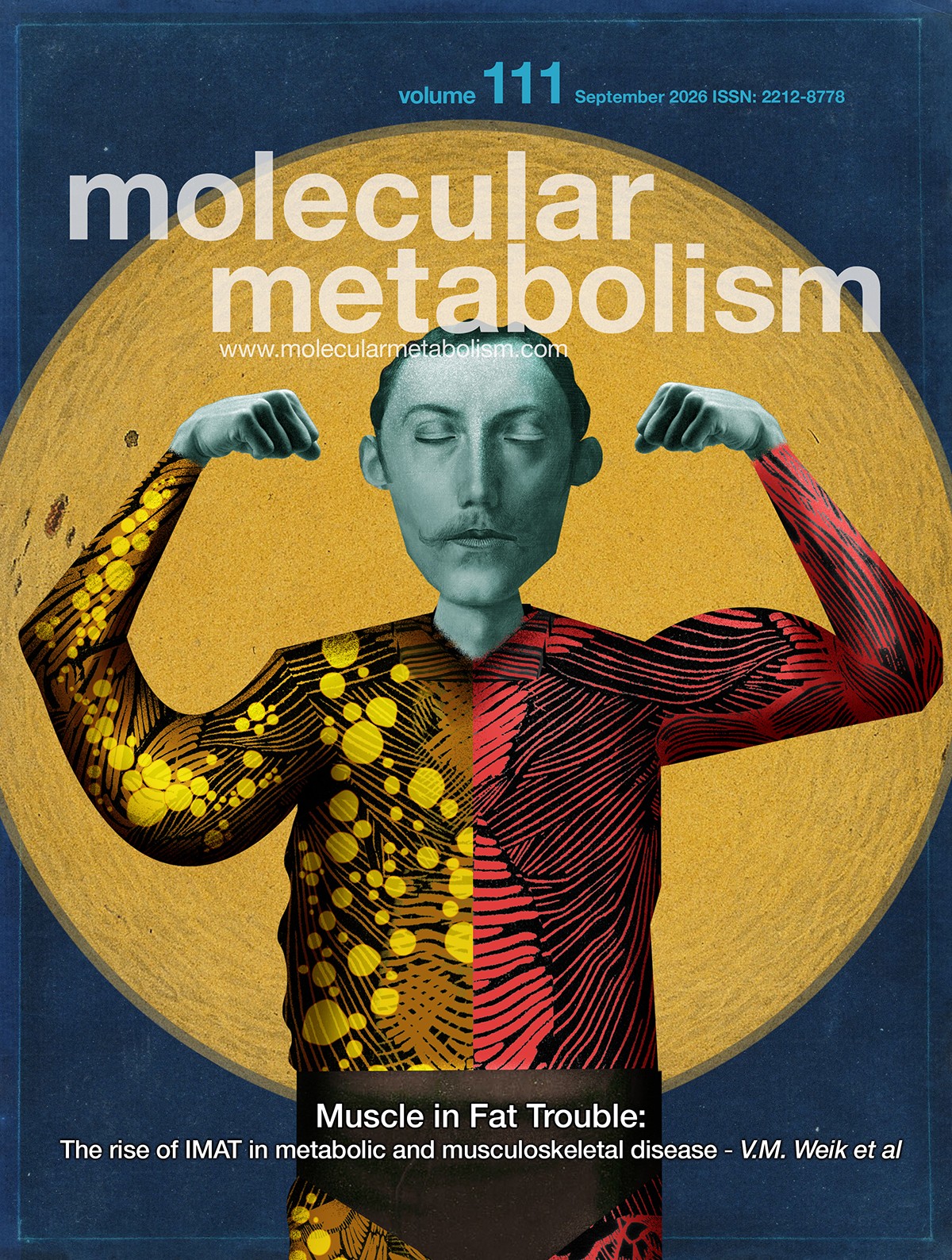
Skeletal muscle is the largest organ in the human body by mass, making up approximately 40 % of total body weight. Furthermore, it accounts for the majority of insulin-stimulated glucose uptake and is also highly involved in lipid metabolism. Lipids can accumulate in muscle through different distinct depots: as intramyocellular lipids (IMCL), stored as triglyceride-containing droplets within muscle cells and as intermuscular adipose tissue (IMAT), located between muscle fiber bundles beneath the deep muscle fascia. The muscular fat depots have been positively correlated with an increased body fat content in obesity, just like subcutaneous and visceral adipose tissue (SAT and VAT, respectively). IMCL, IMAT, VAT and SAT have additionally been linked to insulin resistance and type 2 diabetes mellitus (T2D).
Current Issue
Common and distinct roles of AMPKγ isoforms in small-molecule activator-stimulated glucose uptake in mouse skeletal muscle

Common and distinct roles of AMPKγ isoforms in small-molecule activator-stimulated glucose uptake in mouse skeletal muscle
Objectives
Small-molecule activators targeting the allosteric drug and metabolite (ADaM) site of AMPK enhance insulin-independent glucose uptake in skeletal muscle and lower glucose in preclinical models of hyperglycemia. The regulatory AMPKγ subunit plays a central role in energy sensing. While the skeletal muscle-selective γ3 isoform is essential for AMP/ZMP-induced glucose uptake, it is dispensable for ADaM site-binding activators. We hypothesized that the predominant γ1 isoform is required for ADaM site activator-stimulated glucose uptake in skeletal muscle.
Methods
Single-nucleus RNA sequencing (snRNA-seq) was performed on mouse and human skeletal muscle mapping AMPK subunit isoform distribution across resident cell types. To determine γ isoform-specific requirements for activator-stimulated glucose uptake, skeletal muscle-specific inducible AMPKγ1/γ3 double knockout (imγ1−/−/γ3−/−) and single knockout (imγ1−/− and imγ3−/−) mice were generated. Ex vivo glucose uptake was measured following treatment with AICAR (AMP-mimetic) or MK-8722 (ADaM site activator), and in vivo MK-8722-induced blood glucose lowering was assessed.
Results
snRNA-seq revealed distinct AMPK isoform distribution: γ1 was ubiquitously expressed, whereas γ3 was enriched in glycolytic myofibers in both mouse and human skeletal muscle. Ex vivo, glucose uptake stimulated by either AICAR or MK-8722 was severely blunted in imγ1−/−/γ3−/− muscle, and MK-8722-induced blood glucose lowering was significantly blunted in vivo. AICAR but not MK-8722-stimulated muscle glucose uptake was abolished in imγ3−/−, whereas both activators fully retained effects on glucose uptake and glucose lowering in imγ1−/− mice.
Conclusions
While γ1 predominates in stabilizing the AMPKα2β2γ1 complex, it is dispensable for AMPK activator-stimulated glucose uptake in skeletal muscle, whether mediated via the nucleotide-binding or ADaM site.
Articles in Press
Common and distinct roles of AMPKγ isoforms in small-molecule activator-stimulated glucose uptake in mouse skeletal muscle
Common and distinct roles of AMPKγ isoforms in small-molecule activator-stimulated glucose uptake in mouse skeletal muscle
Objectives
Small-molecule activators targeting the allosteric drug and metabolite (ADaM) site of AMPK enhance insulin-independent glucose uptake in skeletal muscle and lower glucose in preclinical models of hyperglycemia. The regulatory AMPKγ subunit plays a central role in energy sensing. While the skeletal muscle-selective γ3 isoform is essential for AMP/ZMP-induced glucose uptake, it is dispensable for ADaM site-binding activators. We hypothesized that the predominant γ1 isoform is required for ADaM site activator-stimulated glucose uptake in skeletal muscle.
Methods
Single-nucleus RNA sequencing (snRNA-seq) was performed on mouse and human skeletal muscle mapping AMPK subunit isoform distribution across resident cell types. To determine γ isoform-specific requirements for activator-stimulated glucose uptake, skeletal muscle-specific inducible AMPKγ1/γ3 double knockout (imγ1−/−/γ3−/−) and single knockout (imγ1−/− and imγ3−/−) mice were generated. Ex vivo glucose uptake was measured following treatment with AICAR (AMP-mimetic) or MK-8722 (ADaM site activator), and in vivo MK-8722-induced blood glucose lowering was assessed.
Results
snRNA-seq revealed distinct AMPK isoform distribution: γ1 was ubiquitously expressed, whereas γ3 was enriched in glycolytic myofibers in both mouse and human skeletal muscle. Ex vivo, glucose uptake stimulated by either AICAR or MK-8722 was severely blunted in imγ1−/−/γ3−/− muscle, and MK-8722-induced blood glucose lowering was significantly blunted in vivo. AICAR but not MK-8722-stimulated muscle glucose uptake was abolished in imγ3−/−, whereas both activators fully retained effects on glucose uptake and glucose lowering in imγ1−/− mice.
Conclusions
While γ1 predominates in stabilizing the AMPKα2β2γ1 complex, it is dispensable for AMPK activator-stimulated glucose uptake in skeletal muscle, whether mediated via the nucleotide-binding or ADaM site.
Registration still open - sign up now!

13th
Helmholtz Diabetes Conference
Munich, 21-23. Sep 2026

2024 impact factor: 6.6
You are what you eat
Here is a video of Vimeo. When the iframes is activated, a connection to Vimeo is established and, if necessary, cookies from Vimeo are also used. For further information on cookies policy click here.