
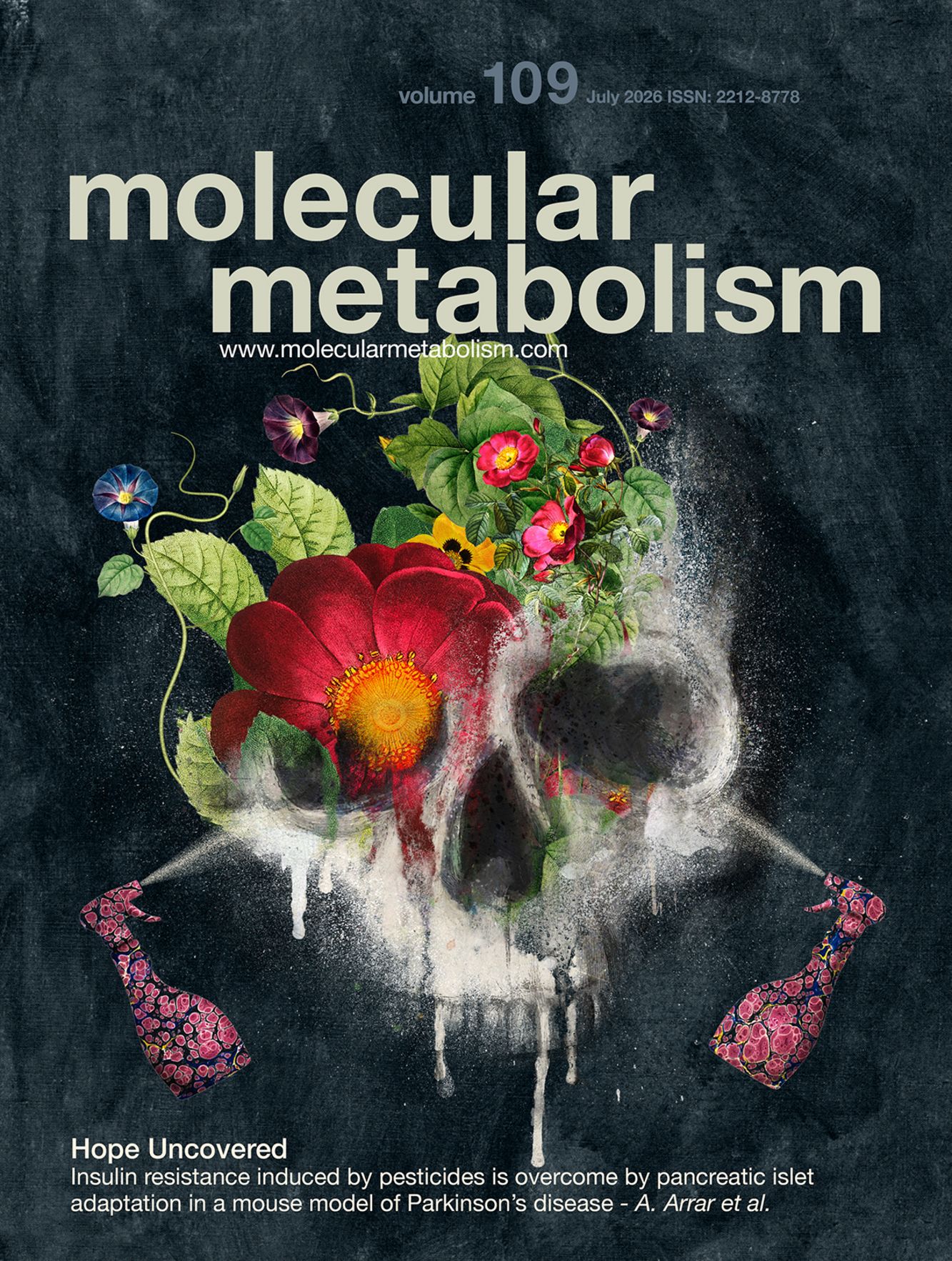


Cover Story Current Issue
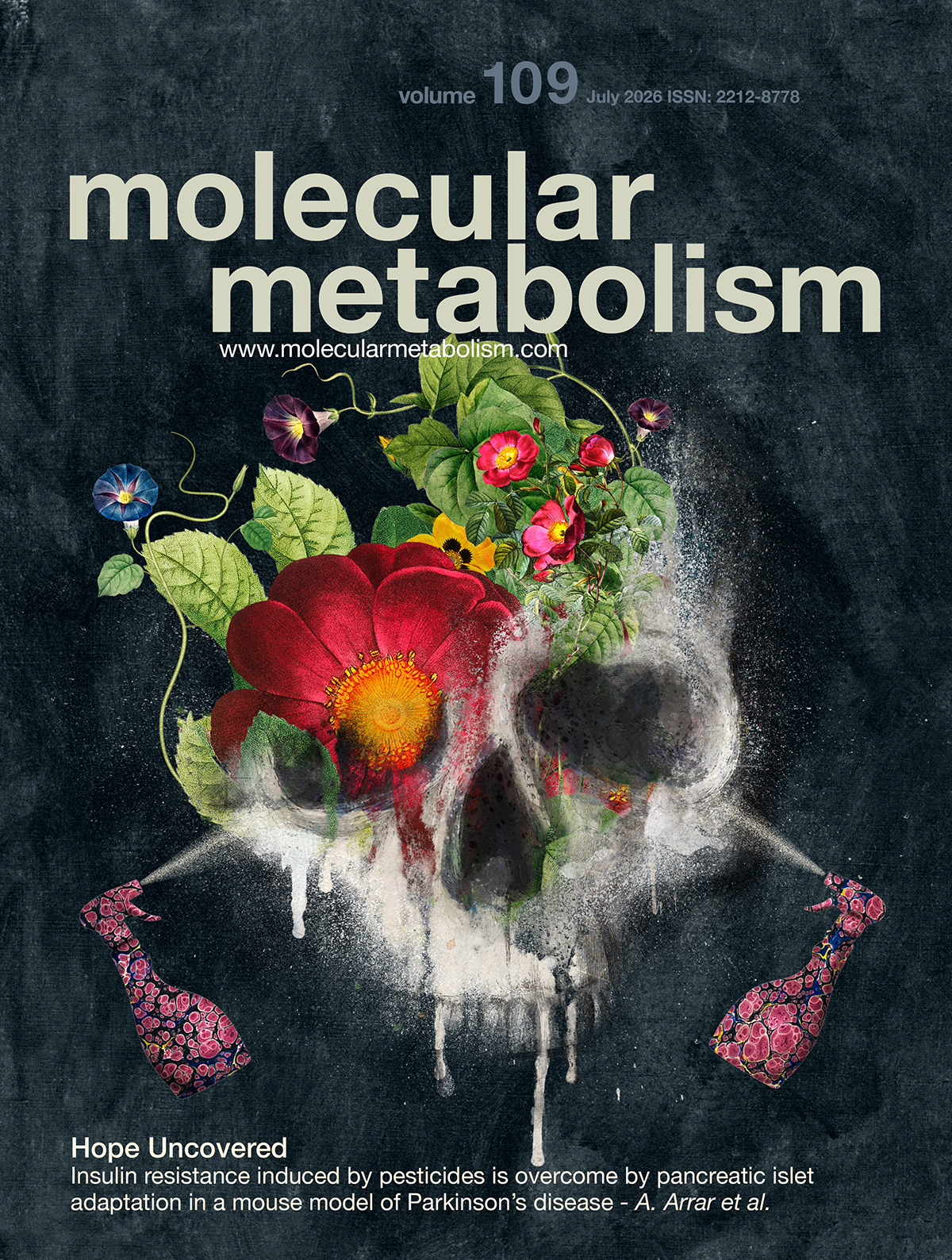
Epidemiological evidences provide proof of concept that certain pesticides are involved in metabolic disorders, but also in the pathophysiology of Parkinson's disease (PD). In addition, large prospective cohort studies reported that type 2 diabetes (T2D) and PD are epidemiologically associated, including an elevated risk of developing PD in patients with T2D.
Current Issue
NLRP3 inhibition by VTX3232 tempers inflammation resulting in reduced body weight, hyperglycemia, and hepatic steatosis in obese male mice

NLRP3 inhibition by VTX3232 tempers inflammation resulting in reduced body weight, hyperglycemia, and hepatic steatosis in obese male mice
The NLRP3 inflammasome is a key innate immune sensor that orchestrates inflammatory responses to diverse stress signals, including metabolic danger cues. Dysregulated NLRP3 activation has been implicated in chronic diseases such as type 2 diabetes, atherosclerosis, and neurodegeneration, underscoring the broad pathophysiological role of the NLRP3 pathway. In the context of obesity and its associated conditions, NLRP3 inhibition by VTX3232, an oral, selective, and brain-penetrant NLRP3 inhibitor, potently suppressed the release of proinflammatory cytokines (IL-1β, IL-18, IL-1α, IL-6, and TNF) from macrophages and microglia stimulated with metabolic stressors including palmitic acid and cholesterol crystals. Moreover, NLRP3 inhibition by VTX3232 also blocked NLRP3-driven insulin resistance in primary human hepatocytes and adipocytes while normalizing the acute phase response and FGF-21 secretion in hepatocytes under palmitic acid-induced inflammation. In vivo, NLRP3 inhibition by VTX3232 reduced systemic and tissue-specific inflammation in a mouse model of diet-induced obesity, reflected by decreased circulating inflammatory mediators, reduced hepatic inflammation, fewer crown-like structures in adipose tissue, and diminished hypothalamic gliosis. These anti-inflammatory effects were accompanied by improvements in body weight, food intake, and obesity-associated comorbidities such as hyperglycemia, hepatic steatosis, and markers of cardiovascular and renal disease. Notably, these effects were confined to the context of obesity, as no impact was observed in lean mice. When combined with glucagon-like peptide-1 receptor agonism by semaglutide, NLRP3 inhibition by VTX3232 yielded additive metabolic benefits, highlighting complementary mechanisms of action. Together, these findings reinforce the biological rationale for targeting NLRP3 in inflammatory conditions such as obesity, expand on the role of NLRP3 in metabolic inflammation, and underscore the importance of continued investigation into the NLRP3 pathway as a central node in cardiometabolic disease.
Articles in Press
NLRP3 inhibition by VTX3232 tempers inflammation resulting in reduced body weight, hyperglycemia, and hepatic steatosis in obese male mice
NLRP3 inhibition by VTX3232 tempers inflammation resulting in reduced body weight, hyperglycemia, and hepatic steatosis in obese male mice
The NLRP3 inflammasome is a key innate immune sensor that orchestrates inflammatory responses to diverse stress signals, including metabolic danger cues. Dysregulated NLRP3 activation has been implicated in chronic diseases such as type 2 diabetes, atherosclerosis, and neurodegeneration, underscoring the broad pathophysiological role of the NLRP3 pathway. In the context of obesity and its associated conditions, NLRP3 inhibition by VTX3232, an oral, selective, and brain-penetrant NLRP3 inhibitor, potently suppressed the release of proinflammatory cytokines (IL-1β, IL-18, IL-1α, IL-6, and TNF) from macrophages and microglia stimulated with metabolic stressors including palmitic acid and cholesterol crystals. Moreover, NLRP3 inhibition by VTX3232 also blocked NLRP3-driven insulin resistance in primary human hepatocytes and adipocytes while normalizing the acute phase response and FGF-21 secretion in hepatocytes under palmitic acid-induced inflammation. In vivo, NLRP3 inhibition by VTX3232 reduced systemic and tissue-specific inflammation in a mouse model of diet-induced obesity, reflected by decreased circulating inflammatory mediators, reduced hepatic inflammation, fewer crown-like structures in adipose tissue, and diminished hypothalamic gliosis. These anti-inflammatory effects were accompanied by improvements in body weight, food intake, and obesity-associated comorbidities such as hyperglycemia, hepatic steatosis, and markers of cardiovascular and renal disease. Notably, these effects were confined to the context of obesity, as no impact was observed in lean mice. When combined with glucagon-like peptide-1 receptor agonism by semaglutide, NLRP3 inhibition by VTX3232 yielded additive metabolic benefits, highlighting complementary mechanisms of action. Together, these findings reinforce the biological rationale for targeting NLRP3 in inflammatory conditions such as obesity, expand on the role of NLRP3 in metabolic inflammation, and underscore the importance of continued investigation into the NLRP3 pathway as a central node in cardiometabolic disease.
Registration & Abstract Submission are open!

13th
Helmholtz Diabetes Conference
Munich, 21-23. Sep 2026

2024 impact factor: 6.6
You are what you eat
Here is a video of Vimeo. When the iframes is activated, a connection to Vimeo is established and, if necessary, cookies from Vimeo are also used. For further information on cookies policy click here.