



Cover Story Current Issue
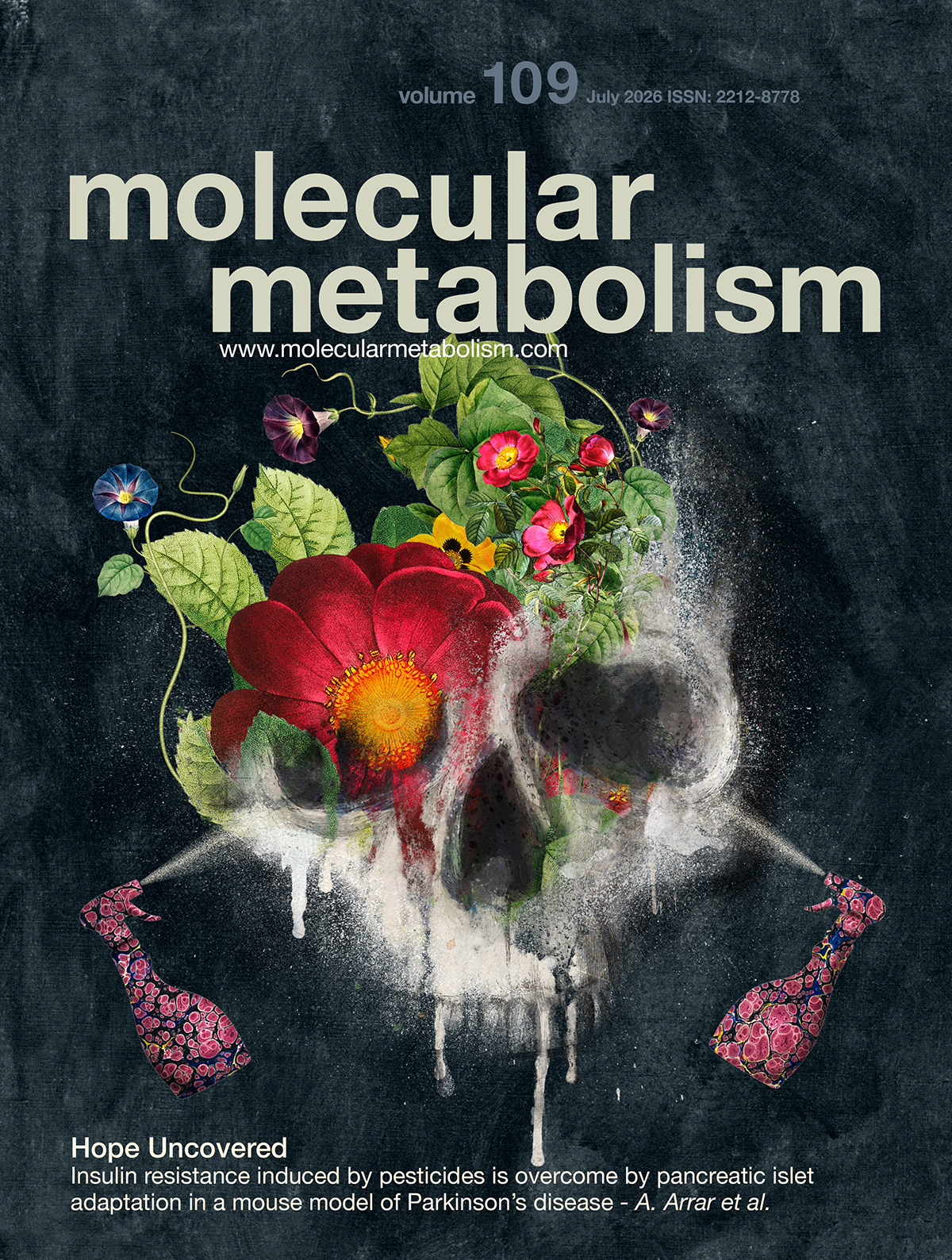
Epidemiological evidences provide proof of concept that certain pesticides are involved in metabolic disorders, but also in the pathophysiology of Parkinson's disease (PD). In addition, large prospective cohort studies reported that type 2 diabetes (T2D) and PD are epidemiologically associated, including an elevated risk of developing PD in patients with T2D.
Current Issue
Interaction between time-of-day and oxytocin efficacy in mice and humans with and without gestational diabetes

Interaction between time-of-day and oxytocin efficacy in mice and humans with and without gestational diabetes
Due to significant risks of peripartum complications, pregnancies complicated by diabetes often require labor induction or augmentation with synthetic oxytocin. However, the efficacy of oxytocin is often compromised in diabetic pregnancies. Given that diabetes deregulates the body's circadian timekeeping system, our objective was to determine how time of day and the circadian clock gene, Bmal1, gate oxytocin efficacy. We compared oxytocin uterotonic efficacy in a smooth muscle-Bmal1 conditional knockout mouse (cKO), and a mouse model of food-induced gestational diabetes. We found that in wild-type mice, the oxytocin receptor is expressed in a time-of-day-dependent manner and is under the control of BMAL1. Both Bmal1 cKO and food-induced gestational diabetes mice, which presented with a downregulation of Bmal1 in the uterus, had decreased uterine contractility in response to oxytocin. To establish the translational value of these findings, we utilized an immortalized term human myometrial cell line. We determined that the time-of-day impacted oxytocin-induced myometrial contractility in vitro. Furthermore, we conducted a retrospective medical record analysis of 2,367 pregnant patients ≥39 weeks gestation undergoing induction of labor. We assessed the timing of labor induction and the impact of gestational diabetes mellitus on labor duration. Induction of labor in the morning compared to midnight was associated with a ∼1.5-hour and ∼7-hour shorter labor duration in controls and patients with gestational diabetes mellitus, respectively. In conclusion, circadian timing plays a key role in induction of labor and oxytocin responsiveness and should be considered when managing labor induction.
Articles in Press
Interaction between time-of-day and oxytocin efficacy in mice and humans with and without gestational diabetes
Interaction between time-of-day and oxytocin efficacy in mice and humans with and without gestational diabetes
Due to significant risks of peripartum complications, pregnancies complicated by diabetes often require labor induction or augmentation with synthetic oxytocin. However, the efficacy of oxytocin is often compromised in diabetic pregnancies. Given that diabetes deregulates the body's circadian timekeeping system, our objective was to determine how time of day and the circadian clock gene, Bmal1, gate oxytocin efficacy. We compared oxytocin uterotonic efficacy in a smooth muscle-Bmal1 conditional knockout mouse (cKO), and a mouse model of food-induced gestational diabetes. We found that in wild-type mice, the oxytocin receptor is expressed in a time-of-day-dependent manner and is under the control of BMAL1. Both Bmal1 cKO and food-induced gestational diabetes mice, which presented with a downregulation of Bmal1 in the uterus, had decreased uterine contractility in response to oxytocin. To establish the translational value of these findings, we utilized an immortalized term human myometrial cell line. We determined that the time-of-day impacted oxytocin-induced myometrial contractility in vitro. Furthermore, we conducted a retrospective medical record analysis of 2,367 pregnant patients ≥39 weeks gestation undergoing induction of labor. We assessed the timing of labor induction and the impact of gestational diabetes mellitus on labor duration. Induction of labor in the morning compared to midnight was associated with a ∼1.5-hour and ∼7-hour shorter labor duration in controls and patients with gestational diabetes mellitus, respectively. In conclusion, circadian timing plays a key role in induction of labor and oxytocin responsiveness and should be considered when managing labor induction.
Registration & Abstract Submission are open!

13th
Helmholtz Diabetes Conference
Munich, 21-23. Sep 2026

2024 impact factor: 6.6
You are what you eat
Here is a video of Vimeo. When the iframes is activated, a connection to Vimeo is established and, if necessary, cookies from Vimeo are also used. For further information on cookies policy click here.