
 Volume 109, Current Issue
 Vol 28, October 2019
 Vol 27, September 2019
 Vol 26, August 2019
 Vol 25, July 2019
 Vol 24, June 2019
 Vol 23, May 2019
 Vol 22, April 2019
 Vol 21, March 2019
 Vol 20, February 2019
 Vol 19, January 2019
 Vol 18, December 2018
 Vol 17, November 2018
 Vol 16, October 2018
 Vol 15, September 2018
 Vol 14, August 2018
 Vol 13, July 2018
 Vol 12, June 2018
 Vol 11, May 2018
 Vol 10, April 2018
 Vol 9, March 2018
 Vol 8, February 2018
 Vol 7, January 2018
 Vol 6 No 12, December 2017
 Vol 6 No 11, November 2017
 Vol 6 No 10, October 2017
 Vol 6 No 9, September 2017
 Vol 6 No 8, August 2017
 Vol 6 No 7, July 2017
 Vol 6 No 6, June 2017
 Vol 6 No 5, May 2017
 Vol 6 No 4, April 2017
 Vol 6 No 3, March 2017
 Vol 6 No 2, February 2017
 Vol 6 No 1, January 2017
 Vol 5 No 12, December 2016
 Vol 5 No 11, November 2016
 Vol 5 No 10, October 2016
 Vol 5 No 9, September 2016
 Vol 5 No 8, August 2016
 Vol 5 No 7, July 2016
 Vol 5 No 6, June 2016
 Vol 5 No 5, May 2016
 Vol 5 No 4, April 2016
 Vol 5 No 3, March 2016
 Vol 5 No 2, February 2016
 Vol 5 No 1, January 2016
 Vol 4 No 12, December 2015
 Vol 4 No 11, November 2015
 Vol 4 No 10, October 2015


Cover Story Current Issue
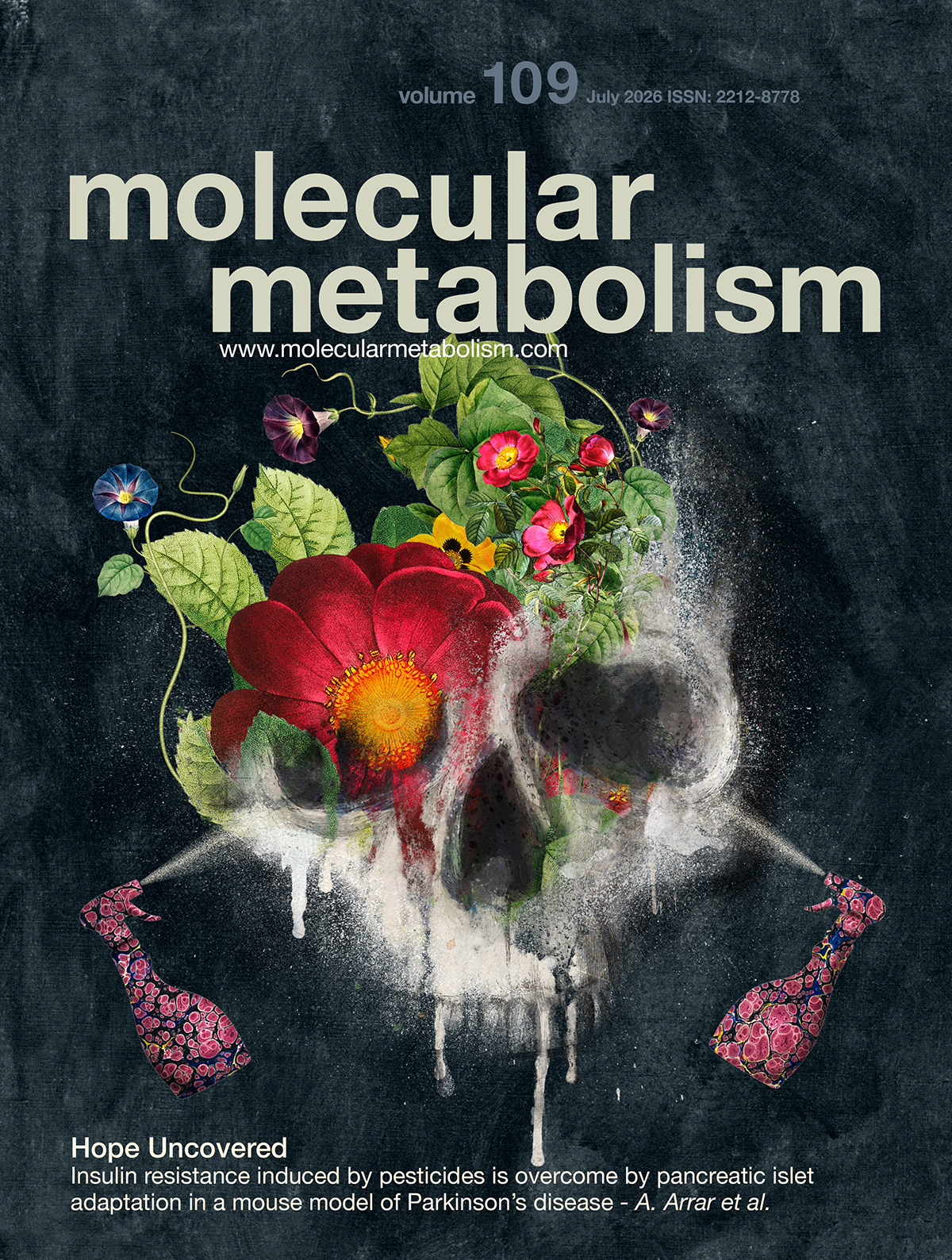
Epidemiological evidences provide proof of concept that certain pesticides are involved in metabolic disorders, but also in the pathophysiology of Parkinson's disease (PD). In addition, large prospective cohort studies reported that type 2 diabetes (T2D) and PD are epidemiologically associated, including an elevated risk of developing PD in patients with T2D.
Current Issue
Increased TGF-β/Activin-Smad2 signaling is associated with pancreatic β-cell dysfunction and glucose intolerance in gestational diabetes mellitus
- Abstract
Increased TGF-β/Activin-Smad2 signaling is associated with pancreatic β-cell dysfunction and glucose intolerance in gestational diabetes mellitus
Background
Gestational diabetes mellitus (GDM) is the most common metabolic disease during pregnancy and increases the prevalence of type 2 diabetes in both mothers and children. GDM management provides an opportunity to prevent and lower the global burden of diabetes across life. Molecular mechanisms underlying GDM are not completely understood. In this study, we explore the role of transforming growth factor beta (TGF-β) signaling in GDM, as this pathway reportedly affects pancreatic β-cell development, function, and proliferation.
Methods
We developed a GDM animal model. Serum circulating levels of TGF-β family ligands were measured in mice and human GDM. Pancreatic TGF-β signaling was investigated via gene and protein expression.
Results
Our GDM animal model recapitulates the main pathophysiological features of human GDM, including glucose intolerance, decreased insulin sensitivity and pancreatic β-cell malfunction. Islets from GDM mice showed impaired insulin secretion and content, altered ion channel activity, and decreased β-cell replication rate. This was accompanied by increased Smad2 signaling activation. Elevated serum activin-A and inhibin levels were found in mice and human GDM, suggesting their role as upstream signaling transducers of pancreatic Smad2 activation. Pharmacological inhibition of TGF-β/Activin-Smad2 signaling in mouse pancreatic islets resulted in improved pancreatic β-cell function and regeneration capacity.
Conclusions
Our data suggest that disruption of the pancreatic Smad2 pathway plays a critical role in the pathogenesis of GDM, contributing to abnormal glucose homeostasis and inadequate insulin secretion. Attenuation of this signaling pathway may represent a putative therapeutic target for GDM.
Articles in Press
Increased TGF-β/Activin-Smad2 signaling is associated with pancreatic β-cell dysfunction and glucose intolerance in gestational diabetes mellitus
- Abstract
Increased TGF-β/Activin-Smad2 signaling is associated with pancreatic β-cell dysfunction and glucose intolerance in gestational diabetes mellitus
Background
Gestational diabetes mellitus (GDM) is the most common metabolic disease during pregnancy and increases the prevalence of type 2 diabetes in both mothers and children. GDM management provides an opportunity to prevent and lower the global burden of diabetes across life. Molecular mechanisms underlying GDM are not completely understood. In this study, we explore the role of transforming growth factor beta (TGF-β) signaling in GDM, as this pathway reportedly affects pancreatic β-cell development, function, and proliferation.
Methods
We developed a GDM animal model. Serum circulating levels of TGF-β family ligands were measured in mice and human GDM. Pancreatic TGF-β signaling was investigated via gene and protein expression.
Results
Our GDM animal model recapitulates the main pathophysiological features of human GDM, including glucose intolerance, decreased insulin sensitivity and pancreatic β-cell malfunction. Islets from GDM mice showed impaired insulin secretion and content, altered ion channel activity, and decreased β-cell replication rate. This was accompanied by increased Smad2 signaling activation. Elevated serum activin-A and inhibin levels were found in mice and human GDM, suggesting their role as upstream signaling transducers of pancreatic Smad2 activation. Pharmacological inhibition of TGF-β/Activin-Smad2 signaling in mouse pancreatic islets resulted in improved pancreatic β-cell function and regeneration capacity.
Conclusions
Our data suggest that disruption of the pancreatic Smad2 pathway plays a critical role in the pathogenesis of GDM, contributing to abnormal glucose homeostasis and inadequate insulin secretion. Attenuation of this signaling pathway may represent a putative therapeutic target for GDM.
Registration & Abstract Submission are open!

13th
Helmholtz Diabetes Conference
Munich, 21-23. Sep 2026

2024 impact factor: 6.6
You are what you eat
Here is a video of Vimeo. When the iframes is activated, a connection to Vimeo is established and, if necessary, cookies from Vimeo are also used. For further information on cookies policy click here.