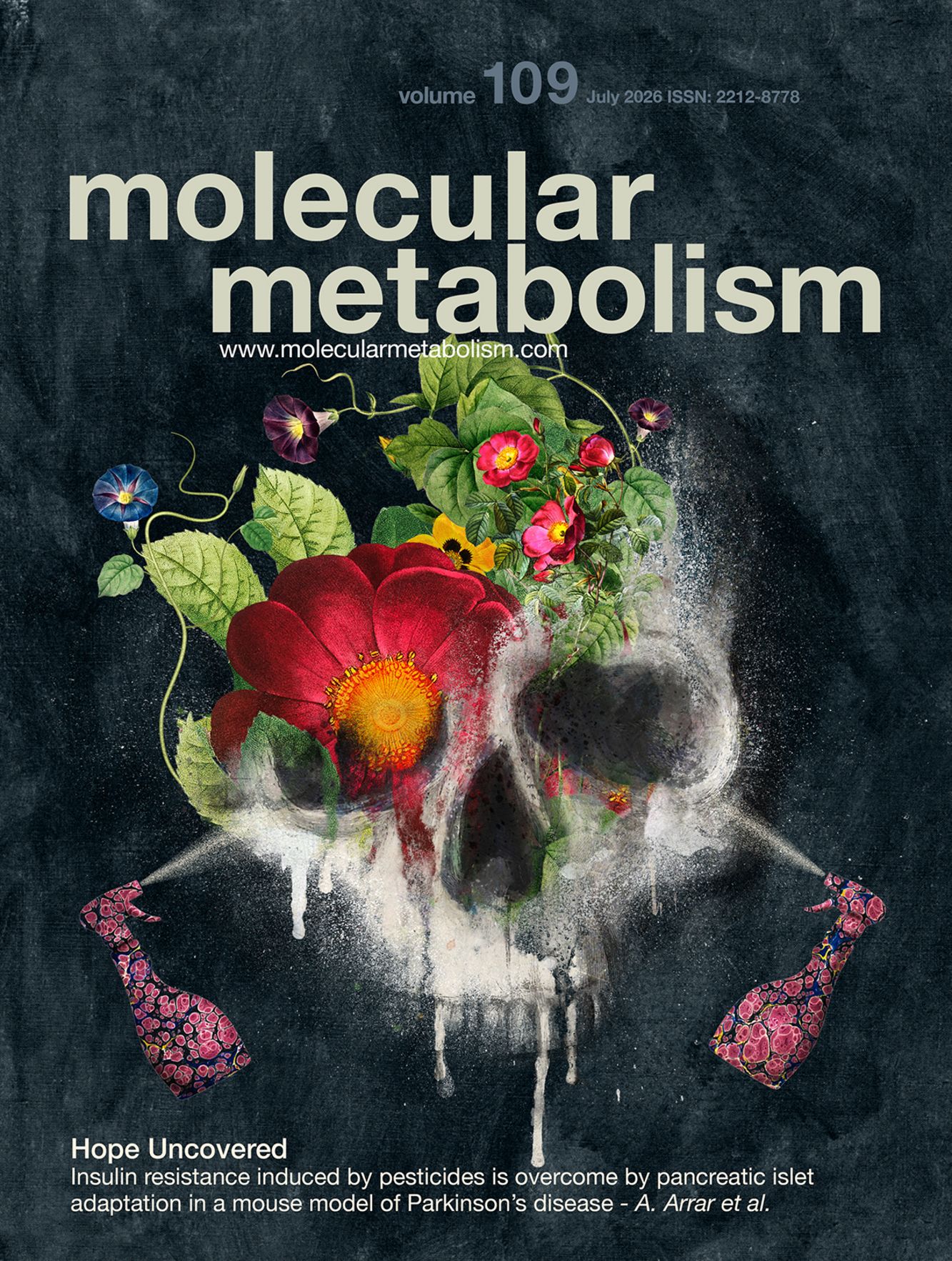
Cover Story Current Issue

Maternal nutrition exerts profound and lasting effects on infant development, with implications extending beyond somatic growth to long-term brain function and metabolic health. For example, newborns from mothers with obesity or diabetes exhibit increased susceptibility to metabolic disorders, including insulin resistance (IR) and type 2 diabetes (T2D), often emerging in childhood or adolescence. While genetic inheritance contributes to this intergenerational risk, early-life nutritional exposures are increasingly recognized as primary drivers of persistent metabolic programming. Among key classes of nutrients, branched-chain amino acids (BCAAs)—leucine, isoleucine, and valine—have emerged as potent modulators of metabolic health in human adults. Elevated circulating BCAAs are among the most accurate predictors of future insulin resistance (IR) and T2D, with a two-fold increase in serum levels conferring a 2.5-fold risk of diabetes onset within 6–10 years. This elevation can directly cause organ toxicity, exacerbating metabolic deficits in a feed-forward loop. However, the extent to which maternal BCAA overnutrition during gestation and lactation impacts offspring metabolic programming and predisposes to dysfunction remains unclear.

Full text


Current Issue

Impaired hepatic metabolism in Hereditary Fructose Intolerance confers fructose-independent risk for steatosis and hypertriglyceridemia

Melissa A. Fulham, John D. Griffin, Sylvie Perez, Zhongyuan Sun, ... Gregory J. Tesz

Impaired hepatic metabolism in Hereditary Fructose Intolerance confers fructose-independent risk for steatosis and hypertriglyceridemia

Objectives

Hereditary fructose intolerance (HFI), caused by Aldolase B deficiency, is a rare genetic disorder where fructose exposure leads to severe metabolic pathologies including Type-2 diabetes and liver steatosis. Despite adhering to fructose-free diets, some individuals still present with disease. Using a rat model of HFI we demonstrate that fructose independent pathologies exist and identify the molecular pathways driving disease.

Methods

Aldob was deleted in Sprague Dawley rats using CRIPSR/Cas9 (AldoB-KO). Phenotypic, metabolomic and transcriptomic studies were conducted to identify mechanisms promoting fructose-independent pathologies. Potential molecular causes were tested using pharmacologic inhibitors and ASOs.

Results

Deletion of Aldob caused hepatic steatosis, fibrosis and stunted growth in rats weaned on low fructose chow recapitulating human HFI. On fructose-free chow, AldoB-KO rats were phenotypically normal. However, upon fasting, male and female AldoB-KO rats developed hepatic steatosis and hyperlipidemia due to impaired fatty acid oxidation (FAOx) and elevated de novo lipogenesis (DNL). Transcriptional and metabolomic profiling revealed increased hepatic Carbohydrate Response Element Binding Protein (ChREBP) activation in AldoB-KO rats due to glycolytic metabolite accumulation caused by impaired gluconeogenesis. Treatment with Acetyl-CoA Carboxylase (ACC) and Diacylglycerol Acyl Transferase 2 (DGAT2) inhibitors reduced hepatic lipids and plasma triglycerides in AldoB-KO rats. Finally, using electronic health records we observed increased metabolic dysfunction-associated steatohepatitis (MASH) diagnosis in individuals with HFI.

Conclusions

Aldob deletion caused fructose-independent hyperlipidemia and steatosis upon fasting in rats. Individuals with HFI may have risk for hepatic disease and hyperlipidemia even upon fructose abstinence suggesting additional therapies may be needed to mitigate disease.

Articles in Press

Impaired hepatic metabolism in Hereditary Fructose Intolerance confers fructose-independent risk for steatosis and hypertriglyceridemia

Melissa A. Fulham, John D. Griffin, Sylvie Perez, Zhongyuan Sun, ... Gregory J. Tesz

Impaired hepatic metabolism in Hereditary Fructose Intolerance confers fructose-independent risk for steatosis and hypertriglyceridemia

Objectives

Hereditary fructose intolerance (HFI), caused by Aldolase B deficiency, is a rare genetic disorder where fructose exposure leads to severe metabolic pathologies including Type-2 diabetes and liver steatosis. Despite adhering to fructose-free diets, some individuals still present with disease. Using a rat model of HFI we demonstrate that fructose independent pathologies exist and identify the molecular pathways driving disease.

Methods

Aldob was deleted in Sprague Dawley rats using CRIPSR/Cas9 (AldoB-KO). Phenotypic, metabolomic and transcriptomic studies were conducted to identify mechanisms promoting fructose-independent pathologies. Potential molecular causes were tested using pharmacologic inhibitors and ASOs.

Results

Deletion of Aldob caused hepatic steatosis, fibrosis and stunted growth in rats weaned on low fructose chow recapitulating human HFI. On fructose-free chow, AldoB-KO rats were phenotypically normal. However, upon fasting, male and female AldoB-KO rats developed hepatic steatosis and hyperlipidemia due to impaired fatty acid oxidation (FAOx) and elevated de novo lipogenesis (DNL). Transcriptional and metabolomic profiling revealed increased hepatic Carbohydrate Response Element Binding Protein (ChREBP) activation in AldoB-KO rats due to glycolytic metabolite accumulation caused by impaired gluconeogenesis. Treatment with Acetyl-CoA Carboxylase (ACC) and Diacylglycerol Acyl Transferase 2 (DGAT2) inhibitors reduced hepatic lipids and plasma triglycerides in AldoB-KO rats. Finally, using electronic health records we observed increased metabolic dysfunction-associated steatohepatitis (MASH) diagnosis in individuals with HFI.

Conclusions

Aldob deletion caused fructose-independent hyperlipidemia and steatosis upon fasting in rats. Individuals with HFI may have risk for hepatic disease and hyperlipidemia even upon fructose abstinence suggesting additional therapies may be needed to mitigate disease.

SAVE THE DATE!

13th
Helmholtz Diabetes Conference 

Munich, 21-23. Sep 2026                                                                                                                             

2024 impact factor: 6.6

You are what you eat

Here is a video of Vimeo. When the iframes is activated, a connection to Vimeo is established and, if necessary, cookies from Vimeo are also used. For further information on cookies policy click here.

Auf Werbeinhalte, die vor, während oder nach Videos von WEBSITE-URL eingeblendet werden, hat WEBSITE-URL keinen Einfluss. Wir übernehmen keine Gewähr für diese Inhalte. Weitere Informationen finden Sie hier.