


Cover Story Current Issue
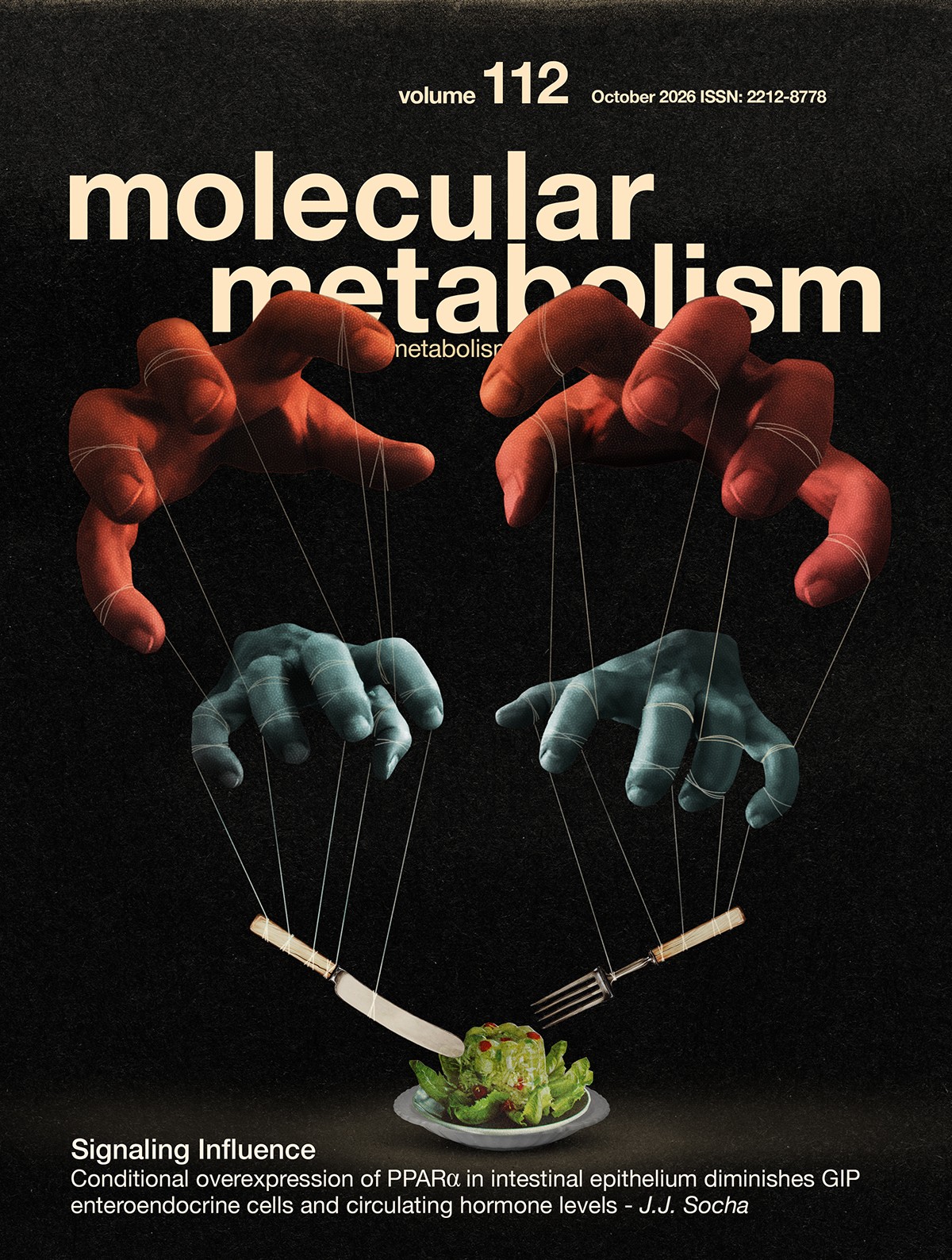
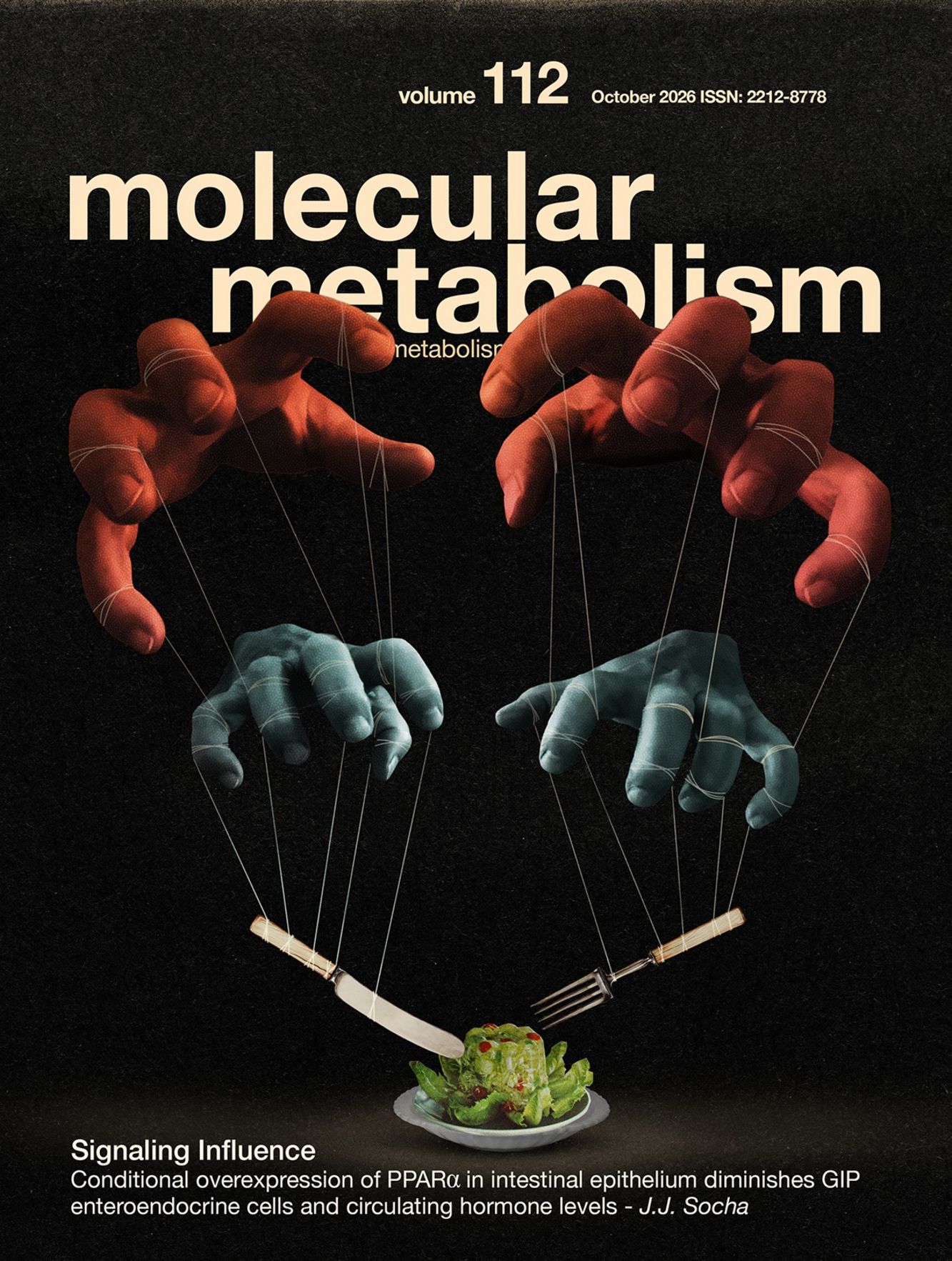
The small intestine, as the primary site of nutrient absorption, integrates signals from dietary components and gut microbiota to coordinate systemic energy balance, metabolism, and glucose homeostasis alongside other tissues such as the pancreas, liver, and brain. Nuclear receptors represent one mechanism by which the intestinal epithelium senses and respond to dietary signals via transcriptional regulation of metabolic programs. The Peroxisome Proliferator Activated Receptors (PPARs), including PPARα, PPARδ, and PPARγ, are lipid-responsive nuclear hormone receptors. PPAR transcriptional activity is highly context-dependent, shaped by the availability and affinity of their lipid ligands and co-regulators as well as by cell and tissue types. Whereas PPARγ and PPARδ are established regulators of glucose homeostasis, acting in white adipose tissue, skeletal muscle, and liver to improve insulin sensitivity, PPARα has been primarily associated with hepatic lipid metabolism, where it promotes fatty acid transport, β-oxidation, and ketogenesis. Due to their roles in lipid metabolism and anti-inflammatory processes, selective PPAR agonists are being actively pursued as therapies in clinical and pre-clinical studies for metabolic diseases. Thus, it is critical to improve our understanding of the context-specific and tissue-specific effects of PPAR signaling.
Current Issue
Nutrient-driven histone acetylation underlies energy storage and mobilization

Nutrient-driven histone acetylation underlies energy storage and mobilization
In natural settings, energy storage and mobilization maintain a dynamic balance in response to recurrent overfeeding and fasting. Imbalanced energy storage and mobilization lead to a variety of metabolic dysfunctions. However, whether the metabolic status directly couples with epigenetic modifications and transcriptional outputs remains unclear. Here, we aimed to investigate the epigenetic mechanism underlying this adaptive balance and observed that, in an overfeeding state, increased glucose availability is associated with enhanced histone acetylation coinciding with acetyl-CoA production in an acyl-CoA short-chain synthetase 2 (ACSS2)-dependent manner, contributing to energy storage (e.g., lipogenesis); in contrast, in the fasting state, elevated d-β-hydroxybutyrate levels are associated with altered histone acetylation distribution and transcriptional programs, supporting a metabolic shift from anabolism to catabolism, such as fatty acid oxidation. In both overfeeding and fasting states, acetylated lysines in the histone require BRD4 to recognize and initiate transcriptional regulation. Inhibition of BRD4 leads to context-dependent phenotypic effects: it ameliorates non-alcoholic fatty liver disease (NAFLD) pathology induced by a high-fat diet, while it exacerbates hepatic steatosis in fasted mice or mice fed a ketogenic diet. Thus, these findings highlights that epigenetic regulation of energy storage and mobilization is closely linked to the availability of glucose, and ketone bodies. Moreover, our study revealed that modulation of ACSS2-associated pathway may represent a potential strategy for treatment of metabolic diseases, such as NAFLD.
Articles in Press
Nutrient-driven histone acetylation underlies energy storage and mobilization
Nutrient-driven histone acetylation underlies energy storage and mobilization
In natural settings, energy storage and mobilization maintain a dynamic balance in response to recurrent overfeeding and fasting. Imbalanced energy storage and mobilization lead to a variety of metabolic dysfunctions. However, whether the metabolic status directly couples with epigenetic modifications and transcriptional outputs remains unclear. Here, we aimed to investigate the epigenetic mechanism underlying this adaptive balance and observed that, in an overfeeding state, increased glucose availability is associated with enhanced histone acetylation coinciding with acetyl-CoA production in an acyl-CoA short-chain synthetase 2 (ACSS2)-dependent manner, contributing to energy storage (e.g., lipogenesis); in contrast, in the fasting state, elevated d-β-hydroxybutyrate levels are associated with altered histone acetylation distribution and transcriptional programs, supporting a metabolic shift from anabolism to catabolism, such as fatty acid oxidation. In both overfeeding and fasting states, acetylated lysines in the histone require BRD4 to recognize and initiate transcriptional regulation. Inhibition of BRD4 leads to context-dependent phenotypic effects: it ameliorates non-alcoholic fatty liver disease (NAFLD) pathology induced by a high-fat diet, while it exacerbates hepatic steatosis in fasted mice or mice fed a ketogenic diet. Thus, these findings highlights that epigenetic regulation of energy storage and mobilization is closely linked to the availability of glucose, and ketone bodies. Moreover, our study revealed that modulation of ACSS2-associated pathway may represent a potential strategy for treatment of metabolic diseases, such as NAFLD.

2025 Impact Factor: 6.3
You are what you eat
Here is a video of Vimeo. When the iframes is activated, a connection to Vimeo is established and, if necessary, cookies from Vimeo are also used. For further information on cookies policy click here.