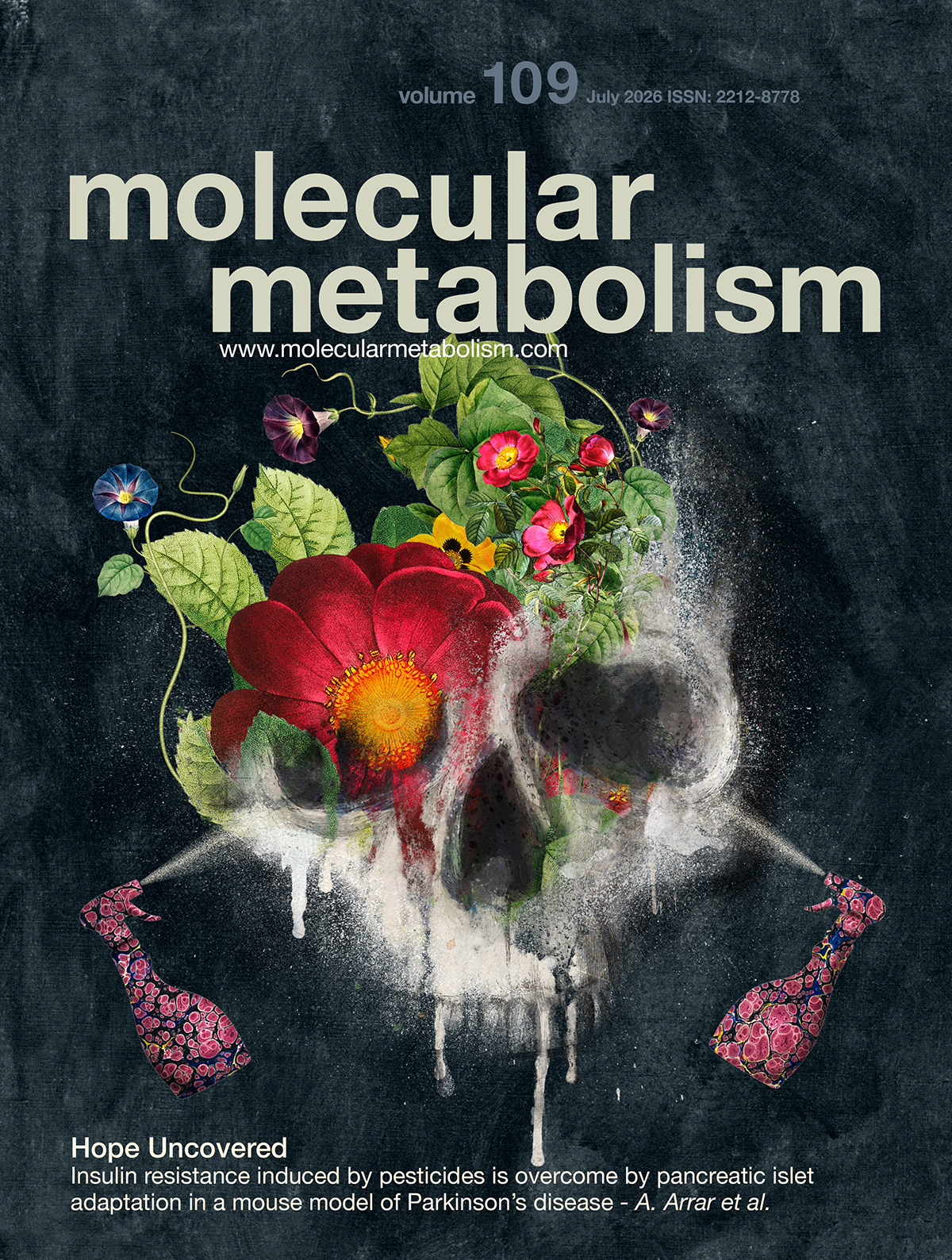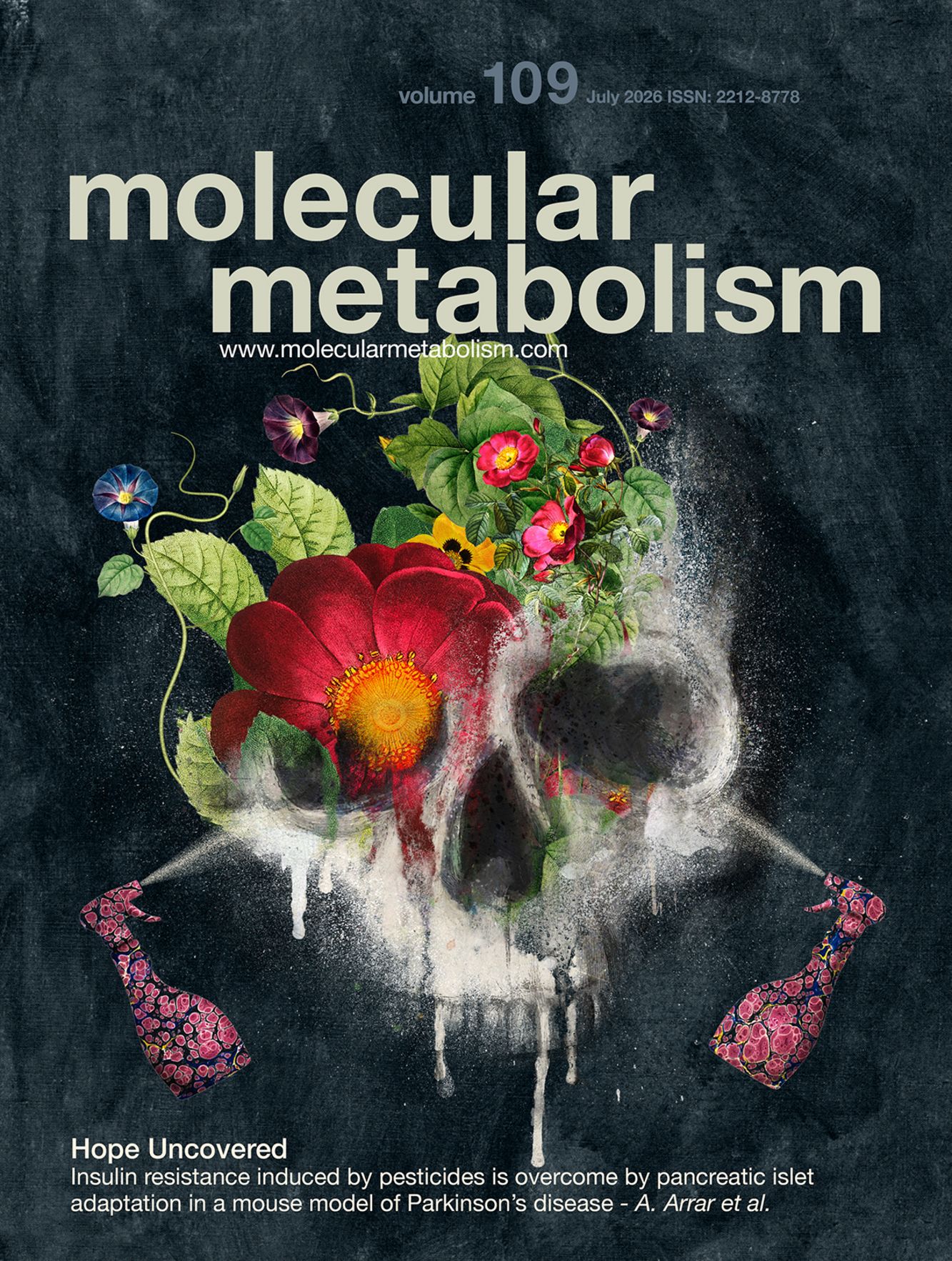
Cover Story Current Issue

Hunger and appetite are associated with fluctuations in glucose levels through mechanisms that remain incompletely understood. Hunger elicits epigastric sensations (“hunger pain”) that coincide with rhythmic gastric contractions, which intensify during hypoglycemia. These observations led to the glucostatic hypothesis, which proposed that glucose availability and utilization regulate food intake. Subsequent studies demonstrated that dynamic changes in blood glucose levels precede meal initiation and influence feeding behavior. Together, these findings provided early evidence for a physiological link between glycemia and appetite regulation.

Full text


Current Issue

Temporal Single-Cell Transcriptional Dynamics of Murine Pancreatic Islet Remodeling During Hyperglycaemia Progression

Simran Singh, Musale Krushna Pavan, Luiz F. Barella, Jayesh Telang, ... Sai Prasad Pydi


Pancreatic islets undergo coordinated cellular remodeling during obesity-induced insulin resistance. However, longitudinal changes across endocrine and non-endocrine compartments remain largely unexplored. We present a comprehensive high-resolution atlas using longitudinal single-cell RNA sequencing (scRNA-seq) and single-cell ATAC sequencing (scATAC-seq) on islets from C57BL/6 mice subjected to high-fat diet (HFD) feeding for 8, 16, and 24 weeks, along with age-matched controls on regular chow (RC). We mapped dynamic changes in islet cell composition and transcriptional states. Trajectory inference indicated diversification of beta-cell programs into adaptive and inflammatory states under HFD. Progression of insulin resistance induced shrinkage and transcriptional remodeling of glucagon-secreting alpha-cells, marked by upregulation of genes related to intracellular transport and oxidative stress, accompanied by the emergence of a polyhormonal alpha-cell subpopulation. Similarly, we identified delta-cell subpopulations exhibiting beta-like transcriptional signatures and polyhormonal identity under nutritional stress, suggesting adaptive delta-cell plasticity that may partially compensate for beta-cell loss during insulin resistance.

The islet microenvironment exhibited robust expansion of proinflammatory M1 macrophages, reaching a plateau by 16 weeks of HFD, indicating niche saturation. Cell-cell communication analyses revealed disruption of key signaling pathways within endocrine and between endocrine and non-endocrine cells under HFD conditions. Notably, CCL27a–chemokine receptor signaling between beta-cells and M1 macrophages was significantly reduced in HFD islets, likely driven by reduced Ccl27a expression and chromatin accessibility in a distinct beta cell subpopulation, which we further validated using INS-1 cells exposed to HFD-like conditions. Comparative analysis with scRNA seq of human islets confirmed conserved stress signatures. Furthermore, genetic variants at the CCL27 locus were associated with increased T2D risk and HOMA-IR in human populations, establishing a novel link between beta-cell stress and systemic inflammation. This resource provides a hierarchical framework for understanding islet failure and identifies potential therapeutic nodes for type 2 diabetes.


Articles in Press

Temporal Single-Cell Transcriptional Dynamics of Murine Pancreatic Islet Remodeling During Hyperglycaemia Progression

Simran Singh, Musale Krushna Pavan, Luiz F. Barella, Jayesh Telang, ... Sai Prasad Pydi


Pancreatic islets undergo coordinated cellular remodeling during obesity-induced insulin resistance. However, longitudinal changes across endocrine and non-endocrine compartments remain largely unexplored. We present a comprehensive high-resolution atlas using longitudinal single-cell RNA sequencing (scRNA-seq) and single-cell ATAC sequencing (scATAC-seq) on islets from C57BL/6 mice subjected to high-fat diet (HFD) feeding for 8, 16, and 24 weeks, along with age-matched controls on regular chow (RC). We mapped dynamic changes in islet cell composition and transcriptional states. Trajectory inference indicated diversification of beta-cell programs into adaptive and inflammatory states under HFD. Progression of insulin resistance induced shrinkage and transcriptional remodeling of glucagon-secreting alpha-cells, marked by upregulation of genes related to intracellular transport and oxidative stress, accompanied by the emergence of a polyhormonal alpha-cell subpopulation. Similarly, we identified delta-cell subpopulations exhibiting beta-like transcriptional signatures and polyhormonal identity under nutritional stress, suggesting adaptive delta-cell plasticity that may partially compensate for beta-cell loss during insulin resistance.

The islet microenvironment exhibited robust expansion of proinflammatory M1 macrophages, reaching a plateau by 16 weeks of HFD, indicating niche saturation. Cell-cell communication analyses revealed disruption of key signaling pathways within endocrine and between endocrine and non-endocrine cells under HFD conditions. Notably, CCL27a–chemokine receptor signaling between beta-cells and M1 macrophages was significantly reduced in HFD islets, likely driven by reduced Ccl27a expression and chromatin accessibility in a distinct beta cell subpopulation, which we further validated using INS-1 cells exposed to HFD-like conditions. Comparative analysis with scRNA seq of human islets confirmed conserved stress signatures. Furthermore, genetic variants at the CCL27 locus were associated with increased T2D risk and HOMA-IR in human populations, establishing a novel link between beta-cell stress and systemic inflammation. This resource provides a hierarchical framework for understanding islet failure and identifies potential therapeutic nodes for type 2 diabetes.


Registration & Abstract Submission are open!

13th
Helmholtz Diabetes Conference 

Munich, 21-23. Sep 2026                                                                                                                             

2024 impact factor: 6.6

You are what you eat

Here is a video of Vimeo. When the iframes is activated, a connection to Vimeo is established and, if necessary, cookies from Vimeo are also used. For further information on cookies policy click here.

Auf Werbeinhalte, die vor, während oder nach Videos von WEBSITE-URL eingeblendet werden, hat WEBSITE-URL keinen Einfluss. Wir übernehmen keine Gewähr für diese Inhalte. Weitere Informationen finden Sie hier.