Cover Story Current Issue

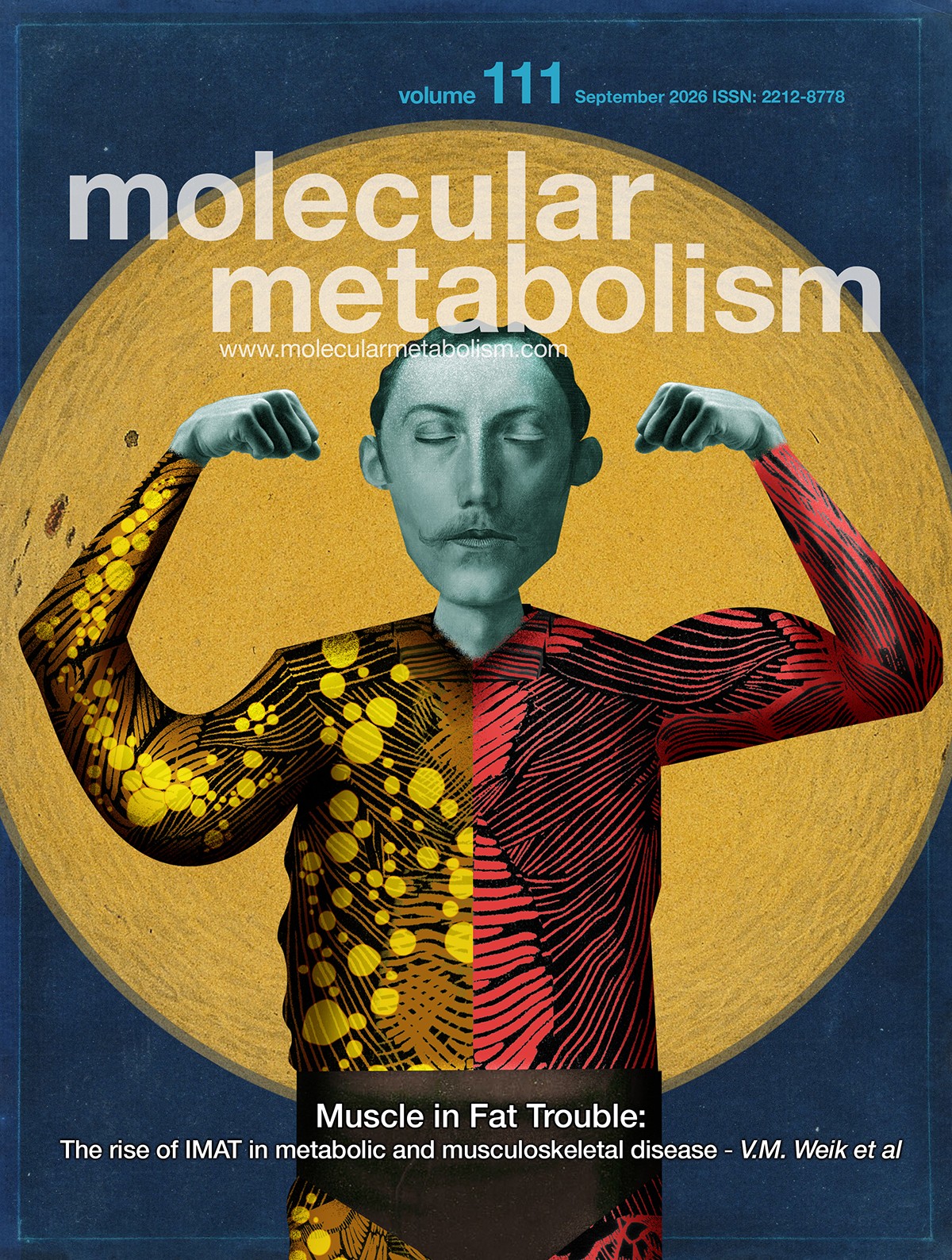
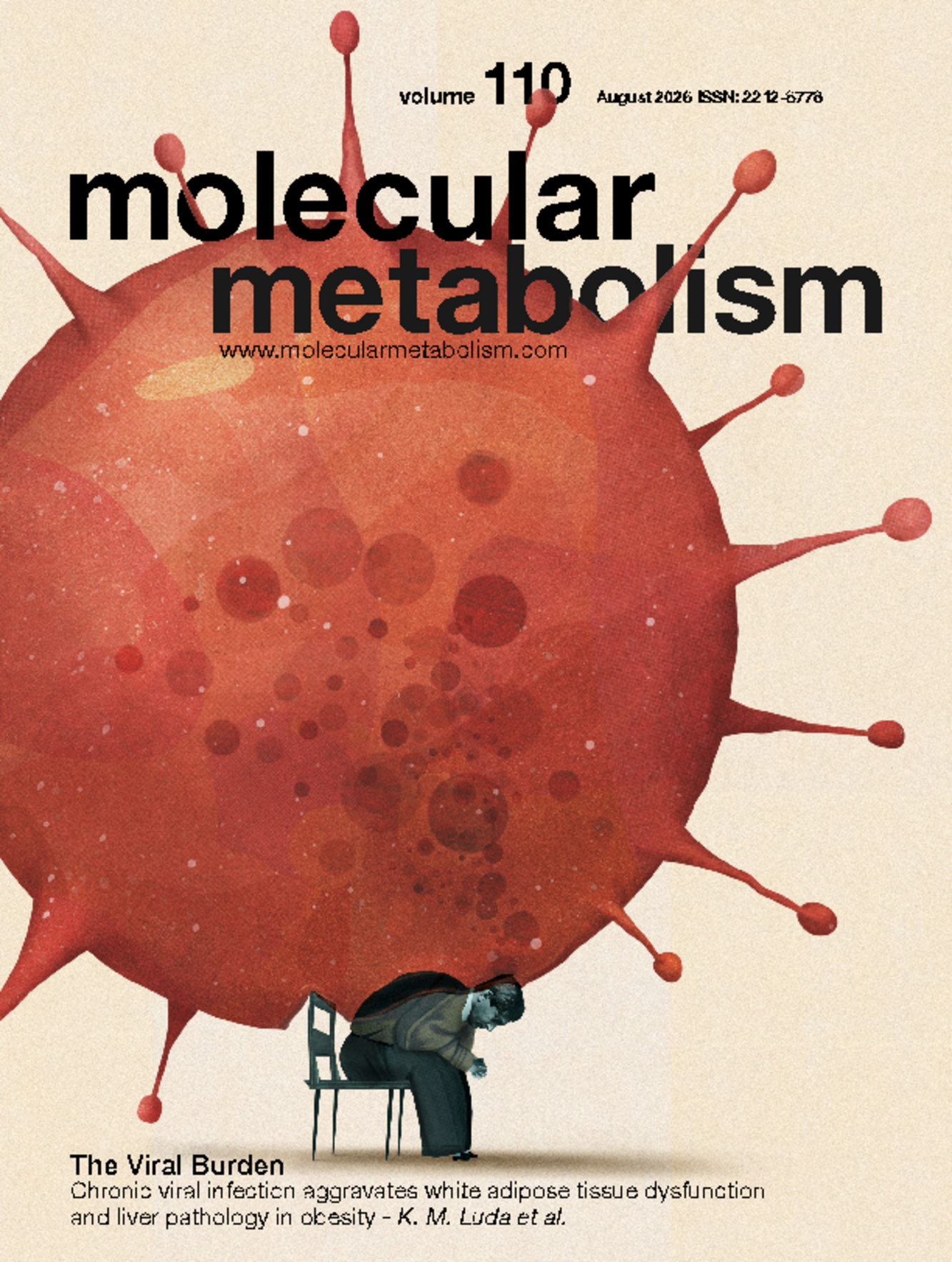
Viral infections are recognized as contributing factors in the pathogenesis of metabolic diseases. Viruses causing chronic infection are particularly important due to their capacity to induce sustained inflammation. Especially individuals with obesity - who exhibit preexisting metabolic abnormalities, low-grade inflammation, and altered antiviral responses - are at increased risk of viral infection-induced metabolic complications. Despite these associations, the specific metabolic consequences of chronic viral infections in obesity remain insufficiently characterized.

Full text


Current Issue

Copper import via CTR1 supports the β3-Adrenergic thermogenic program

Tae-Il Jeon, Young-Seung Lee, Tamara Korolnek, Juyoung Kim, ... Byung-Eun Kim

Copper import via CTR1 supports the β3-Adrenergic thermogenic program

Adaptive thermogenesis requires coordinated activation of mitochondrial oxidation and metabolic remodeling, yet the signals driving this coordination are incompletely understood. Here, we show that cold exposure and β3-adrenergic receptor (β3-AR) stimulation upregulate the high-affinity copper (Cu) importer CTR1 and promote Cu accumulation in thermogenic adipose tissues. Adipocyte-specific Ctr1 knockout (ACKO) mice exhibit markedly reduced energy expenditure and develop severe hypothermia during acute cold challenge. Proteomic analysis of brown adipose tissue (BAT) from ACKO mice reveals coordinated suppression of oxidative phosphorylation and thermogenic metabolic programs, accompanied by attenuation of lipolytic pathways. Cu deficiency also impairs cold- and β3-AR-induced lipolytic activation, including reduced HSL phosphorylation and lipid clearance in both BAT and inguinal white adipose tissue (iWAT). Although BAT-specific Ctr1 deletion (BCKO) leaves acute β3-adrenergic responses largely intact, these mice still exhibit cold intolerance, indicating that BAT Cu homeostasis is critical for sustaining thermogenic capacity during cold challenge. Treatment with the Cu ionophore elesclomol partially restores mitochondrial oxidative capacity and improves cold tolerance in ACKO mice. Together, these findings identify CTR1-dependent Cu import as an inducible component of the β3-adrenergic thermogenic program and establish intracellular Cu availability as a key determinant of thermogenic capacity during adaptive thermogenesis.

Articles in Press

Copper import via CTR1 supports the β3-Adrenergic thermogenic program

Tae-Il Jeon, Young-Seung Lee, Tamara Korolnek, Juyoung Kim, ... Byung-Eun Kim

Copper import via CTR1 supports the β3-Adrenergic thermogenic program

Adaptive thermogenesis requires coordinated activation of mitochondrial oxidation and metabolic remodeling, yet the signals driving this coordination are incompletely understood. Here, we show that cold exposure and β3-adrenergic receptor (β3-AR) stimulation upregulate the high-affinity copper (Cu) importer CTR1 and promote Cu accumulation in thermogenic adipose tissues. Adipocyte-specific Ctr1 knockout (ACKO) mice exhibit markedly reduced energy expenditure and develop severe hypothermia during acute cold challenge. Proteomic analysis of brown adipose tissue (BAT) from ACKO mice reveals coordinated suppression of oxidative phosphorylation and thermogenic metabolic programs, accompanied by attenuation of lipolytic pathways. Cu deficiency also impairs cold- and β3-AR-induced lipolytic activation, including reduced HSL phosphorylation and lipid clearance in both BAT and inguinal white adipose tissue (iWAT). Although BAT-specific Ctr1 deletion (BCKO) leaves acute β3-adrenergic responses largely intact, these mice still exhibit cold intolerance, indicating that BAT Cu homeostasis is critical for sustaining thermogenic capacity during cold challenge. Treatment with the Cu ionophore elesclomol partially restores mitochondrial oxidative capacity and improves cold tolerance in ACKO mice. Together, these findings identify CTR1-dependent Cu import as an inducible component of the β3-adrenergic thermogenic program and establish intracellular Cu availability as a key determinant of thermogenic capacity during adaptive thermogenesis.

Early Bird Registration extended until 16 Aug!

13th
Helmholtz Diabetes Conference 

Munich, 21-23. Sep 2026                                                                                                                             

2024 impact factor: 6.6

You are what you eat

Here is a video of Vimeo. When the iframes is activated, a connection to Vimeo is established and, if necessary, cookies from Vimeo are also used. For further information on cookies policy click here.

Auf Werbeinhalte, die vor, während oder nach Videos von WEBSITE-URL eingeblendet werden, hat WEBSITE-URL keinen Einfluss. Wir übernehmen keine Gewähr für diese Inhalte. Weitere Informationen finden Sie hier.