Cover Story Current Issue

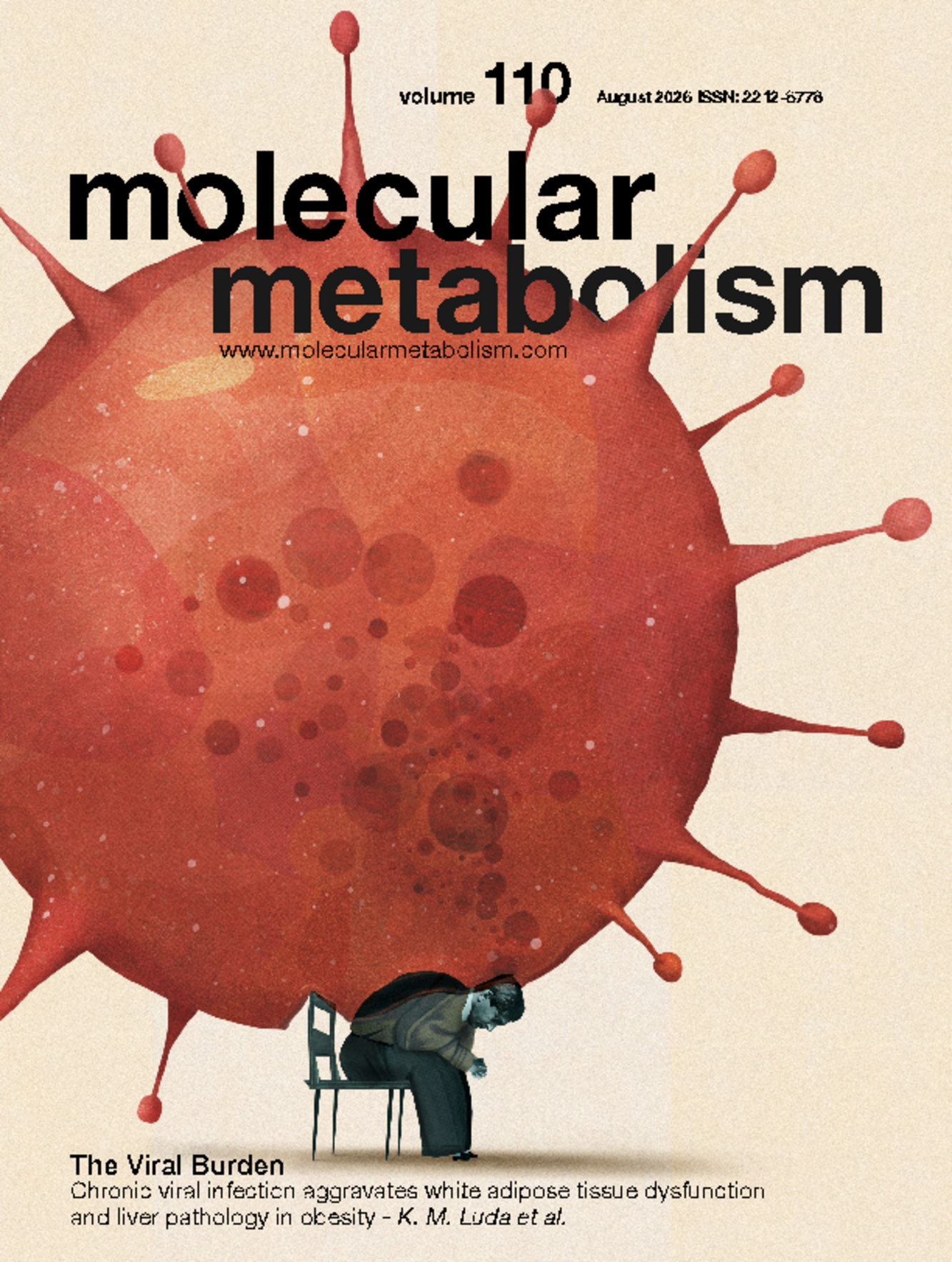
Viral infections are recognized as contributing factors in the pathogenesis of metabolic diseases. Viruses causing chronic infection are particularly important due to their capacity to induce sustained inflammation. Especially individuals with obesity - who exhibit preexisting metabolic abnormalities, low-grade inflammation, and altered antiviral responses - are at increased risk of viral infection-induced metabolic complications. Despite these associations, the specific metabolic consequences of chronic viral infections in obesity remain insufficiently characterized.

Full text


Current Issue

Chronic viral infection aggravates white adipose tissue dysfunction and liver pathology in obesity

Katarzyna M. Luda, Marianne Agerholm, Si Brask Sonne, Dipsikha Biswas, ... Kei Sakamoto

Chronic viral infection aggravates white adipose tissue dysfunction and liver pathology in obesity


Background

White adipose tissue (WAT) plays a central role in maintaining systemic metabolic homeostasis by buffering lipid flux throughout the body. Impairment of this lipid-buffering capacity is a hallmark of obesity and has also been observed during chronic viral infection. Such dysfunction is closely associated with ectopic fat accumulation, particularly in the liver.

Objectives

We hypothesized that the coexistence of obesity and chronic viral infection exacerbates WAT dysfunction, thereby promoting liver pathology. However, the specific response of obese WAT to chronic viral infection – and its downstream impact on liver health – remains to be explored.

Methods

To investigate this interaction, we employed a model of chronic viral infection in mice using lymphocytic choriomeningitis virus (LCMV) clone 13.

Results

In obese hosts, chronic infection caused sustained WAT depletion and progressive weight loss, accompanied by a reduction of Tim-4+ eWAT-resident macrophages and features reminiscent of lipodystrophy and aggravated metabolic dysfunction-associated steatotic liver disease (MASLD). Depletion of CD8+ T cells, the key mediators of LCMV-driven weight loss in lean mice, only modestly attenuated weight loss and did not ameliorate liver pathology in obese mice. Likewise, therapeutic interventions including TNF-α blockade and glycemic control with metformin did not reverse infection-induced weight loss; moreover, TNF-α blockade failed to improve liver pathology.

Conclusions

Collectively, these findings reveal a previously unrecognized crosstalk between WAT and the liver in infection-driven MASLD, highlight distinct responses in WAT of obese mice compared to their lean counterpart, and underscore the increased susceptibility to virus-induced metabolic complications in obesity.


Articles in Press

Chronic viral infection aggravates white adipose tissue dysfunction and liver pathology in obesity

Katarzyna M. Luda, Marianne Agerholm, Si Brask Sonne, Dipsikha Biswas, ... Kei Sakamoto

Chronic viral infection aggravates white adipose tissue dysfunction and liver pathology in obesity


Background

White adipose tissue (WAT) plays a central role in maintaining systemic metabolic homeostasis by buffering lipid flux throughout the body. Impairment of this lipid-buffering capacity is a hallmark of obesity and has also been observed during chronic viral infection. Such dysfunction is closely associated with ectopic fat accumulation, particularly in the liver.

Objectives

We hypothesized that the coexistence of obesity and chronic viral infection exacerbates WAT dysfunction, thereby promoting liver pathology. However, the specific response of obese WAT to chronic viral infection – and its downstream impact on liver health – remains to be explored.

Methods

To investigate this interaction, we employed a model of chronic viral infection in mice using lymphocytic choriomeningitis virus (LCMV) clone 13.

Results

In obese hosts, chronic infection caused sustained WAT depletion and progressive weight loss, accompanied by a reduction of Tim-4+ eWAT-resident macrophages and features reminiscent of lipodystrophy and aggravated metabolic dysfunction-associated steatotic liver disease (MASLD). Depletion of CD8+ T cells, the key mediators of LCMV-driven weight loss in lean mice, only modestly attenuated weight loss and did not ameliorate liver pathology in obese mice. Likewise, therapeutic interventions including TNF-α blockade and glycemic control with metformin did not reverse infection-induced weight loss; moreover, TNF-α blockade failed to improve liver pathology.

Conclusions

Collectively, these findings reveal a previously unrecognized crosstalk between WAT and the liver in infection-driven MASLD, highlight distinct responses in WAT of obese mice compared to their lean counterpart, and underscore the increased susceptibility to virus-induced metabolic complications in obesity.


Early Bird Registration extended until 16 Aug!

13th
Helmholtz Diabetes Conference 

Munich, 21-23. Sep 2026                                                                                                                             

2024 impact factor: 6.6

You are what you eat

Here is a video of Vimeo. When the iframes is activated, a connection to Vimeo is established and, if necessary, cookies from Vimeo are also used. For further information on cookies policy click here.

Auf Werbeinhalte, die vor, während oder nach Videos von WEBSITE-URL eingeblendet werden, hat WEBSITE-URL keinen Einfluss. Wir übernehmen keine Gewähr für diese Inhalte. Weitere Informationen finden Sie hier.