
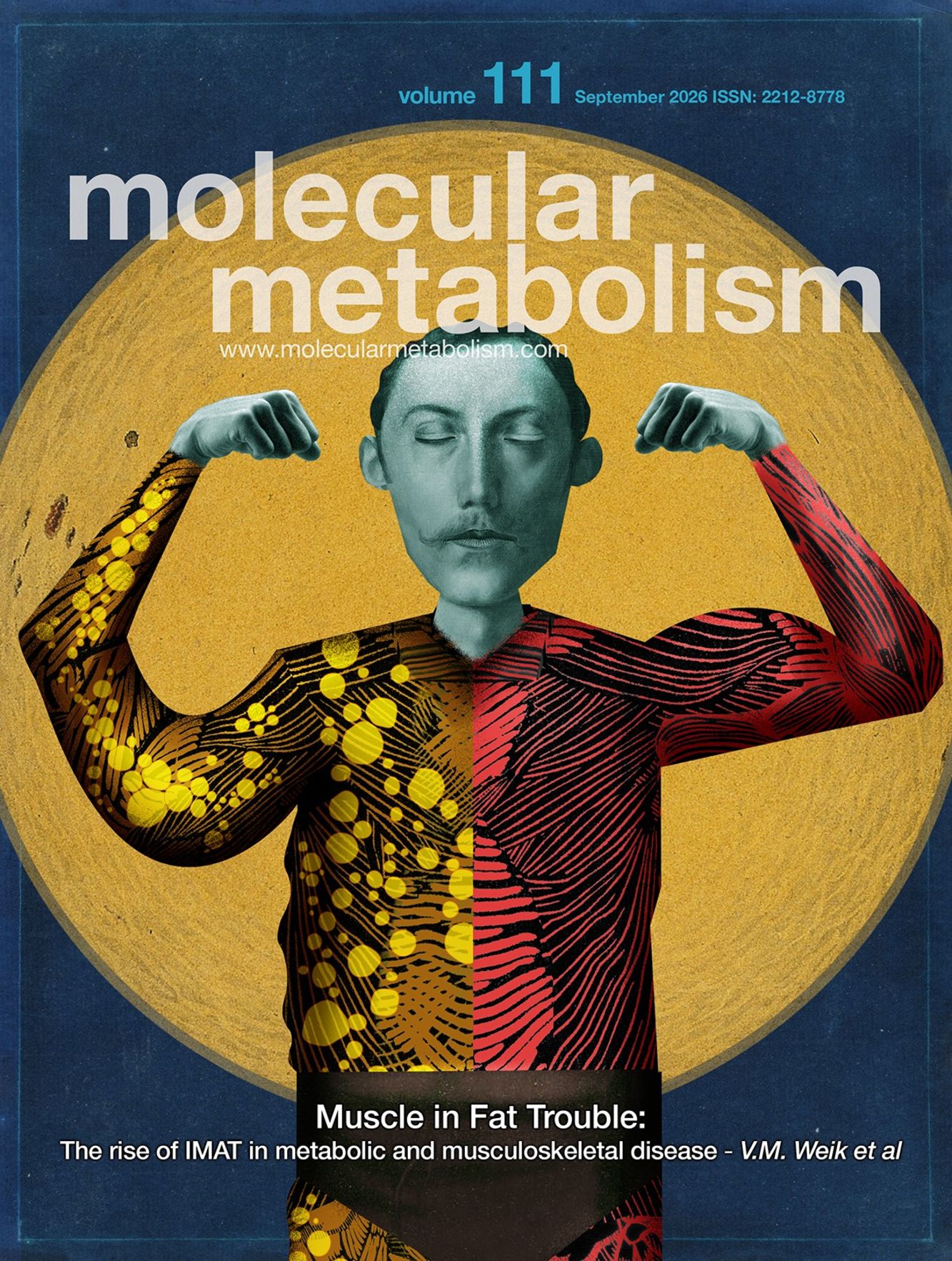


Cover Story Current Issue
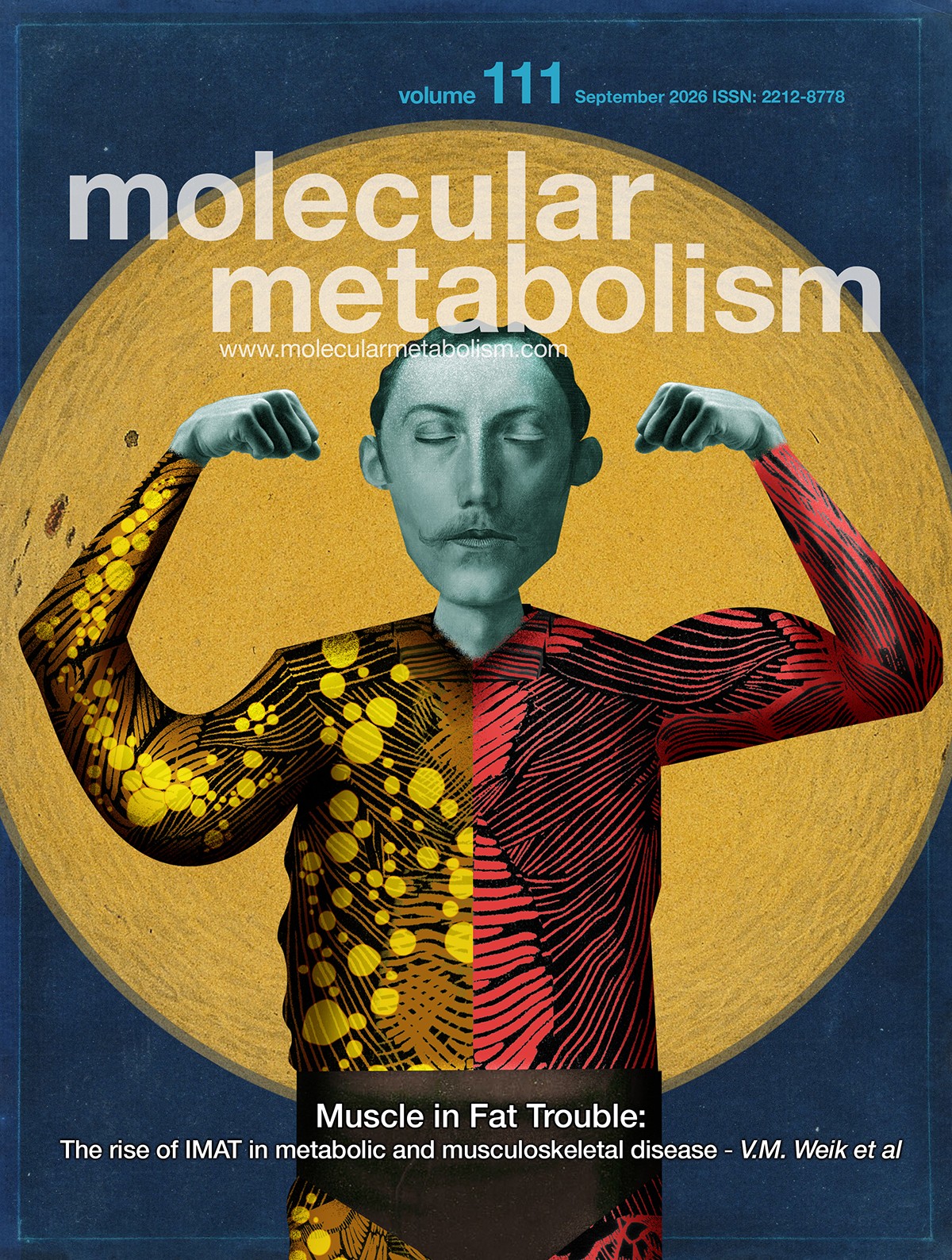
Skeletal muscle is the largest organ in the human body by mass, making up approximately 40 % of total body weight. Furthermore, it accounts for the majority of insulin-stimulated glucose uptake and is also highly involved in lipid metabolism. Lipids can accumulate in muscle through different distinct depots: as intramyocellular lipids (IMCL), stored as triglyceride-containing droplets within muscle cells and as intermuscular adipose tissue (IMAT), located between muscle fiber bundles beneath the deep muscle fascia. The muscular fat depots have been positively correlated with an increased body fat content in obesity, just like subcutaneous and visceral adipose tissue (SAT and VAT, respectively). IMCL, IMAT, VAT and SAT have additionally been linked to insulin resistance and type 2 diabetes mellitus (T2D).
Current Issue
Metabolite-driven remodeling of hepatic lipid metabolism by the plasticizer di-isononyl phthalate
Metabolite-driven remodeling of hepatic lipid metabolism by the plasticizer di-isononyl phthalate
Introduction
Phthalates are widely used as plasticizers in consumer products and are suspected to be metabolism-disrupting chemicals. Di-isononyl phthalate (DINP) is commonly recognized as less hazardous substitute for more studied di(2-ethylhexyl) phthalate (DEHP).
Materials and methods
The effects of DINP on hepatic lipid metabolism were studied using C57BL/6J mice with diet-induced obesity, and human HepaRG and C3A cell lines. The mice were orally exposed to 0, 1.5, 15 or 150 mg/kg bw/d DINP for 20 weeks, followed by assessment of glucose and insulin tolerance, hepatic histology, transcriptome and metabolome. The cells were exposed to DINP and its metabolites, followed by measurement of mitochondrial function and nuclear receptor activation.
Results
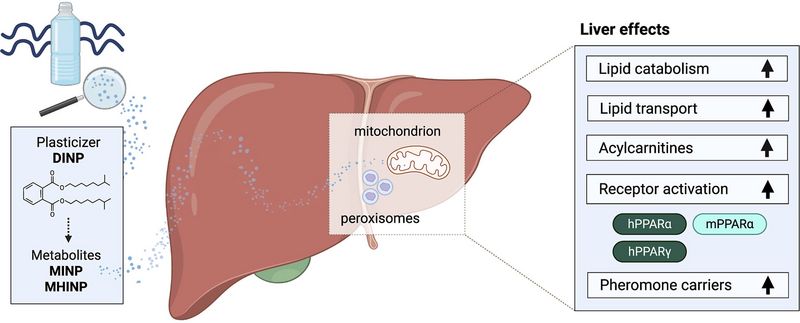
The highest dose of DINP decreased hepatic lipid droplets and slightly attenuated weight gain and glucose tolerance of the mice. DINP exposure elevated acylcarnitine levels, indicating altered fatty acid beta-oxidation, which was accompanied by enrichment in mitochondrial and peroxisomal lipid metabolism pathways at transcriptomics level. In vitro, monoisononyl phthalate (MINP), the primary metabolite of DINP, increased mitochondrial respiration and beta-oxidation in presence of long-chain fatty acids. DINP metabolites activated peroxisome proliferator-activated receptors (PPARs) of both mouse and human, with an activation profile partially distinct from DEHP.
Conclusions
Our findings indicate that DINP remodels hepatic lipid metabolism through its active metabolites via PPARs at high doses, with additional modes of action at lower exposure levels. Due to species-specific differences in nuclear receptor activation potencies, the adverse or potentially beneficial nature of these effects in humans remains ambiguous.
Articles in Press
Metabolite-driven remodeling of hepatic lipid metabolism by the plasticizer di-isononyl phthalate
Metabolite-driven remodeling of hepatic lipid metabolism by the plasticizer di-isononyl phthalate
Introduction
Phthalates are widely used as plasticizers in consumer products and are suspected to be metabolism-disrupting chemicals. Di-isononyl phthalate (DINP) is commonly recognized as less hazardous substitute for more studied di(2-ethylhexyl) phthalate (DEHP).
Materials and methods
The effects of DINP on hepatic lipid metabolism were studied using C57BL/6J mice with diet-induced obesity, and human HepaRG and C3A cell lines. The mice were orally exposed to 0, 1.5, 15 or 150 mg/kg bw/d DINP for 20 weeks, followed by assessment of glucose and insulin tolerance, hepatic histology, transcriptome and metabolome. The cells were exposed to DINP and its metabolites, followed by measurement of mitochondrial function and nuclear receptor activation.
Results
The highest dose of DINP decreased hepatic lipid droplets and slightly attenuated weight gain and glucose tolerance of the mice. DINP exposure elevated acylcarnitine levels, indicating altered fatty acid beta-oxidation, which was accompanied by enrichment in mitochondrial and peroxisomal lipid metabolism pathways at transcriptomics level. In vitro, monoisononyl phthalate (MINP), the primary metabolite of DINP, increased mitochondrial respiration and beta-oxidation in presence of long-chain fatty acids. DINP metabolites activated peroxisome proliferator-activated receptors (PPARs) of both mouse and human, with an activation profile partially distinct from DEHP.
Conclusions
Our findings indicate that DINP remodels hepatic lipid metabolism through its active metabolites via PPARs at high doses, with additional modes of action at lower exposure levels. Due to species-specific differences in nuclear receptor activation potencies, the adverse or potentially beneficial nature of these effects in humans remains ambiguous.
Registration still open - sign up now!

13th
Helmholtz Diabetes Conference
Munich, 21-23. Sep 2026

2024 impact factor: 6.6
You are what you eat
Here is a video of Vimeo. When the iframes is activated, a connection to Vimeo is established and, if necessary, cookies from Vimeo are also used. For further information on cookies policy click here.