
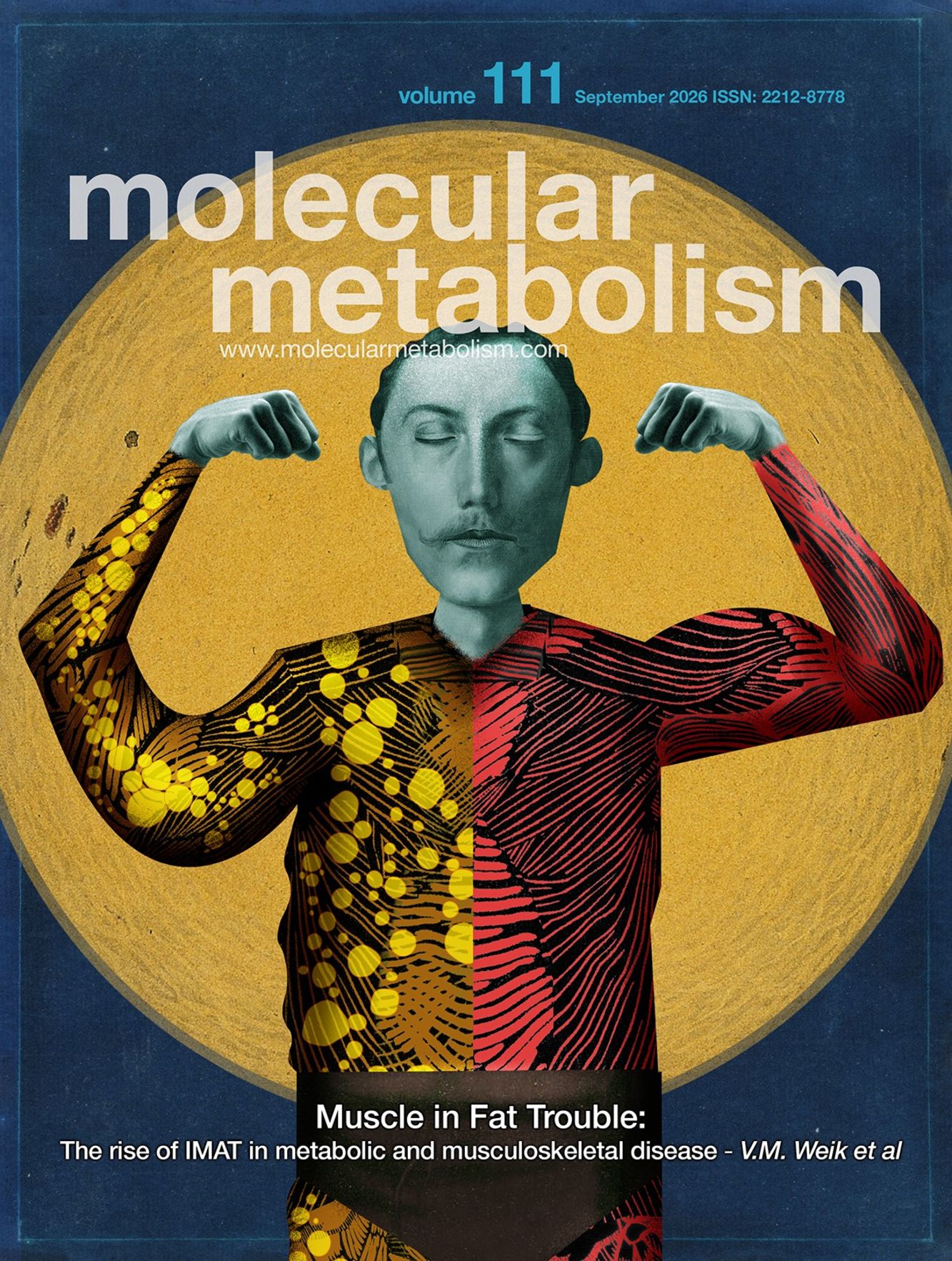


Cover Story Current Issue
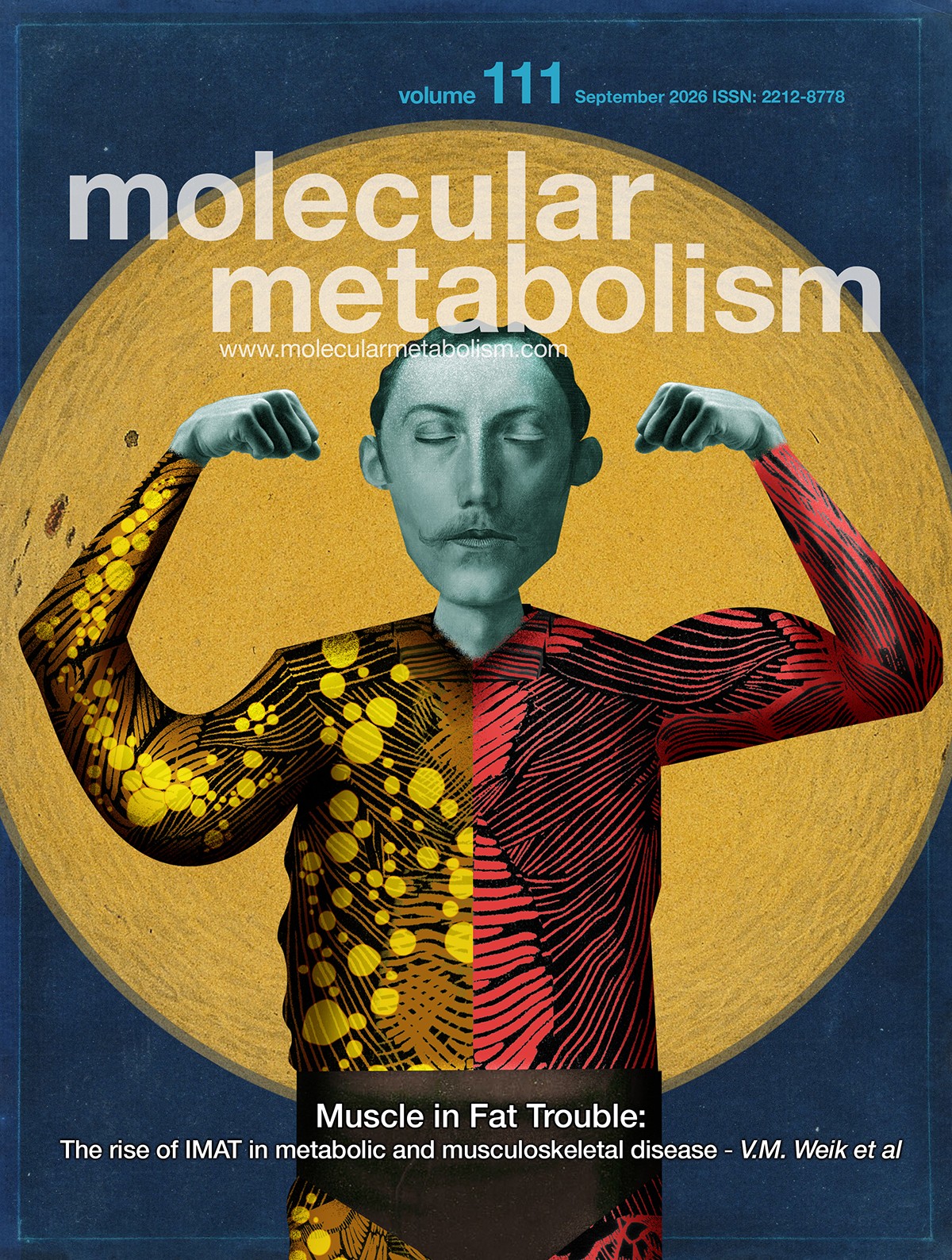
Skeletal muscle is the largest organ in the human body by mass, making up approximately 40 % of total body weight. Furthermore, it accounts for the majority of insulin-stimulated glucose uptake and is also highly involved in lipid metabolism. Lipids can accumulate in muscle through different distinct depots: as intramyocellular lipids (IMCL), stored as triglyceride-containing droplets within muscle cells and as intermuscular adipose tissue (IMAT), located between muscle fiber bundles beneath the deep muscle fascia. The muscular fat depots have been positively correlated with an increased body fat content in obesity, just like subcutaneous and visceral adipose tissue (SAT and VAT, respectively). IMCL, IMAT, VAT and SAT have additionally been linked to insulin resistance and type 2 diabetes mellitus (T2D).
Current Issue
RNASET2 degrades mRNAs that protect against lipotoxicity
RNASET2 degrades mRNAs that protect against lipotoxicity
Objectives
RNASET2 is a lysosomal RNase whose enzymatic function is required for early events in lipotoxicity. However, the endogenous RNA substrates of RNASET2 that modulate lipid-induced cell death are not known. The purpose of this study was to identify RNASET2 substrates that impact lipotoxic stress.
Methods
RNA sequencing was used to identify RNAs that increase in abundance in human cells upon RNASET2 knockdown, and actinomycin D assays were used to show that RNASET2 impacted decay rates of these RNAs. We tested for the presence of these RNAs in immunoisolated lysosomes and determined the contribution of the lysosomal membrane transporter SIDT2 in delivery of these RNAs to the lysosome. A role for these RNAs in lipotoxic cell death was directly tested in loss- and gain of function analysis.
Results
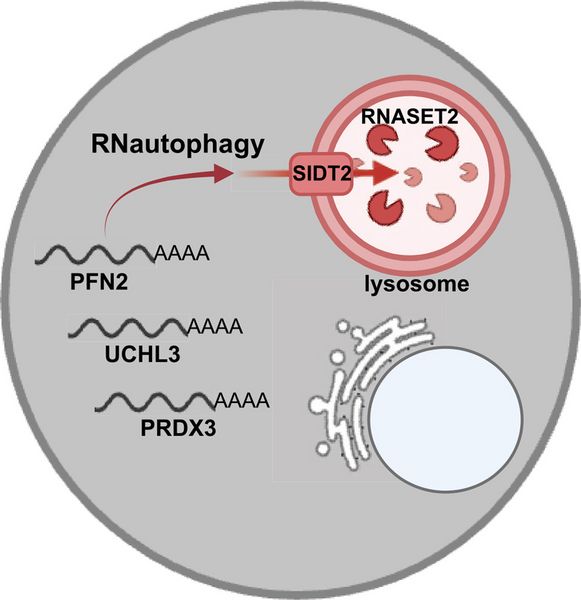
RNASET2 knockdown increased steady-state abundance of UCHL3, PFN2 and PRDX3 mRNAs and prolonged their decay rate, leading to increased protein expression. These mRNAs were delivered to the lysosomal lumen by the lysosomal membrane transporter SIDT2 that mediates RNautophagy. While UCHL3 and PFN2 have not previously been implicated in lipotoxic responses, expression of these proteins protected against lipid-induced cell death.
Conclusions
Our study identified specific mRNA substrates of RNASET2 and uncovered a previously unexplored function for lysosomes and RNautophagy in regulation of the response to metabolic stress. Moreover, we demonstrated that RNautophagy selectively regulates turnover of specific endogenous RNAs and thereby impacts regulation of gene expression.
Articles in Press
RNASET2 degrades mRNAs that protect against lipotoxicity
RNASET2 degrades mRNAs that protect against lipotoxicity
Objectives
RNASET2 is a lysosomal RNase whose enzymatic function is required for early events in lipotoxicity. However, the endogenous RNA substrates of RNASET2 that modulate lipid-induced cell death are not known. The purpose of this study was to identify RNASET2 substrates that impact lipotoxic stress.
Methods
RNA sequencing was used to identify RNAs that increase in abundance in human cells upon RNASET2 knockdown, and actinomycin D assays were used to show that RNASET2 impacted decay rates of these RNAs. We tested for the presence of these RNAs in immunoisolated lysosomes and determined the contribution of the lysosomal membrane transporter SIDT2 in delivery of these RNAs to the lysosome. A role for these RNAs in lipotoxic cell death was directly tested in loss- and gain of function analysis.
Results
RNASET2 knockdown increased steady-state abundance of UCHL3, PFN2 and PRDX3 mRNAs and prolonged their decay rate, leading to increased protein expression. These mRNAs were delivered to the lysosomal lumen by the lysosomal membrane transporter SIDT2 that mediates RNautophagy. While UCHL3 and PFN2 have not previously been implicated in lipotoxic responses, expression of these proteins protected against lipid-induced cell death.
Conclusions
Our study identified specific mRNA substrates of RNASET2 and uncovered a previously unexplored function for lysosomes and RNautophagy in regulation of the response to metabolic stress. Moreover, we demonstrated that RNautophagy selectively regulates turnover of specific endogenous RNAs and thereby impacts regulation of gene expression.
Registration still open - sign up now!

13th
Helmholtz Diabetes Conference
Munich, 21-23. Sep 2026

2024 impact factor: 6.6
You are what you eat
Here is a video of Vimeo. When the iframes is activated, a connection to Vimeo is established and, if necessary, cookies from Vimeo are also used. For further information on cookies policy click here.