Cover Story Current Issue

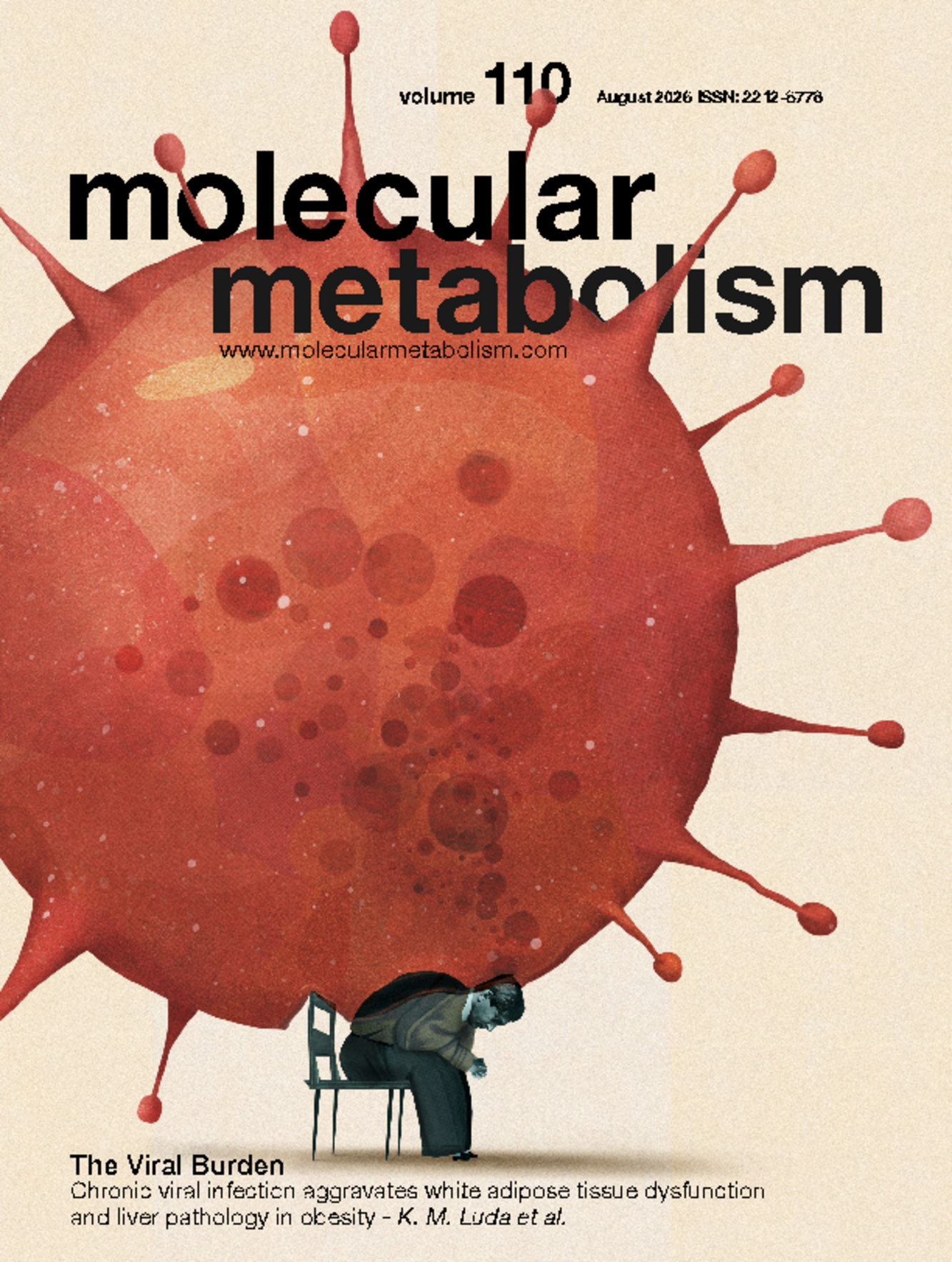
Viral infections are recognized as contributing factors in the pathogenesis of metabolic diseases. Viruses causing chronic infection are particularly important due to their capacity to induce sustained inflammation. Especially individuals with obesity - who exhibit preexisting metabolic abnormalities, low-grade inflammation, and altered antiviral responses - are at increased risk of viral infection-induced metabolic complications. Despite these associations, the specific metabolic consequences of chronic viral infections in obesity remain insufficiently characterized.

Full text


Current Issue

Skeletal muscle-specific deficiency of Rab geranylgeranyl transferase beta subunit induces myopathy and exacerbates the symptoms caused by HMG-CoA reductase deficiency in mice

Yoshinori Osaki, Yuhei Mizunoe, Yoshimi Nakagawa, Takafumi Miyamoto, ... Hitoshi Shimano

Skeletal muscle-specific deficiency of Rab geranylgeranyl transferase beta subunit induces myopathy and exacerbates the symptoms caused by HMG-CoA reductase deficiency in mice

Objectives

Statins (HMG-CoA reductase inhibitors) are associated with myopathy, yet the precise in vivo mechanisms underlying this association remain unclear. Emerging evidence implicates a deficiency of geranylgeranyl pyrophosphate (GGPP), a key downstream isoprenoid metabolite of the mevalonate pathway. We employed novel muscle-specific genetic mouse models to elucidate the roles of GGPP and Rab geranylgeranyl transferase β (RabGGT-β) in the development of myopathy.

Methods

Using doxycycline-inducible Cre-LoxP technology, we generated three skeletal muscle-specific knockout (KO) models: Hmgcr-DimKO, Rabggtb-DimKO, and combined Hmgcr/Rabggtb-DimKO mice. The severity of myopathy was evaluated based on serum creatine kinase levels and histological examination. Mitochondrial mass and function were rigorously quantified. Prenylation deficit in Rabggtb-DimKO mice was confirmed via subcellular fractionation. To validate GGPP's involvement, rescue experiments were conducted using its precursor, geranylgeraniol (GGOH).

Results

Hmgcr KO resulted in pronounced myopathy, marked by an early reduction in mitochondria-rich myosin heavy chain (MyHC) type I and IIa muscle fibers, followed by a later reduction in mitochondria-poor glycolytic MyHC type IIb muscle fibers, and these changes were reversed by GGOH administration. Rabggtb-DimKO mice developed myopathy later than Hmgcr-DimKO mice; however, in Hmgcr/Rabggtb-DimKO mice, myopathy was dramatically accelerated and more severe. Across all models, mitochondrial dysfunction emerged early—preceding clinical signs of myopathy—consistent with a causal relationship.

Conclusions

Our findings demonstrate that myopathy induced by HMGCR deficiency is primarily driven by GGPP depletion in a mouse model. Furthermore, impaired RabGGT-β-mediated protein geranylgeranylation represents a critical downstream mechanism that aggravates the myopathic phenotype. Early mitochondrial abnormalities may contribute to the pathogenesis of myopathy due to disruption of the mevalonate pathway.

  •  

Articles in Press

Skeletal muscle-specific deficiency of Rab geranylgeranyl transferase beta subunit induces myopathy and exacerbates the symptoms caused by HMG-CoA reductase deficiency in mice

Yoshinori Osaki, Yuhei Mizunoe, Yoshimi Nakagawa, Takafumi Miyamoto, ... Hitoshi Shimano

Skeletal muscle-specific deficiency of Rab geranylgeranyl transferase beta subunit induces myopathy and exacerbates the symptoms caused by HMG-CoA reductase deficiency in mice

Objectives

Statins (HMG-CoA reductase inhibitors) are associated with myopathy, yet the precise in vivo mechanisms underlying this association remain unclear. Emerging evidence implicates a deficiency of geranylgeranyl pyrophosphate (GGPP), a key downstream isoprenoid metabolite of the mevalonate pathway. We employed novel muscle-specific genetic mouse models to elucidate the roles of GGPP and Rab geranylgeranyl transferase β (RabGGT-β) in the development of myopathy.

Methods

Using doxycycline-inducible Cre-LoxP technology, we generated three skeletal muscle-specific knockout (KO) models: Hmgcr-DimKO, Rabggtb-DimKO, and combined Hmgcr/Rabggtb-DimKO mice. The severity of myopathy was evaluated based on serum creatine kinase levels and histological examination. Mitochondrial mass and function were rigorously quantified. Prenylation deficit in Rabggtb-DimKO mice was confirmed via subcellular fractionation. To validate GGPP's involvement, rescue experiments were conducted using its precursor, geranylgeraniol (GGOH).

Results

Hmgcr KO resulted in pronounced myopathy, marked by an early reduction in mitochondria-rich myosin heavy chain (MyHC) type I and IIa muscle fibers, followed by a later reduction in mitochondria-poor glycolytic MyHC type IIb muscle fibers, and these changes were reversed by GGOH administration. Rabggtb-DimKO mice developed myopathy later than Hmgcr-DimKO mice; however, in Hmgcr/Rabggtb-DimKO mice, myopathy was dramatically accelerated and more severe. Across all models, mitochondrial dysfunction emerged early—preceding clinical signs of myopathy—consistent with a causal relationship.

Conclusions

Our findings demonstrate that myopathy induced by HMGCR deficiency is primarily driven by GGPP depletion in a mouse model. Furthermore, impaired RabGGT-β-mediated protein geranylgeranylation represents a critical downstream mechanism that aggravates the myopathic phenotype. Early mitochondrial abnormalities may contribute to the pathogenesis of myopathy due to disruption of the mevalonate pathway.

  •  

Early Bird Registration extended until 16 Aug!

13th
Helmholtz Diabetes Conference 

Munich, 21-23. Sep 2026                                                                                                                             

2024 impact factor: 6.6

You are what you eat

Here is a video of Vimeo. When the iframes is activated, a connection to Vimeo is established and, if necessary, cookies from Vimeo are also used. For further information on cookies policy click here.

Auf Werbeinhalte, die vor, während oder nach Videos von WEBSITE-URL eingeblendet werden, hat WEBSITE-URL keinen Einfluss. Wir übernehmen keine Gewähr für diese Inhalte. Weitere Informationen finden Sie hier.