Cover Story Current Issue

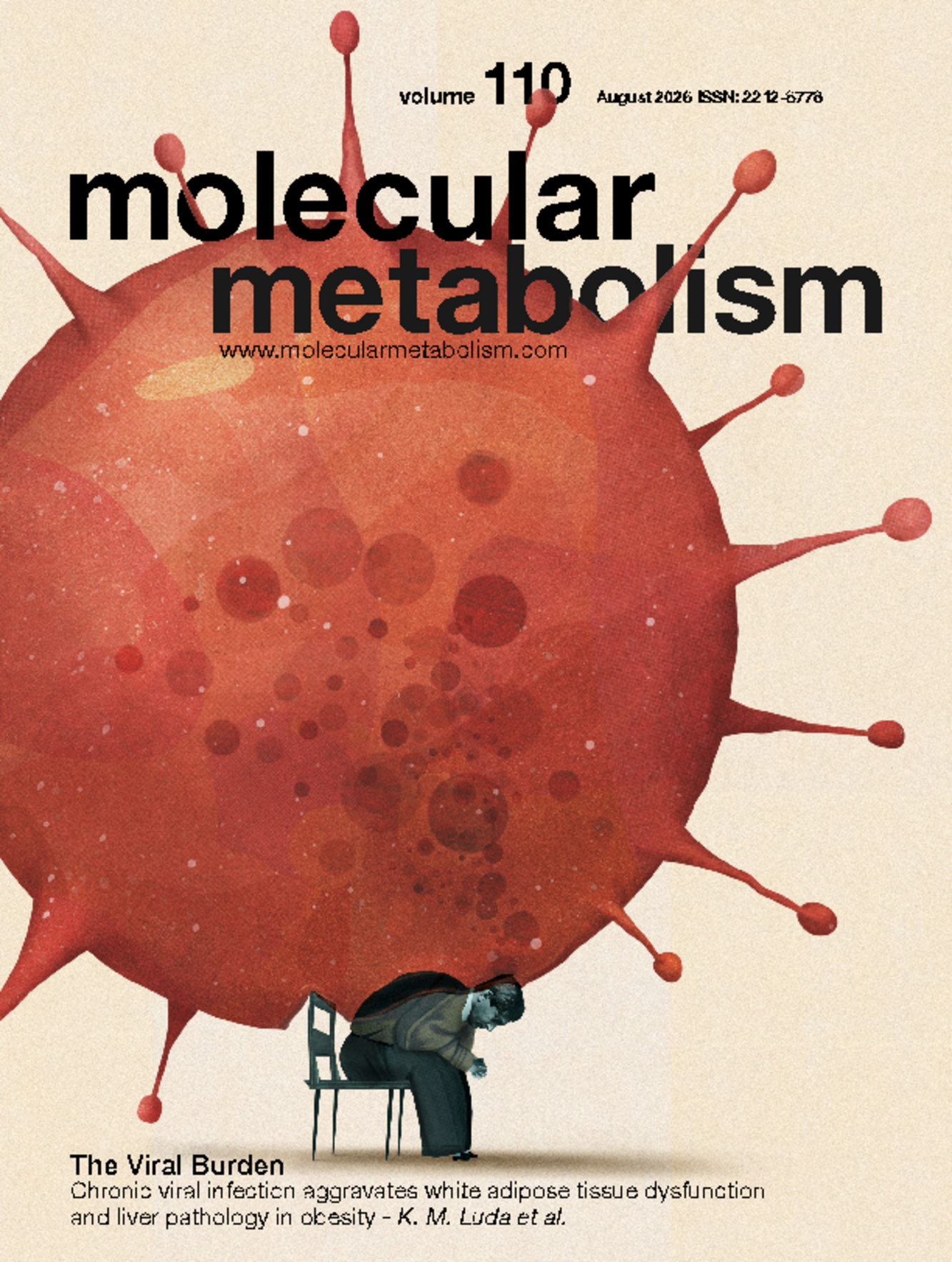
Viral infections are recognized as contributing factors in the pathogenesis of metabolic diseases. Viruses causing chronic infection are particularly important due to their capacity to induce sustained inflammation. Especially individuals with obesity - who exhibit preexisting metabolic abnormalities, low-grade inflammation, and altered antiviral responses - are at increased risk of viral infection-induced metabolic complications. Despite these associations, the specific metabolic consequences of chronic viral infections in obesity remain insufficiently characterized.

Full text


Current Issue

Prenatal metabolic adversity reprograms insulin-responsive transcription in the developing nucleus accumbens

Bonnie Alberry, Barbara Barth, Aashita Batra, Marcio Bonesso Alves, ... Patricia Pelufo Silveira

Prenatal metabolic adversity reprograms insulin-responsive transcription in the developing nucleus accumbens

Prenatal metabolic adversity, including fetal growth restriction (FR), programs long-term alterations in systemic and neural insulin sensitivity, yet its impact on insulin signaling within reward-circuit plasticity across development remains poorly understood. Using a rodent model of gestational FR, we examined how early metabolic stress alters insulin regulation of mesolimbic reward circuits using in vivo chronoamperometry to measure nucleus accumbens (NAc) dopamine (DA) release during palatable food exposure, with and without peripheral insulin. We assessed longitudinal consumption behavior and conducted transcriptomic profiling (RNA-Seq) at birth (P0), weaning (P21), and adulthood (P90) following saline or insulin administration. FR blunted immediate NAc DA release in response to palatable food, a deficit specifically reversed by peripheral insulin, indicating altered insulin sensitivity of mesolimbic reward circuits. FR animals also display accelerated initial palatable food consumption. Transcriptomic analysis revealed that FR reprograms the NAc's molecular response to insulin. Across development and sex, only 2–9% of insulin-responsive genes overlap between FR and controls. FR generated condition-specific and frequently inverted transcriptional signatures, affecting genes linked to synaptic plasticity (Cplx3Rab3b) and neurodevelopment (Ccn3). These findings demonstrate that prenatal adversity reconfigures the NAc by altering its molecular and neurochemical responsiveness to insulin. This developmental reprogramming reveals how early metabolic stress reshapes insulin sensitivity within reward circuitry, a mechanism that may contribute to both metabolic and psychiatric disease vulnerability.

Articles in Press

Prenatal metabolic adversity reprograms insulin-responsive transcription in the developing nucleus accumbens

Bonnie Alberry, Barbara Barth, Aashita Batra, Marcio Bonesso Alves, ... Patricia Pelufo Silveira

Prenatal metabolic adversity reprograms insulin-responsive transcription in the developing nucleus accumbens

Prenatal metabolic adversity, including fetal growth restriction (FR), programs long-term alterations in systemic and neural insulin sensitivity, yet its impact on insulin signaling within reward-circuit plasticity across development remains poorly understood. Using a rodent model of gestational FR, we examined how early metabolic stress alters insulin regulation of mesolimbic reward circuits using in vivo chronoamperometry to measure nucleus accumbens (NAc) dopamine (DA) release during palatable food exposure, with and without peripheral insulin. We assessed longitudinal consumption behavior and conducted transcriptomic profiling (RNA-Seq) at birth (P0), weaning (P21), and adulthood (P90) following saline or insulin administration. FR blunted immediate NAc DA release in response to palatable food, a deficit specifically reversed by peripheral insulin, indicating altered insulin sensitivity of mesolimbic reward circuits. FR animals also display accelerated initial palatable food consumption. Transcriptomic analysis revealed that FR reprograms the NAc's molecular response to insulin. Across development and sex, only 2–9% of insulin-responsive genes overlap between FR and controls. FR generated condition-specific and frequently inverted transcriptional signatures, affecting genes linked to synaptic plasticity (Cplx3Rab3b) and neurodevelopment (Ccn3). These findings demonstrate that prenatal adversity reconfigures the NAc by altering its molecular and neurochemical responsiveness to insulin. This developmental reprogramming reveals how early metabolic stress reshapes insulin sensitivity within reward circuitry, a mechanism that may contribute to both metabolic and psychiatric disease vulnerability.

Early Bird Registration extended until 16 Aug!

13th
Helmholtz Diabetes Conference 

Munich, 21-23. Sep 2026                                                                                                                             

2024 impact factor: 6.6

You are what you eat

Here is a video of Vimeo. When the iframes is activated, a connection to Vimeo is established and, if necessary, cookies from Vimeo are also used. For further information on cookies policy click here.

Auf Werbeinhalte, die vor, während oder nach Videos von WEBSITE-URL eingeblendet werden, hat WEBSITE-URL keinen Einfluss. Wir übernehmen keine Gewähr für diese Inhalte. Weitere Informationen finden Sie hier.