Cover Story Current Issue

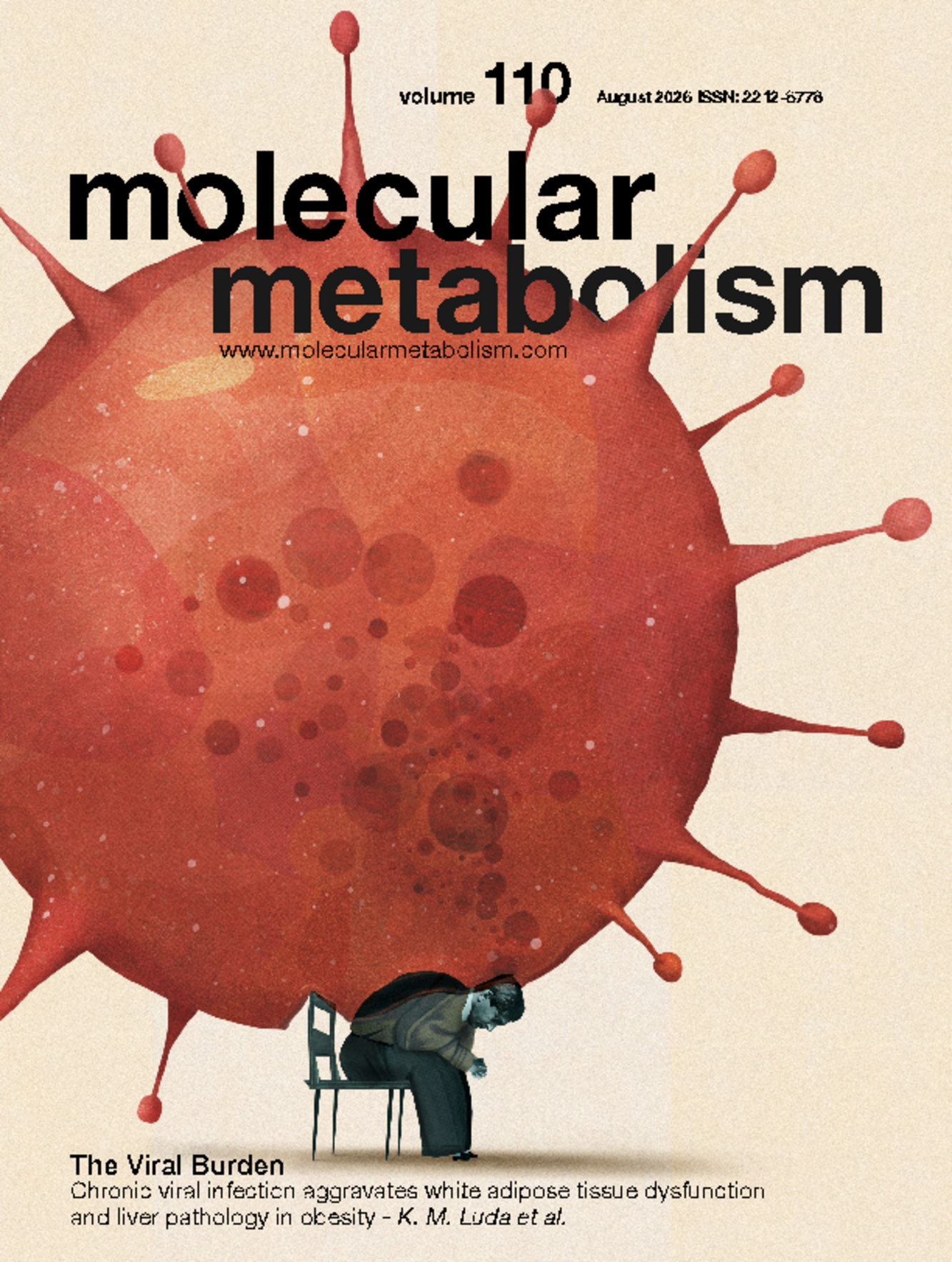
Viral infections are recognized as contributing factors in the pathogenesis of metabolic diseases. Viruses causing chronic infection are particularly important due to their capacity to induce sustained inflammation. Especially individuals with obesity - who exhibit preexisting metabolic abnormalities, low-grade inflammation, and altered antiviral responses - are at increased risk of viral infection-induced metabolic complications. Despite these associations, the specific metabolic consequences of chronic viral infections in obesity remain insufficiently characterized.

Full text


Current Issue

A UFMylation-COPII axis orchestrates lipid transport in intestinal enterocytes and regulates systemic lipid balance

Yaqun Wang, Feng Zhou, Xin Xu, Guangyu Wu, ... Honglin Li


A UFMylation-COPII axis orchestrates lipid transport in intestinal enterocytes and regulates systemic lipid balance

Background

Intestinal lipid absorption and chylomicron secretion are essential for systemic lipid homeostasis, yet the regulatory mechanisms coordinating lipoprotein assembly and ER export remain poorly understood. UFMylation is a newly identified ubiquitin-like modification pathway that plays critical roles in endoplasmic reticulum (ER)-related cellular activities such as protein quality control, ER-associated degradation (ERAD) and ER-phagy. However, its role in intestinal lipid transport and systemic lipid homeostasis is completely unclear.

Methods

To elucidate the role of UFMylation in intestinal lipid metabolism, we generated intestinal epithelial cell (IEC)-specific knockout mouse model of Ufbp1, a key component of the UFMylation pathway, and a double knockout model of Ufbp1 and IRE1α, one of the three signaling branches of Unfolded Protein response (UPR). After observing lipid droplet accumulation in the intestinal tissue of Ufbp1 and IRE1α double knockout mice, we further examined lipid metabolism in Ufbp1 knockout mice under high-fat diet. Finally, we used C2BBe1, a subclone of Caco-2 cell, as a cell model to investigate the role of UFMylation in Coat Protein Complex II (COPII)-mediated lipid transport in enterocytes.

Results

We serendipitously found that the combination of Ufbp1 and IRE1α deficiencies led to dramatic accumulation of lipid droplets in the enterocytes, thereby impairing enterocyte function and causing significant growth retardation. Furthermore, we found that Ufbp1 IEC-specific knockout mice were highly resistant to high-fat diet-induced hyperlipidemia. On the molecular level, we found that the components of the UFMylation pathway interacted with COPII complex and regulates the recruitment of COPII coat to ER-located lipoprotein.

Conclusions

Our findings have established that the UFMylation pathway is a novel mediator of enterocyte lipid transport and a key partner of COPII-mediated trafficking.

Articles in Press

A UFMylation-COPII axis orchestrates lipid transport in intestinal enterocytes and regulates systemic lipid balance

Yaqun Wang, Feng Zhou, Xin Xu, Guangyu Wu, ... Honglin Li


A UFMylation-COPII axis orchestrates lipid transport in intestinal enterocytes and regulates systemic lipid balance

Background

Intestinal lipid absorption and chylomicron secretion are essential for systemic lipid homeostasis, yet the regulatory mechanisms coordinating lipoprotein assembly and ER export remain poorly understood. UFMylation is a newly identified ubiquitin-like modification pathway that plays critical roles in endoplasmic reticulum (ER)-related cellular activities such as protein quality control, ER-associated degradation (ERAD) and ER-phagy. However, its role in intestinal lipid transport and systemic lipid homeostasis is completely unclear.

Methods

To elucidate the role of UFMylation in intestinal lipid metabolism, we generated intestinal epithelial cell (IEC)-specific knockout mouse model of Ufbp1, a key component of the UFMylation pathway, and a double knockout model of Ufbp1 and IRE1α, one of the three signaling branches of Unfolded Protein response (UPR). After observing lipid droplet accumulation in the intestinal tissue of Ufbp1 and IRE1α double knockout mice, we further examined lipid metabolism in Ufbp1 knockout mice under high-fat diet. Finally, we used C2BBe1, a subclone of Caco-2 cell, as a cell model to investigate the role of UFMylation in Coat Protein Complex II (COPII)-mediated lipid transport in enterocytes.

Results

We serendipitously found that the combination of Ufbp1 and IRE1α deficiencies led to dramatic accumulation of lipid droplets in the enterocytes, thereby impairing enterocyte function and causing significant growth retardation. Furthermore, we found that Ufbp1 IEC-specific knockout mice were highly resistant to high-fat diet-induced hyperlipidemia. On the molecular level, we found that the components of the UFMylation pathway interacted with COPII complex and regulates the recruitment of COPII coat to ER-located lipoprotein.

Conclusions

Our findings have established that the UFMylation pathway is a novel mediator of enterocyte lipid transport and a key partner of COPII-mediated trafficking.

Early Bird Registration extended until 16 Aug!

13th
Helmholtz Diabetes Conference 

Munich, 21-23. Sep 2026                                                                                                                             

2024 impact factor: 6.6

You are what you eat

Here is a video of Vimeo. When the iframes is activated, a connection to Vimeo is established and, if necessary, cookies from Vimeo are also used. For further information on cookies policy click here.

Auf Werbeinhalte, die vor, während oder nach Videos von WEBSITE-URL eingeblendet werden, hat WEBSITE-URL keinen Einfluss. Wir übernehmen keine Gewähr für diese Inhalte. Weitere Informationen finden Sie hier.