
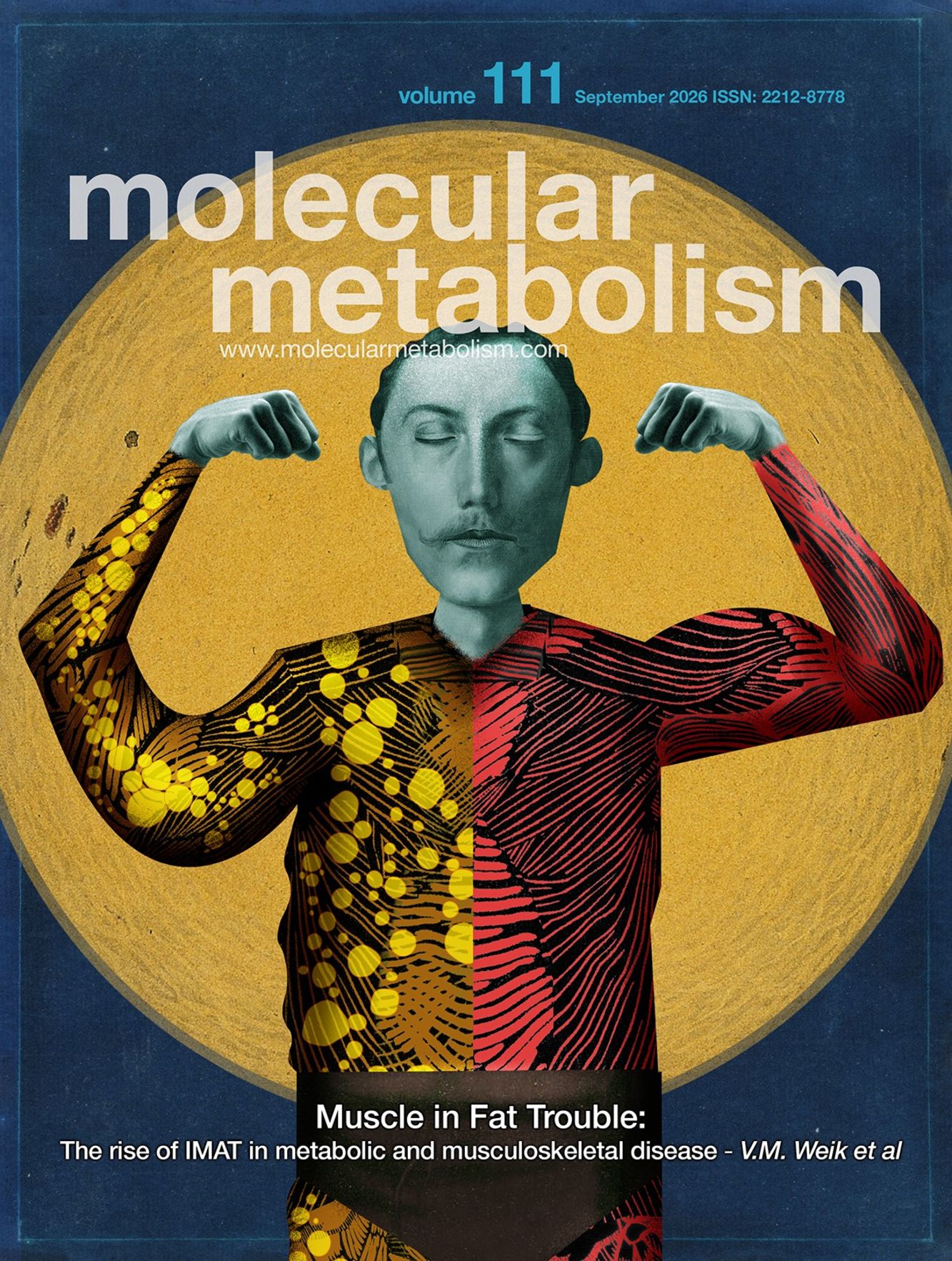


Cover Story Current Issue
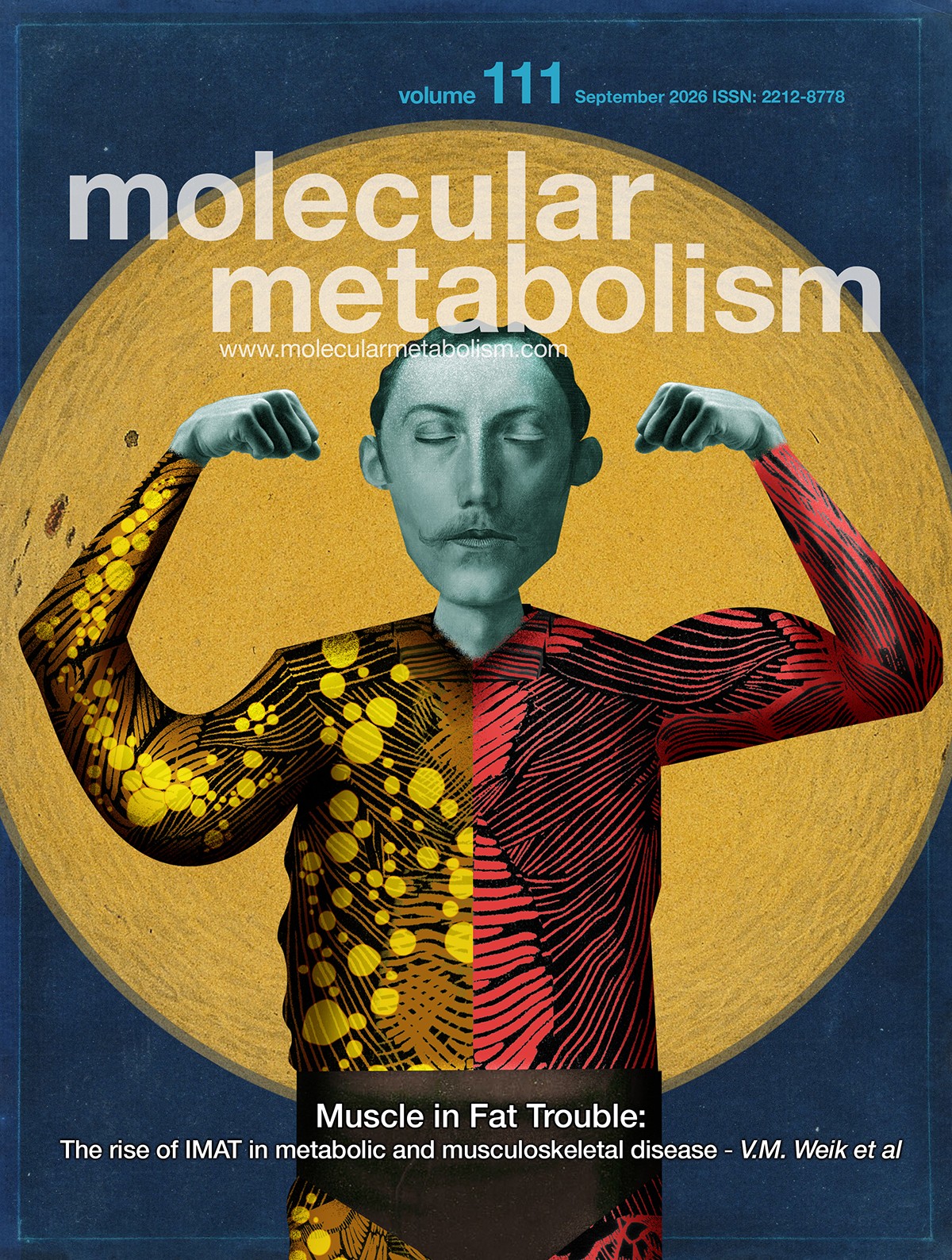
Skeletal muscle is the largest organ in the human body by mass, making up approximately 40 % of total body weight. Furthermore, it accounts for the majority of insulin-stimulated glucose uptake and is also highly involved in lipid metabolism. Lipids can accumulate in muscle through different distinct depots: as intramyocellular lipids (IMCL), stored as triglyceride-containing droplets within muscle cells and as intermuscular adipose tissue (IMAT), located between muscle fiber bundles beneath the deep muscle fascia. The muscular fat depots have been positively correlated with an increased body fat content in obesity, just like subcutaneous and visceral adipose tissue (SAT and VAT, respectively). IMCL, IMAT, VAT and SAT have additionally been linked to insulin resistance and type 2 diabetes mellitus (T2D).
Current Issue
IL-6 Activity is Required for Maximal Catecholamine Release During High-Intensity Exercise in Men
IL-6 Activity is Required for Maximal Catecholamine Release During High-Intensity Exercise in Men
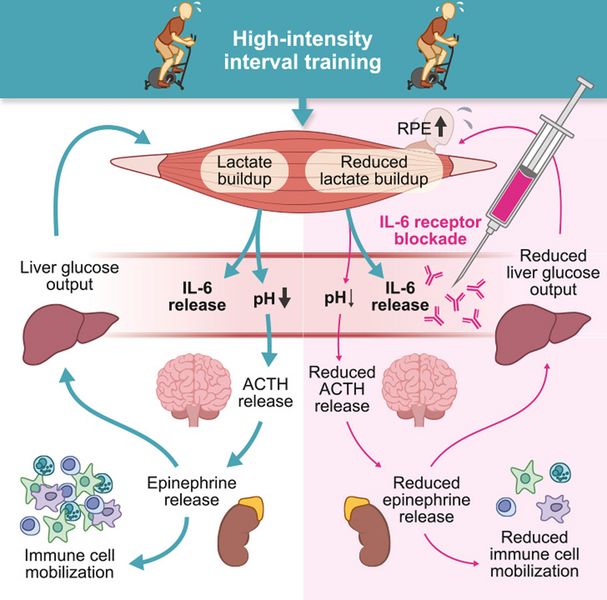
High-intensity exercise triggers a coordinated activation of metabolic, endocrine, and immune pathways, yet the mechanisms integrating these responses remain incompletely understood. Interleukin-6 (IL-6), released during exercise, has been proposed as a systemic signal linking skeletal muscle activity to whole-body stress responses. We tested whether exercise-induced IL-6 is required for full sympathoadrenal activation and immune cell mobilization during intense exercise in humans.
Healthy young men received the IL-6 receptor (IL-6R) antibody tocilizumab prior to high-intensity interval exercise. IL-6R blockade reduced circulating epinephrine by ∼50%, lowered plasma glucose levels, and attenuated lactate accumulation, resulting in a smaller decline in blood pH. Immune cell mobilization was selectively impaired, with reduced recruitment of lymphocytes, CD8+ T cells, CD56ˆbright natural killer (NK) cells, monocytes, neutrophils, and dendritic cells, while CD4+ T cells, CD56ˆdim NK cells, and B cells were unaffected. Although upstream hypothalamic-pituitary-adrenal (HPA)-axis hormones corticotropin-releasing hormone (CRH) and arginine vasopressin (AVP) were unchanged, adrenocorticotropic hormone (ACTH) was significantly reduced and associated with pH and catecholamine responses in the control condition. A lower lactate-to-pyruvate ratio during IL-6R blockade suggests enhanced pyruvate oxidation as a potential upstream mechanism.
These findings position IL-6 as an integrative metabolic signal that mediates organ crosstalk and amplifies the HPA and sympathoadrenal response during high-intensity exercise. By linking skeletal muscle metabolic stress to endocrine activation, glucose regulation, and immune cell mobilization, IL-6 appears to coordinate the complex systemic fight-or-flight response to intense physical exertion.
Articles in Press
IL-6 Activity is Required for Maximal Catecholamine Release During High-Intensity Exercise in Men
IL-6 Activity is Required for Maximal Catecholamine Release During High-Intensity Exercise in Men
High-intensity exercise triggers a coordinated activation of metabolic, endocrine, and immune pathways, yet the mechanisms integrating these responses remain incompletely understood. Interleukin-6 (IL-6), released during exercise, has been proposed as a systemic signal linking skeletal muscle activity to whole-body stress responses. We tested whether exercise-induced IL-6 is required for full sympathoadrenal activation and immune cell mobilization during intense exercise in humans.
Healthy young men received the IL-6 receptor (IL-6R) antibody tocilizumab prior to high-intensity interval exercise. IL-6R blockade reduced circulating epinephrine by ∼50%, lowered plasma glucose levels, and attenuated lactate accumulation, resulting in a smaller decline in blood pH. Immune cell mobilization was selectively impaired, with reduced recruitment of lymphocytes, CD8+ T cells, CD56ˆbright natural killer (NK) cells, monocytes, neutrophils, and dendritic cells, while CD4+ T cells, CD56ˆdim NK cells, and B cells were unaffected. Although upstream hypothalamic-pituitary-adrenal (HPA)-axis hormones corticotropin-releasing hormone (CRH) and arginine vasopressin (AVP) were unchanged, adrenocorticotropic hormone (ACTH) was significantly reduced and associated with pH and catecholamine responses in the control condition. A lower lactate-to-pyruvate ratio during IL-6R blockade suggests enhanced pyruvate oxidation as a potential upstream mechanism.
These findings position IL-6 as an integrative metabolic signal that mediates organ crosstalk and amplifies the HPA and sympathoadrenal response during high-intensity exercise. By linking skeletal muscle metabolic stress to endocrine activation, glucose regulation, and immune cell mobilization, IL-6 appears to coordinate the complex systemic fight-or-flight response to intense physical exertion.
Registration still open - sign up now!

13th
Helmholtz Diabetes Conference
Munich, 21-23. Sep 2026

2024 impact factor: 6.6
You are what you eat
Here is a video of Vimeo. When the iframes is activated, a connection to Vimeo is established and, if necessary, cookies from Vimeo are also used. For further information on cookies policy click here.