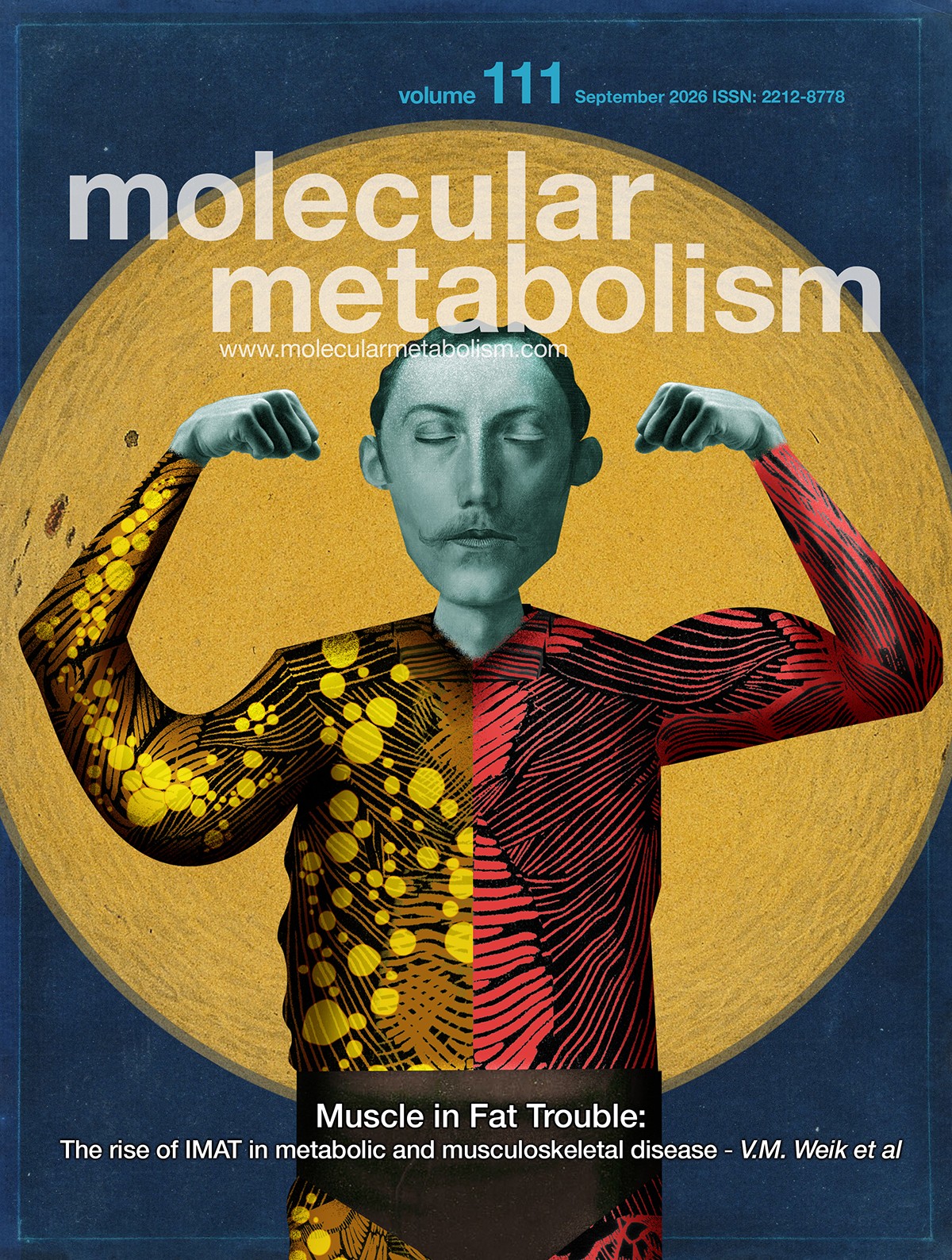
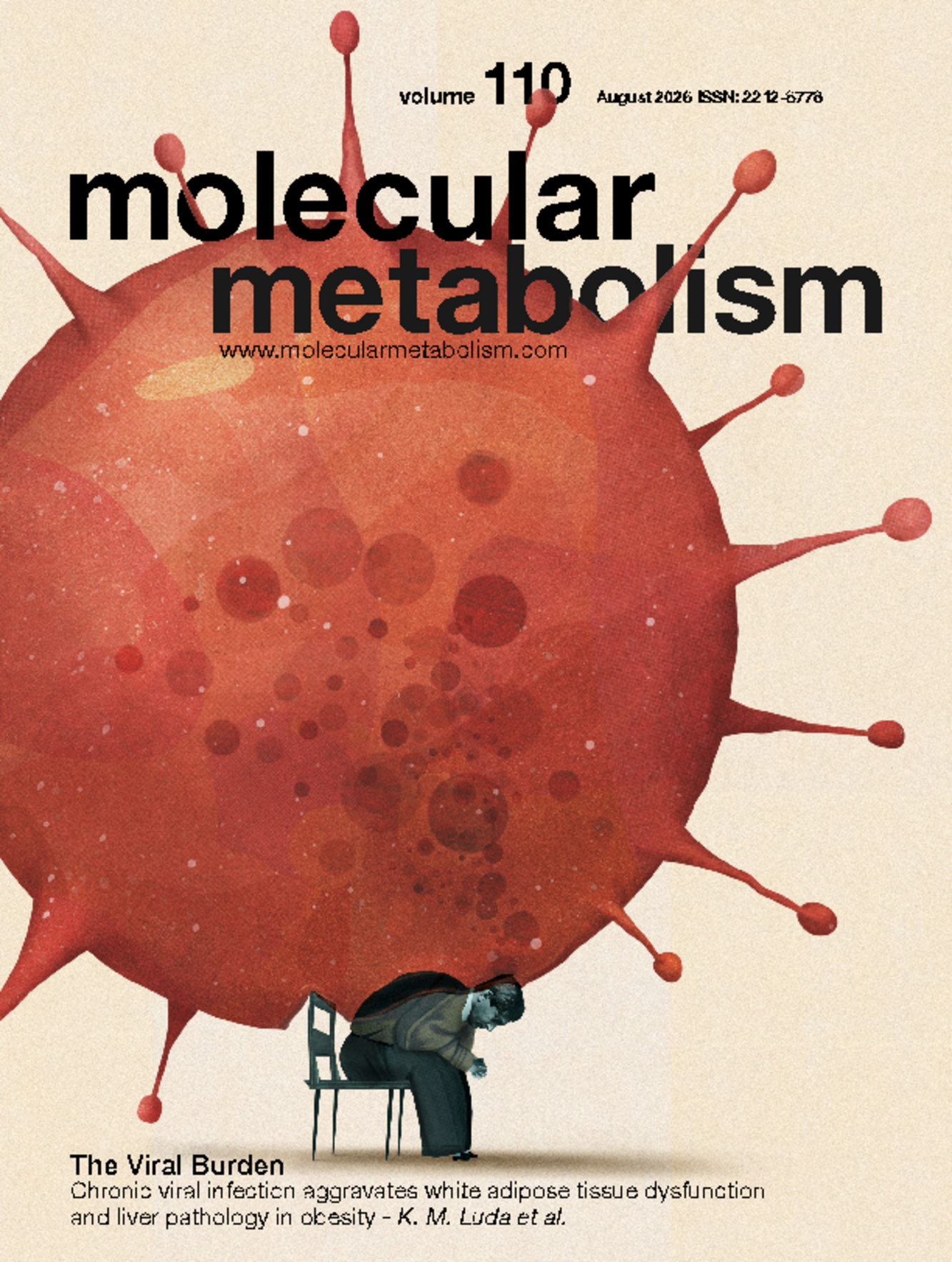
Cover Story Current Issue

Viral infections are recognized as contributing factors in the pathogenesis of metabolic diseases. Viruses causing chronic infection are particularly important due to their capacity to induce sustained inflammation. Especially individuals with obesity - who exhibit preexisting metabolic abnormalities, low-grade inflammation, and altered antiviral responses - are at increased risk of viral infection-induced metabolic complications. Despite these associations, the specific metabolic consequences of chronic viral infections in obesity remain insufficiently characterized.

Full text


Current Issue

Hepatocyte-specific Cas9-mediated editing of G6pc and Slc37a4 elicits comparable biochemical and regulatory responses between glycogen storage disease (GSD) type Ia and Ib mice

Kishore A. Krishnamurthy, Ruiqi Xiao, Martijn G.S. Rutten, Trijnie Bos, ... Maaike H. Oosterveer

Hepatocyte-specific Cas9-mediated editing of G6pc and Slc37a4 elicits comparable biochemical and regulatory responses between glycogen storage disease (GSD) type Ia and Ib mice

Background/Objective

Glycogen storage disease type I (GSD I) is an autosomal recessive inborn error of carbohydrate metabolism. Patients with GSD type Ia and Ib exhibit overlapping and distinct symptoms and complications. Notably, GSD Ia patients show more severe hypertriglyceridemia and higher risk of hepatic tumors than GSD Ib patients.

Methods

Given the liver's pivotal role in these processes, this study utilized hepatocyte-specific CRISPR/Cas9-mediated somatic gene editing to explore the pathophysiological and biochemical adaptations in hepatic GSD Ia and Ib side-by-side. Additionally, hepatic histology, transcriptomics, and proteomics analysis was performed.

Results

Compared to controls, hepatic GSD Ia and Ib mice showed hepatomegaly, fasting hypoglycemia, hyperlactatemia, and increased uric acid in plasma, which was somewhat more pronounced in GSD Ia than Ib. Both GSD I subtypes showed similar reductions in hepatic acetyl-CoA precursor pool enrichment and increases in de novo biosynthesis of hepatic stearate and oleate. Interestingly, only GSD Ia mice showed mildly elevated plasma triglyceride and hepatic phosphate sugars. Metabolic changes were reflected at the transcriptomic and proteomic levels, with largely similar responses between GSD Ia and Ib livers. Moreover, altered mRNAs and protein levels related to nucleotide-binding oligomerization domain (NOD) signaling pathways, infection and inflammation, liver disease, and chemical carcinogenesis were somewhat more pronounced in hepatic GSD Ia than in GSD Ib mice.

Conclusions

Overall, the metabolic disturbance was more severe in hepatocyte-specific GSD Ia than in GSD Ib mice, consistent with the clinical phenotype in patients. The metabolic disorders and specific metabolites, genes, and proteins identified in this study provided new insights into the pathophysiological and biochemical phenotypes of GSD I subtypes in the liver.

Articles in Press

Hepatocyte-specific Cas9-mediated editing of G6pc and Slc37a4 elicits comparable biochemical and regulatory responses between glycogen storage disease (GSD) type Ia and Ib mice

Kishore A. Krishnamurthy, Ruiqi Xiao, Martijn G.S. Rutten, Trijnie Bos, ... Maaike H. Oosterveer

Hepatocyte-specific Cas9-mediated editing of G6pc and Slc37a4 elicits comparable biochemical and regulatory responses between glycogen storage disease (GSD) type Ia and Ib mice

Background/Objective

Glycogen storage disease type I (GSD I) is an autosomal recessive inborn error of carbohydrate metabolism. Patients with GSD type Ia and Ib exhibit overlapping and distinct symptoms and complications. Notably, GSD Ia patients show more severe hypertriglyceridemia and higher risk of hepatic tumors than GSD Ib patients.

Methods

Given the liver's pivotal role in these processes, this study utilized hepatocyte-specific CRISPR/Cas9-mediated somatic gene editing to explore the pathophysiological and biochemical adaptations in hepatic GSD Ia and Ib side-by-side. Additionally, hepatic histology, transcriptomics, and proteomics analysis was performed.

Results

Compared to controls, hepatic GSD Ia and Ib mice showed hepatomegaly, fasting hypoglycemia, hyperlactatemia, and increased uric acid in plasma, which was somewhat more pronounced in GSD Ia than Ib. Both GSD I subtypes showed similar reductions in hepatic acetyl-CoA precursor pool enrichment and increases in de novo biosynthesis of hepatic stearate and oleate. Interestingly, only GSD Ia mice showed mildly elevated plasma triglyceride and hepatic phosphate sugars. Metabolic changes were reflected at the transcriptomic and proteomic levels, with largely similar responses between GSD Ia and Ib livers. Moreover, altered mRNAs and protein levels related to nucleotide-binding oligomerization domain (NOD) signaling pathways, infection and inflammation, liver disease, and chemical carcinogenesis were somewhat more pronounced in hepatic GSD Ia than in GSD Ib mice.

Conclusions

Overall, the metabolic disturbance was more severe in hepatocyte-specific GSD Ia than in GSD Ib mice, consistent with the clinical phenotype in patients. The metabolic disorders and specific metabolites, genes, and proteins identified in this study provided new insights into the pathophysiological and biochemical phenotypes of GSD I subtypes in the liver.

Early Bird Registration extended until 16 Aug!

13th
Helmholtz Diabetes Conference 

Munich, 21-23. Sep 2026                                                                                                                             

2024 impact factor: 6.6

You are what you eat

Here is a video of Vimeo. When the iframes is activated, a connection to Vimeo is established and, if necessary, cookies from Vimeo are also used. For further information on cookies policy click here.

Auf Werbeinhalte, die vor, während oder nach Videos von WEBSITE-URL eingeblendet werden, hat WEBSITE-URL keinen Einfluss. Wir übernehmen keine Gewähr für diese Inhalte. Weitere Informationen finden Sie hier.