Cover Story Current Issue

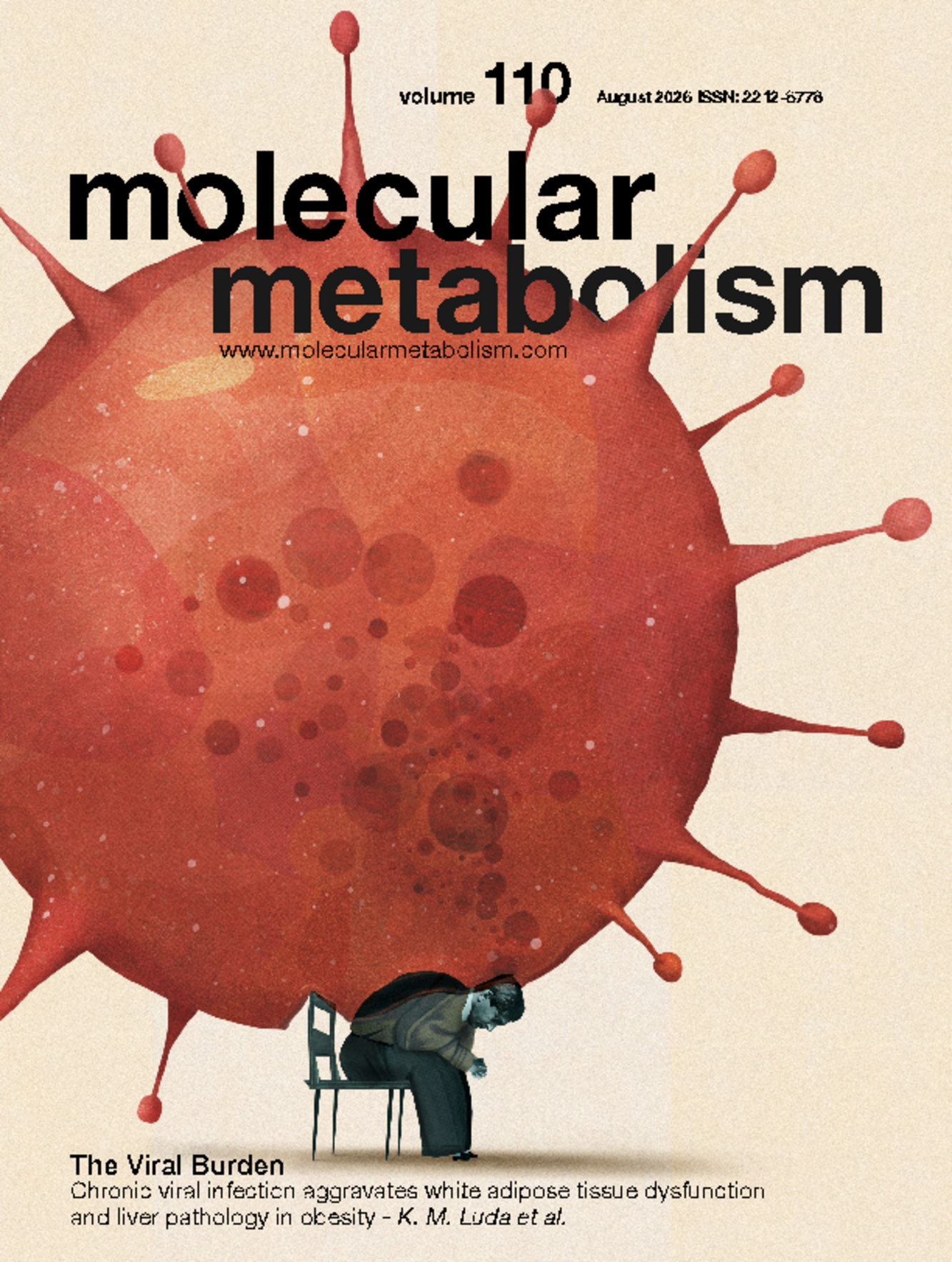
Viral infections are recognized as contributing factors in the pathogenesis of metabolic diseases. Viruses causing chronic infection are particularly important due to their capacity to induce sustained inflammation. Especially individuals with obesity - who exhibit preexisting metabolic abnormalities, low-grade inflammation, and altered antiviral responses - are at increased risk of viral infection-induced metabolic complications. Despite these associations, the specific metabolic consequences of chronic viral infections in obesity remain insufficiently characterized.

Full text


Current Issue

Cross-talk between glycosylation pathways: Mechanistic insights and implications for human diseases

Ninon Very, Ikram El Yazidi-Belkoura

Cross-talk between glycosylation pathways: Mechanistic insights and implications for human diseases

Glycosylation encompasses a broad spectrum of post-translational modifications (PTMs) that shape protein stability, spatial organization, and function. Traditionally, it is classified into two major categories: complex glycosylation within the secretory pathway — including N-glycosylation, mucin-type O-glycosylation, glycosaminoglycans (GAGs), and glycolipids — which generate structurally stable and long-lived modifications; and O-GlcNAcylation, a highly dynamic modification of nucleocytoplasmic and mitochondrial proteins that rapidly responds to metabolic and environmental cues. While this dichotomous framework has guided our understanding of glycan biology, emerging evidence now reveals that glycosylations are functionally interconnected through shared metabolic substrates, and regulatory circuits.

Here, we revisit this classical classification and integrate it into a modern, systems-level view of glycosylation. We highlight the nucleotide sugar UDP-N-acetylglucosamine (UDP-GlcNAc) as a metabolic node reflecting cellular nutrient status and fuelling both complex glycan synthesis and O-GlcNAcylation. UDP-GlcNAc pool fluctuations drive coordinated remodeling across glycosylation pathways, and dysregulation of this hub is associated with diverse human diseases. We discuss how O-GlcNAcylation functions as a supplementary regulatory PTM, modulating glycosylation-related enzymes and proteins through both direct effects on their interactions, stability, localisation and activity, and via broader transcriptional and epigenetic programs, thereby dynamically controlling otherwise stable glycosylation processes. Examples from metabolic, cardiovascular, neurological diseases, cancer and congenital disorders of glycosylation (CDGs) illustrate how perturbations in one glycosylation pathway propagate through the glycosylation network, reshaping cellular identity and disease trajectories. We support a paradigm in which glycosylation operates as an integrated regulatory framework linking metabolism, signaling, and extracellular architecture, providing new perspectives for disease stratification and therapeutic intervention.

Articles in Press

Cross-talk between glycosylation pathways: Mechanistic insights and implications for human diseases

Ninon Very, Ikram El Yazidi-Belkoura

Cross-talk between glycosylation pathways: Mechanistic insights and implications for human diseases

Glycosylation encompasses a broad spectrum of post-translational modifications (PTMs) that shape protein stability, spatial organization, and function. Traditionally, it is classified into two major categories: complex glycosylation within the secretory pathway — including N-glycosylation, mucin-type O-glycosylation, glycosaminoglycans (GAGs), and glycolipids — which generate structurally stable and long-lived modifications; and O-GlcNAcylation, a highly dynamic modification of nucleocytoplasmic and mitochondrial proteins that rapidly responds to metabolic and environmental cues. While this dichotomous framework has guided our understanding of glycan biology, emerging evidence now reveals that glycosylations are functionally interconnected through shared metabolic substrates, and regulatory circuits.

Here, we revisit this classical classification and integrate it into a modern, systems-level view of glycosylation. We highlight the nucleotide sugar UDP-N-acetylglucosamine (UDP-GlcNAc) as a metabolic node reflecting cellular nutrient status and fuelling both complex glycan synthesis and O-GlcNAcylation. UDP-GlcNAc pool fluctuations drive coordinated remodeling across glycosylation pathways, and dysregulation of this hub is associated with diverse human diseases. We discuss how O-GlcNAcylation functions as a supplementary regulatory PTM, modulating glycosylation-related enzymes and proteins through both direct effects on their interactions, stability, localisation and activity, and via broader transcriptional and epigenetic programs, thereby dynamically controlling otherwise stable glycosylation processes. Examples from metabolic, cardiovascular, neurological diseases, cancer and congenital disorders of glycosylation (CDGs) illustrate how perturbations in one glycosylation pathway propagate through the glycosylation network, reshaping cellular identity and disease trajectories. We support a paradigm in which glycosylation operates as an integrated regulatory framework linking metabolism, signaling, and extracellular architecture, providing new perspectives for disease stratification and therapeutic intervention.

Early Bird Registration extended until 16 Aug!

13th
Helmholtz Diabetes Conference 

Munich, 21-23. Sep 2026                                                                                                                             

2024 impact factor: 6.6

You are what you eat

Here is a video of Vimeo. When the iframes is activated, a connection to Vimeo is established and, if necessary, cookies from Vimeo are also used. For further information on cookies policy click here.

Auf Werbeinhalte, die vor, während oder nach Videos von WEBSITE-URL eingeblendet werden, hat WEBSITE-URL keinen Einfluss. Wir übernehmen keine Gewähr für diese Inhalte. Weitere Informationen finden Sie hier.