Cover Story Current Issue

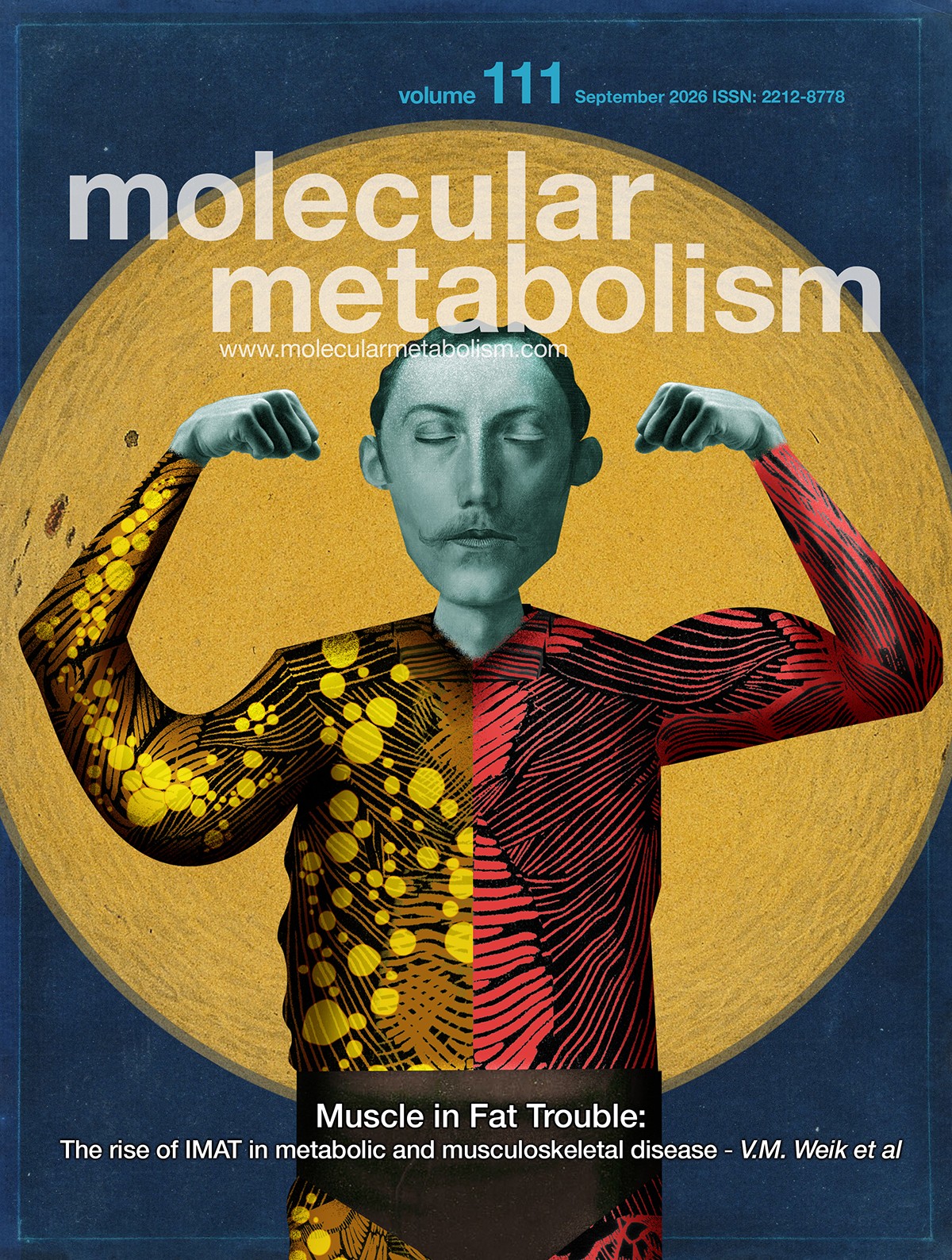
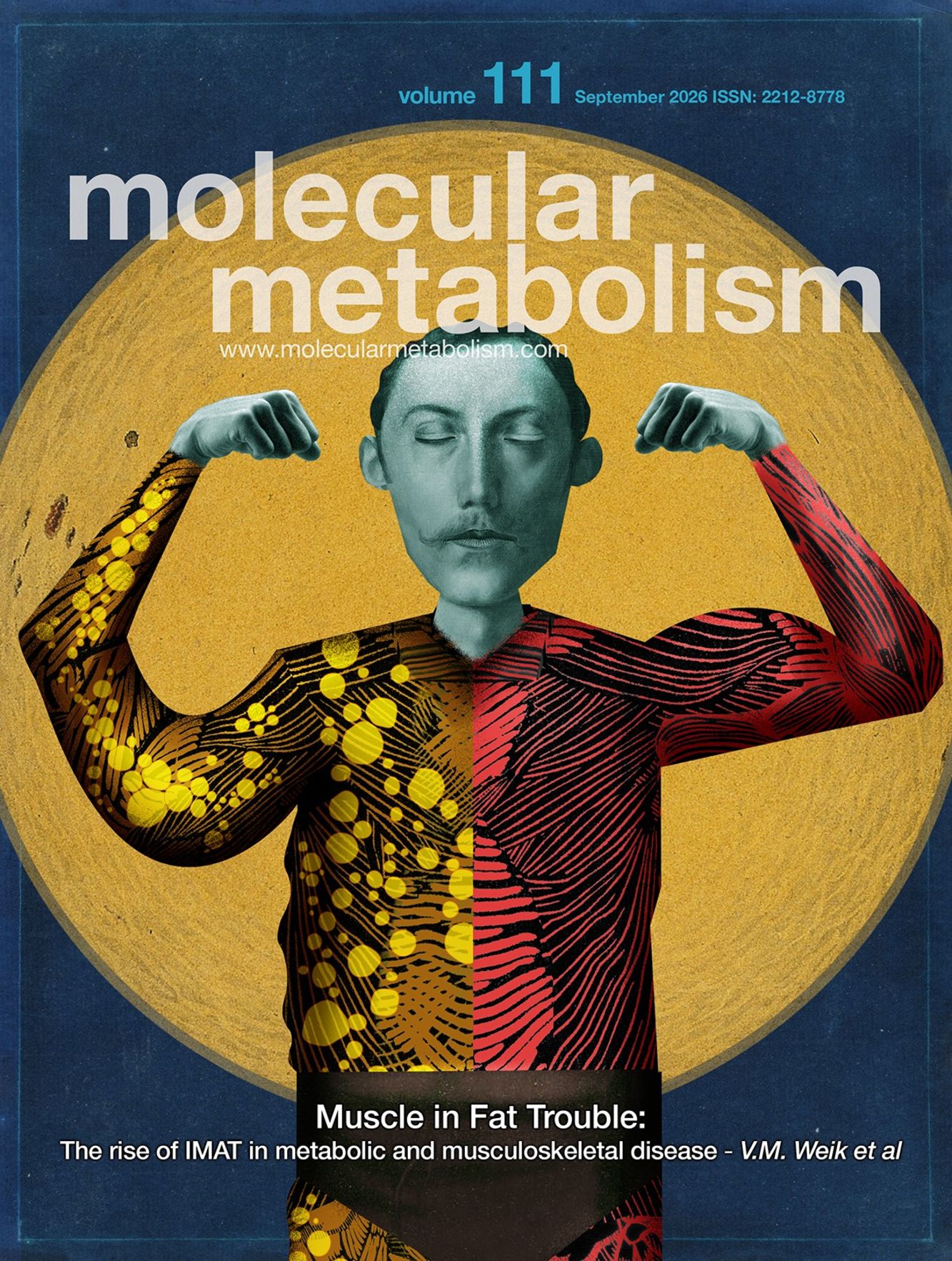
Skeletal muscle is the largest organ in the human body by mass, making up approximately 40 % of total body weight. Furthermore, it accounts for the majority of insulin-stimulated glucose uptake and is also highly involved in lipid metabolism. Lipids can accumulate in muscle through different distinct depots: as intramyocellular lipids (IMCL), stored as triglyceride-containing droplets within muscle cells and as intermuscular adipose tissue (IMAT), located between muscle fiber bundles beneath the deep muscle fascia. The muscular fat depots have been positively correlated with an increased body fat content in obesity, just like subcutaneous and visceral adipose tissue (SAT and VAT, respectively). IMCL, IMAT, VAT and SAT have additionally been linked to insulin resistance and type 2 diabetes mellitus (T2D).

Full text


Current Issue

Pre-clinical cancer cachexia causes glucose hypermetabolism prior to overt weight loss

Emma Frank, Kaspar W. Persson, Pauline Morigny, Zakarias Kefil Jensen Ogueboule, ... Steffen H. Raun

Pre-clinical cancer cachexia causes glucose hypermetabolism prior to overt weight loss

Purpose

Cancer cachexia is a life-threatening complication of advanced malignancies, driven by profound systemic metabolic reprogramming and anorexia. Insulin action is markedly impaired in patients with cancer and may contribute directly to cachexia pathogenesis. However, the interplay between weight loss, food intake, and cancer-associated metabolic rewiring in cachexia remains poorly defined. Clarifying this relationship is essential for identifying the fundamental drivers of cachexia and for developing effective therapeutic strategies.

Methods

We assessed metabolic rewiring by temporal evaluation of glucose tolerance and isotopic tracers to determine muscle insulin-stimulated glucose uptake in male cachectic and non-cachectic C26- and KPC-tumor-bearing, as well as healthy mice undergoing food restriction.

Results

Cachectic C26- and KPC-tumor mice showed increased glucose tolerance compared to non-tumor-bearing control mice, and non-cachectic tumor-bearing mice. Increased glucose tolerance appeared prior to overt muscle loss, independent of tumor size and changes in food intake. Ex vivo insulin-stimulated glucose uptake was elevated in soleus (+78%) and extensor digitorum longus (+35%) muscle from cachectic C26-tumor mice with anorexia compared to weight stable C26-tumor mice and control mice. This increase was associated with enhanced AKT signaling. Food restriction in healthy mice increased glucose tolerance, insulin-stimulated glucose uptake ex vivo, and AKT signaling.

Conclusions

Our findings suggest that glucose hypermetabolism appears prior to overt weight loss in pre-clinical cachexia, whereas late-stage cachexia with anorexia increased skeletal muscle insulin responsiveness. This highlights AKT signaling as a key node connecting nutrient status with muscle metabolism in cancer cachexia.

Articles in Press

Pre-clinical cancer cachexia causes glucose hypermetabolism prior to overt weight loss

Emma Frank, Kaspar W. Persson, Pauline Morigny, Zakarias Kefil Jensen Ogueboule, ... Steffen H. Raun

Pre-clinical cancer cachexia causes glucose hypermetabolism prior to overt weight loss

Purpose

Cancer cachexia is a life-threatening complication of advanced malignancies, driven by profound systemic metabolic reprogramming and anorexia. Insulin action is markedly impaired in patients with cancer and may contribute directly to cachexia pathogenesis. However, the interplay between weight loss, food intake, and cancer-associated metabolic rewiring in cachexia remains poorly defined. Clarifying this relationship is essential for identifying the fundamental drivers of cachexia and for developing effective therapeutic strategies.

Methods

We assessed metabolic rewiring by temporal evaluation of glucose tolerance and isotopic tracers to determine muscle insulin-stimulated glucose uptake in male cachectic and non-cachectic C26- and KPC-tumor-bearing, as well as healthy mice undergoing food restriction.

Results

Cachectic C26- and KPC-tumor mice showed increased glucose tolerance compared to non-tumor-bearing control mice, and non-cachectic tumor-bearing mice. Increased glucose tolerance appeared prior to overt muscle loss, independent of tumor size and changes in food intake. Ex vivo insulin-stimulated glucose uptake was elevated in soleus (+78%) and extensor digitorum longus (+35%) muscle from cachectic C26-tumor mice with anorexia compared to weight stable C26-tumor mice and control mice. This increase was associated with enhanced AKT signaling. Food restriction in healthy mice increased glucose tolerance, insulin-stimulated glucose uptake ex vivo, and AKT signaling.

Conclusions

Our findings suggest that glucose hypermetabolism appears prior to overt weight loss in pre-clinical cachexia, whereas late-stage cachexia with anorexia increased skeletal muscle insulin responsiveness. This highlights AKT signaling as a key node connecting nutrient status with muscle metabolism in cancer cachexia.

Registration still open - sign up now!

13th
Helmholtz Diabetes Conference 

Munich, 21-23. Sep 2026                                                                                                                             

2024 impact factor: 6.6

You are what you eat

Here is a video of Vimeo. When the iframes is activated, a connection to Vimeo is established and, if necessary, cookies from Vimeo are also used. For further information on cookies policy click here.

Auf Werbeinhalte, die vor, während oder nach Videos von WEBSITE-URL eingeblendet werden, hat WEBSITE-URL keinen Einfluss. Wir übernehmen keine Gewähr für diese Inhalte. Weitere Informationen finden Sie hier.