Cover Story Current Issue

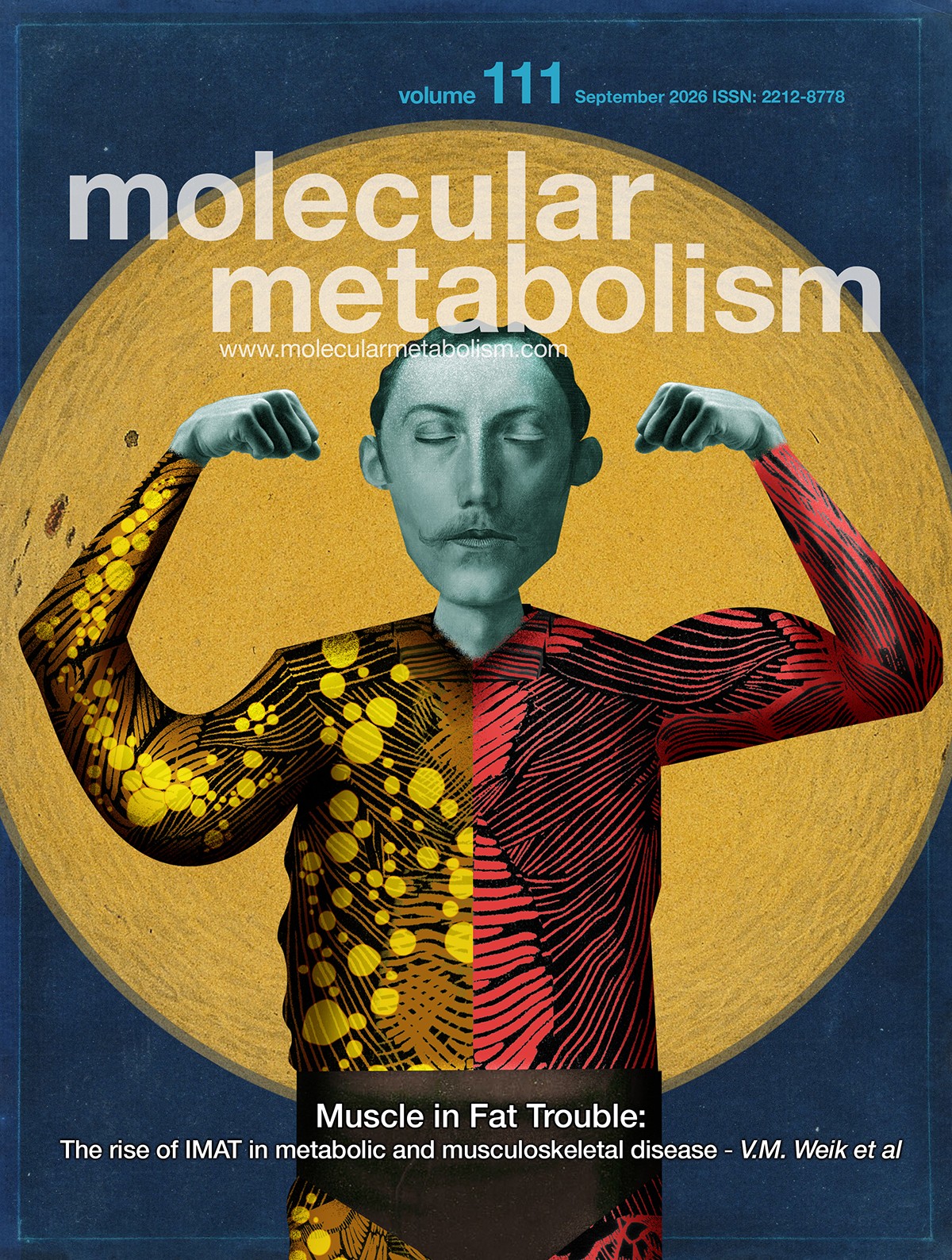
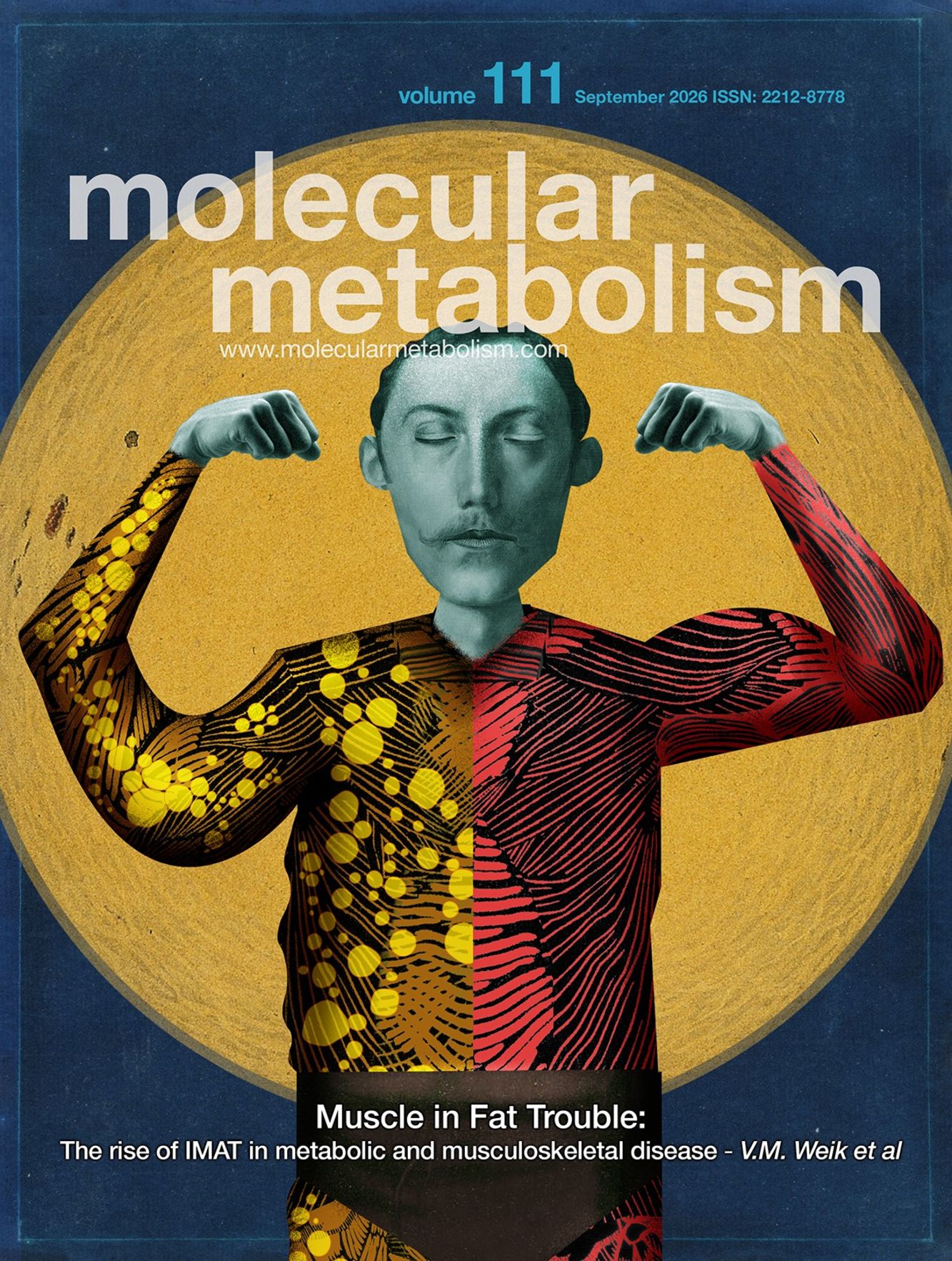
Skeletal muscle is the largest organ in the human body by mass, making up approximately 40 % of total body weight. Furthermore, it accounts for the majority of insulin-stimulated glucose uptake and is also highly involved in lipid metabolism. Lipids can accumulate in muscle through different distinct depots: as intramyocellular lipids (IMCL), stored as triglyceride-containing droplets within muscle cells and as intermuscular adipose tissue (IMAT), located between muscle fiber bundles beneath the deep muscle fascia. The muscular fat depots have been positively correlated with an increased body fat content in obesity, just like subcutaneous and visceral adipose tissue (SAT and VAT, respectively). IMCL, IMAT, VAT and SAT have additionally been linked to insulin resistance and type 2 diabetes mellitus (T2D).

Full text


Current Issue

Inhibitor of DNA binding/differentiation 4 deficiency impairs hepatic fatty acid synthesis and is associated with epigenomic alterations in chromatin accessibility

Yoshikazu Hayashi, Koji Kinoshita, Tsai-Ming Lu, Hsin-Yi Tseng, ... Tomoyo Kawakubo-Yasukochi

Inhibitor of DNA binding/differentiation 4 deficiency impairs hepatic fatty acid synthesis and is associated with epigenomic alterations in chromatin accessibility

Inhibitor of DNA binding/differentiation (ID) 4 is a member of the ID family of proteins. ID4 is involved in gene transcriptional regulation during diverse pathophysiological processes, including cellular differentiation, proliferation, and senescence. ID4-deficient (Id4−/−) mice exhibit markedly reduced tissue and body mass and survive for only a few weeks after birth. However, the direct cause of this premature lethality remains unknown. This study demonstrated that ID4 deficiency leads to impaired hepatic fatty acid synthesis, accompanied by downregulation of the rate-limiting enzymes of fatty acid synthesis, such as fatty acid synthase (FASN) and acetyl-CoA carboxylase 1 (ACC1). Comprehensive histone modification profiling based on mass spectrometry revealed drastic alterations involving histone modification patterns in the livers of Id4−/−mice compared to those of wild-type littermates. Furthermore, ID4 deficiency resulted in aberrant histone expression patterns. Integrative assay for transposase-accessible chromatin sequencing and RNA-sequencing analyses further revealed that ID4 deficiency induces chromatin closure at the promoter region of Srebf1 (encoding sterol regulatory element-binding protein), a master transcription factor upstream of Fasn (encoding FASN) and Acaca (encoding ACC1). Collectively, these findings indicate that ID4 functions as an important regulator of hepatic fatty acid metabolism by maintaining chromatin accessibility, rather than merely acting as a classical ID protein that regulates target gene transcription.

Articles in Press

Inhibitor of DNA binding/differentiation 4 deficiency impairs hepatic fatty acid synthesis and is associated with epigenomic alterations in chromatin accessibility

Yoshikazu Hayashi, Koji Kinoshita, Tsai-Ming Lu, Hsin-Yi Tseng, ... Tomoyo Kawakubo-Yasukochi

Inhibitor of DNA binding/differentiation 4 deficiency impairs hepatic fatty acid synthesis and is associated with epigenomic alterations in chromatin accessibility

Inhibitor of DNA binding/differentiation (ID) 4 is a member of the ID family of proteins. ID4 is involved in gene transcriptional regulation during diverse pathophysiological processes, including cellular differentiation, proliferation, and senescence. ID4-deficient (Id4−/−) mice exhibit markedly reduced tissue and body mass and survive for only a few weeks after birth. However, the direct cause of this premature lethality remains unknown. This study demonstrated that ID4 deficiency leads to impaired hepatic fatty acid synthesis, accompanied by downregulation of the rate-limiting enzymes of fatty acid synthesis, such as fatty acid synthase (FASN) and acetyl-CoA carboxylase 1 (ACC1). Comprehensive histone modification profiling based on mass spectrometry revealed drastic alterations involving histone modification patterns in the livers of Id4−/−mice compared to those of wild-type littermates. Furthermore, ID4 deficiency resulted in aberrant histone expression patterns. Integrative assay for transposase-accessible chromatin sequencing and RNA-sequencing analyses further revealed that ID4 deficiency induces chromatin closure at the promoter region of Srebf1 (encoding sterol regulatory element-binding protein), a master transcription factor upstream of Fasn (encoding FASN) and Acaca (encoding ACC1). Collectively, these findings indicate that ID4 functions as an important regulator of hepatic fatty acid metabolism by maintaining chromatin accessibility, rather than merely acting as a classical ID protein that regulates target gene transcription.

Registration still open - sign up now!

13th
Helmholtz Diabetes Conference 

Munich, 21-23. Sep 2026                                                                                                                             

2024 impact factor: 6.6

You are what you eat

Here is a video of Vimeo. When the iframes is activated, a connection to Vimeo is established and, if necessary, cookies from Vimeo are also used. For further information on cookies policy click here.

Auf Werbeinhalte, die vor, während oder nach Videos von WEBSITE-URL eingeblendet werden, hat WEBSITE-URL keinen Einfluss. Wir übernehmen keine Gewähr für diese Inhalte. Weitere Informationen finden Sie hier.