Cover Story Current Issue

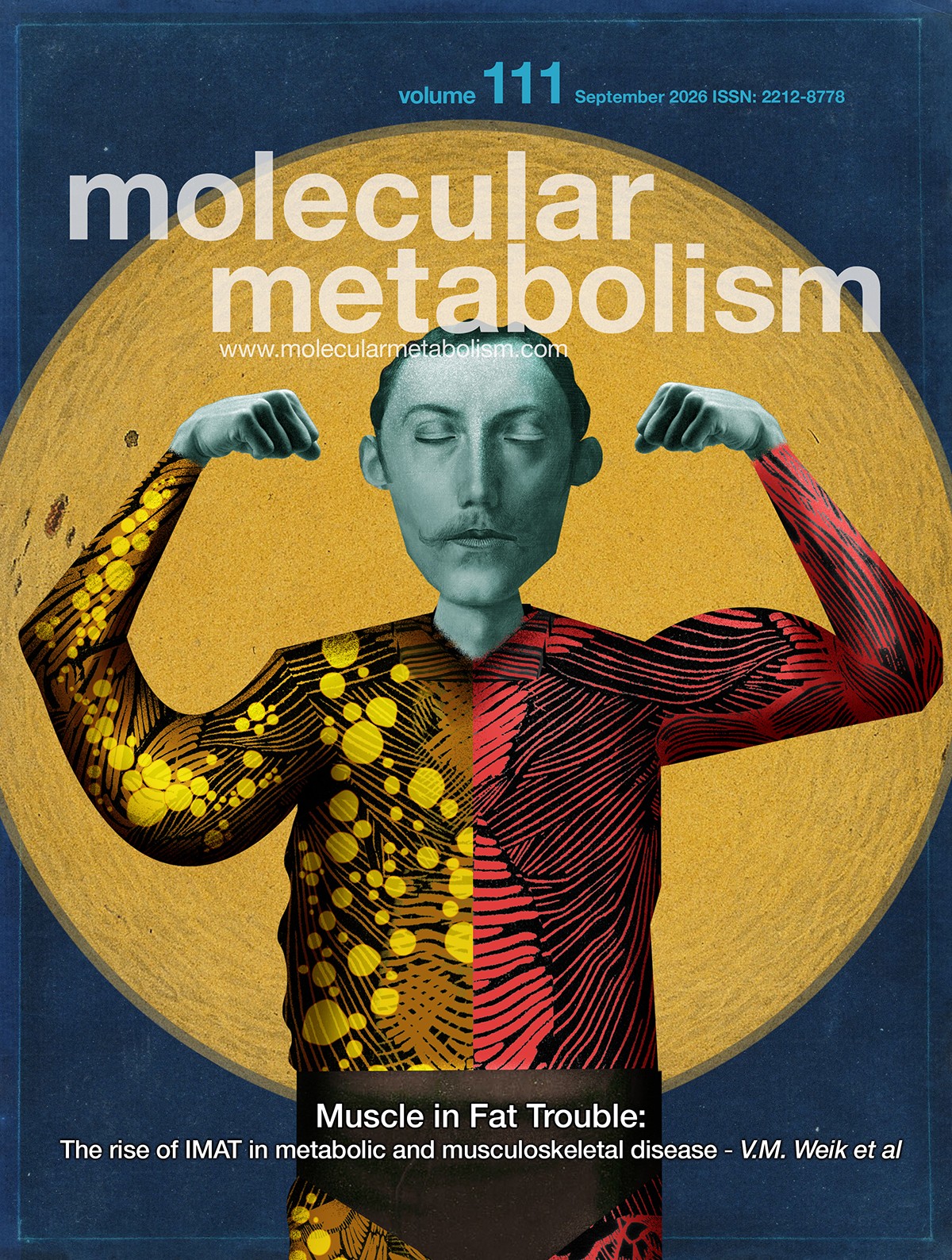
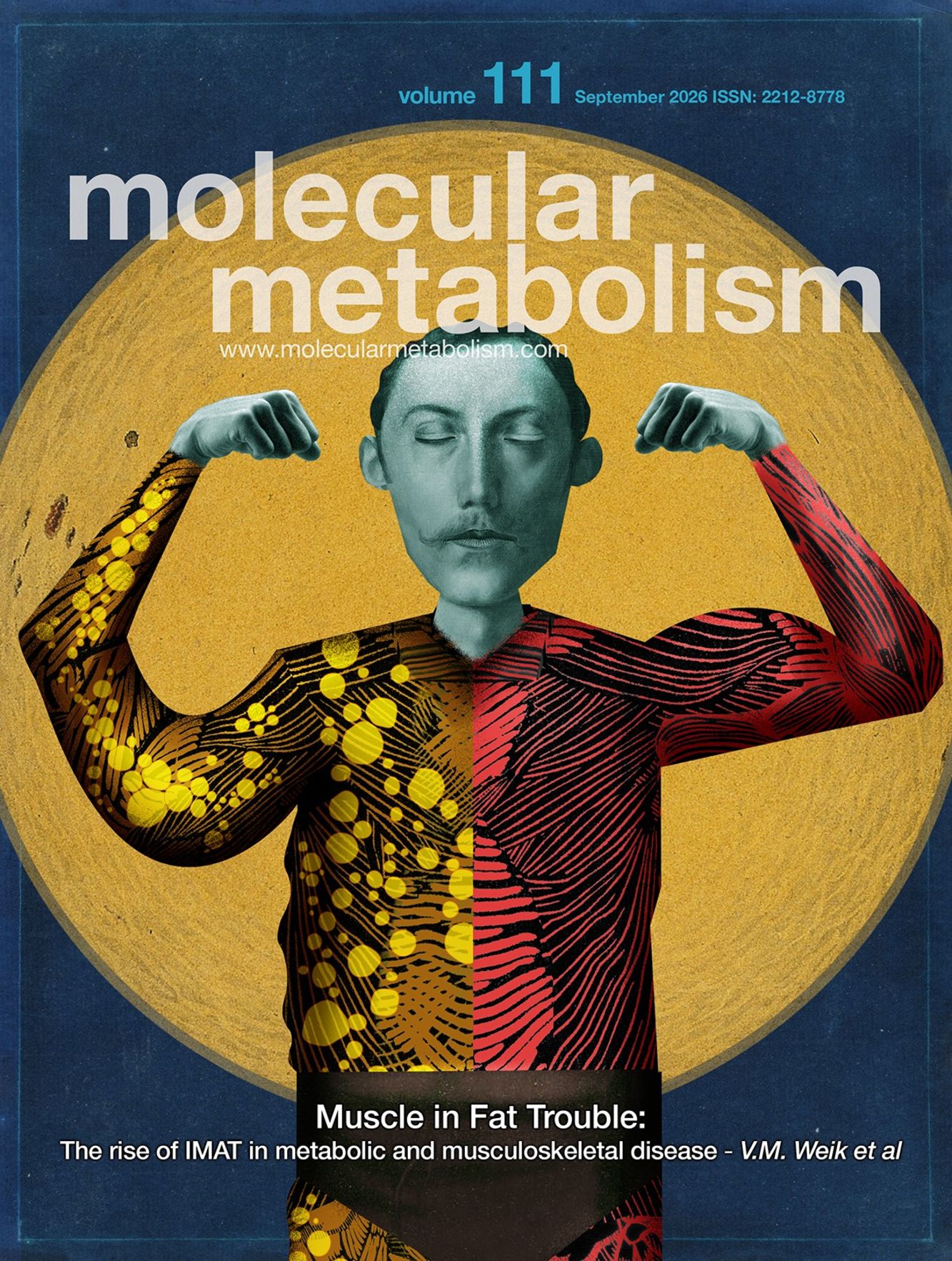
Skeletal muscle is the largest organ in the human body by mass, making up approximately 40 % of total body weight. Furthermore, it accounts for the majority of insulin-stimulated glucose uptake and is also highly involved in lipid metabolism. Lipids can accumulate in muscle through different distinct depots: as intramyocellular lipids (IMCL), stored as triglyceride-containing droplets within muscle cells and as intermuscular adipose tissue (IMAT), located between muscle fiber bundles beneath the deep muscle fascia. The muscular fat depots have been positively correlated with an increased body fat content in obesity, just like subcutaneous and visceral adipose tissue (SAT and VAT, respectively). IMCL, IMAT, VAT and SAT have additionally been linked to insulin resistance and type 2 diabetes mellitus (T2D).

Full text


Current Issue

Biallelic TXNIP deficiency is associated with a multisystemic metabolic disease

Julia-Josefine Scholz, Sharlaine Y.L. Piel, Ioannis Evangelakos, Christian Müller, ... Christian Schlein

Biallelic TXNIP deficiency is associated with a multisystemic metabolic disease


Objective

Thioredoxin-interacting protein (TXNIP) is a protein involved in redox metabolism, but also a key regulator of glucose and lipid metabolism in preclinical models. To date, four patients with biallelic loss-of-function variants in TXNIP have been described, presenting with lactic acidosis and variable hypoglycemia, hepatomegaly, developmental delay and seizures. However, the role of TXNIP in human metabolism and its mechanistic effects across different organs are not fully understood.

Methods

We clinically, biochemically and genetically characterized a cohort of six additional individuals with biallelic pathogenic variants in TXNIP. Organ specimens from patients and mice were analyzed by gene expression, histology, and lipidomic and proteomic profiling.

Results

We confirmed lactic acidosis as the main clinical sign and added adult-onset cardiomyopathy, skeletal muscle weakness, and dyslipidemia to the extended disease spectrum. Heart, liver and muscle patient specimens showed pathological lipid accumulation, and mechanistic studies uncovered increased fatty acid synthesis markers and complex rearrangements of the lipidome and proteome. In Txnip-deficient mice, restricting dietary carbohydrates partially rescued fatty acid synthesis markers and lipid storage in the heart but led to dyslipidemia.

Conclusions

Our studies show that TXNIP is an important metabolic modifier in cardiac and skeletal muscle as well as in lipoprotein metabolism and that biallelic pathogenic variants in TXNIP lead to a pleiotropic disease affecting cellular lipid metabolism in multiple organ systems, with potentially fatal adult-onset cardiomyopathy.


Articles in Press

Biallelic TXNIP deficiency is associated with a multisystemic metabolic disease

Julia-Josefine Scholz, Sharlaine Y.L. Piel, Ioannis Evangelakos, Christian Müller, ... Christian Schlein

Biallelic TXNIP deficiency is associated with a multisystemic metabolic disease


Objective

Thioredoxin-interacting protein (TXNIP) is a protein involved in redox metabolism, but also a key regulator of glucose and lipid metabolism in preclinical models. To date, four patients with biallelic loss-of-function variants in TXNIP have been described, presenting with lactic acidosis and variable hypoglycemia, hepatomegaly, developmental delay and seizures. However, the role of TXNIP in human metabolism and its mechanistic effects across different organs are not fully understood.

Methods

We clinically, biochemically and genetically characterized a cohort of six additional individuals with biallelic pathogenic variants in TXNIP. Organ specimens from patients and mice were analyzed by gene expression, histology, and lipidomic and proteomic profiling.

Results

We confirmed lactic acidosis as the main clinical sign and added adult-onset cardiomyopathy, skeletal muscle weakness, and dyslipidemia to the extended disease spectrum. Heart, liver and muscle patient specimens showed pathological lipid accumulation, and mechanistic studies uncovered increased fatty acid synthesis markers and complex rearrangements of the lipidome and proteome. In Txnip-deficient mice, restricting dietary carbohydrates partially rescued fatty acid synthesis markers and lipid storage in the heart but led to dyslipidemia.

Conclusions

Our studies show that TXNIP is an important metabolic modifier in cardiac and skeletal muscle as well as in lipoprotein metabolism and that biallelic pathogenic variants in TXNIP lead to a pleiotropic disease affecting cellular lipid metabolism in multiple organ systems, with potentially fatal adult-onset cardiomyopathy.


Registration still open - sign up now!

13th
Helmholtz Diabetes Conference 

Munich, 21-23. Sep 2026                                                                                                                             

2024 impact factor: 6.6

You are what you eat

Here is a video of Vimeo. When the iframes is activated, a connection to Vimeo is established and, if necessary, cookies from Vimeo are also used. For further information on cookies policy click here.

Auf Werbeinhalte, die vor, während oder nach Videos von WEBSITE-URL eingeblendet werden, hat WEBSITE-URL keinen Einfluss. Wir übernehmen keine Gewähr für diese Inhalte. Weitere Informationen finden Sie hier.