Cover Story Current Issue

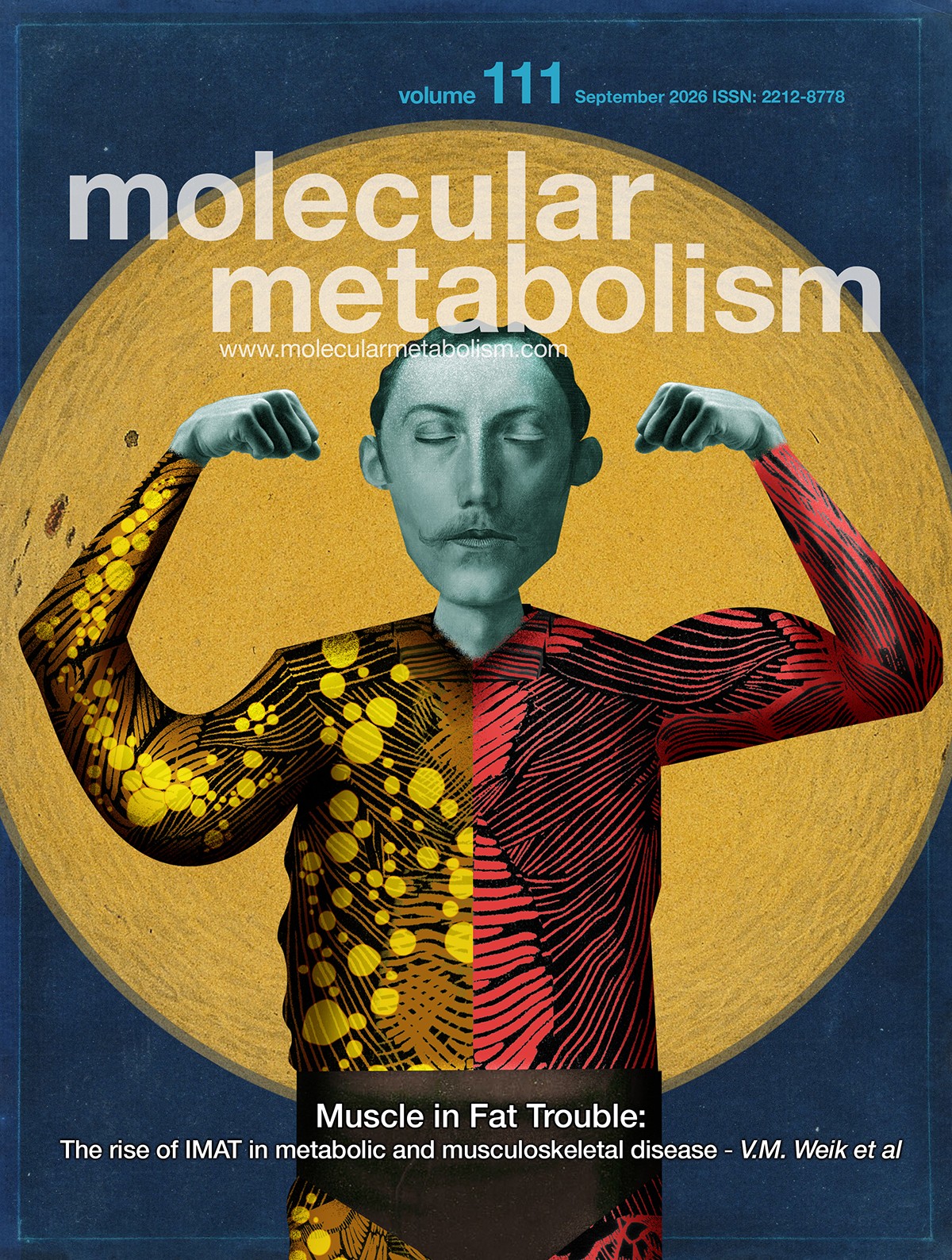
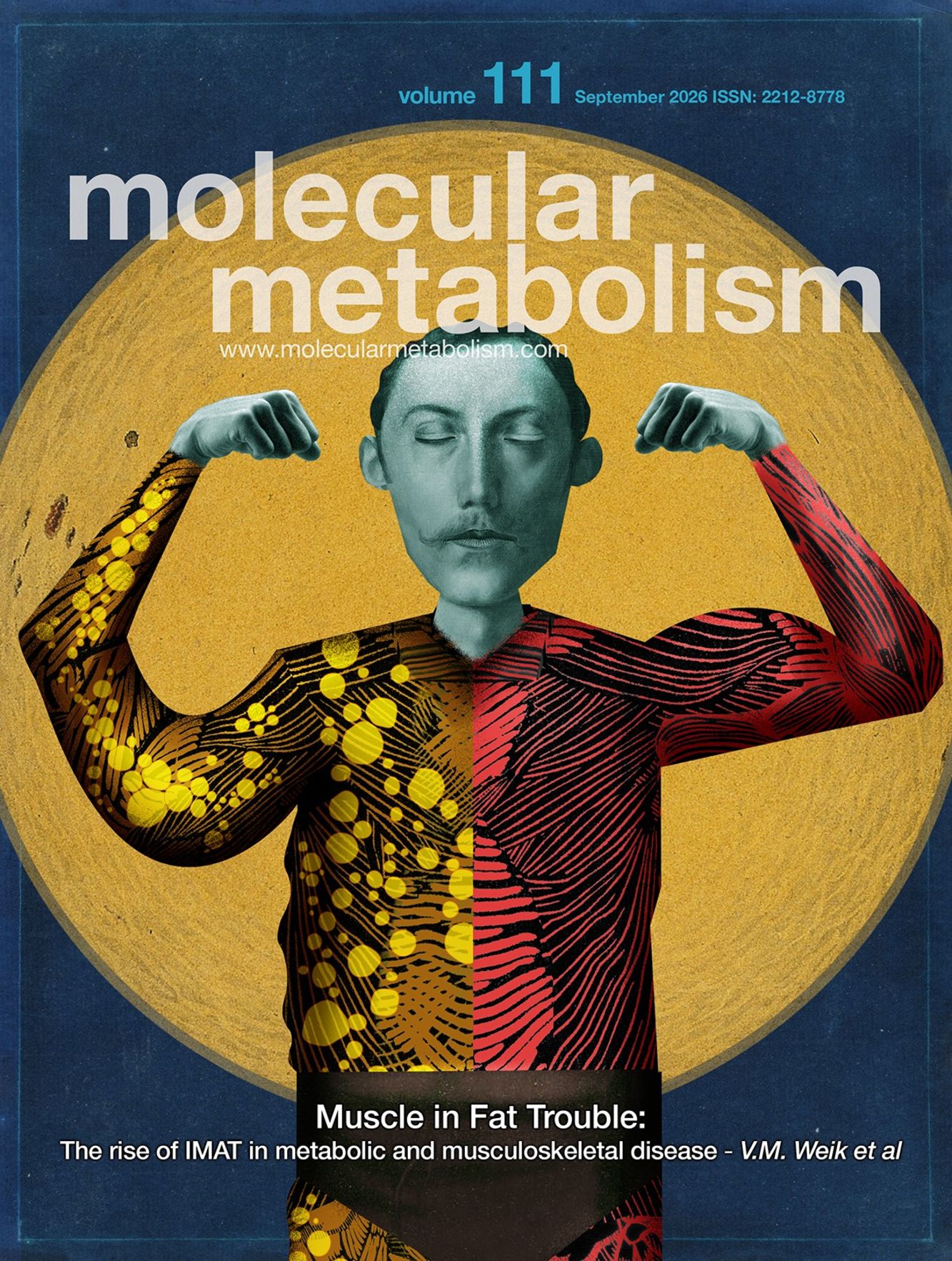
Skeletal muscle is the largest organ in the human body by mass, making up approximately 40 % of total body weight. Furthermore, it accounts for the majority of insulin-stimulated glucose uptake and is also highly involved in lipid metabolism. Lipids can accumulate in muscle through different distinct depots: as intramyocellular lipids (IMCL), stored as triglyceride-containing droplets within muscle cells and as intermuscular adipose tissue (IMAT), located between muscle fiber bundles beneath the deep muscle fascia. The muscular fat depots have been positively correlated with an increased body fat content in obesity, just like subcutaneous and visceral adipose tissue (SAT and VAT, respectively). IMCL, IMAT, VAT and SAT have additionally been linked to insulin resistance and type 2 diabetes mellitus (T2D).

Full text


Current Issue

Conserved transcriptional co-regulation of pyrophosphate homeostasis genes governs systemic mineralization factors in mice and humans

Virgil Tamatey, Martin Várhegyi, Bence Blaha, Judith Van Wynsberghe, ... Flóra Szeri

Conserved transcriptional co-regulation of pyrophosphate homeostasis genes governs systemic mineralization factors in mice and humans

Inorganic pyrophosphate (PPi) is a key inhibitor of ectopic calcification, yet transcriptional regulation of genes controlling its systemic production and degradation (ABCC6ALPLANKH, and ENPP1) remains poorly understood. We hypothesized that PPi homeostasis is regulated by an evolutionarily conserved transcription factor (TF) network. Promoter motif analysis combined with ATAC-seq revealed conserved enrichment of TF binding sites, including FOXA1, HNF4A, and SREBF1, across mouse and human orthologues. Bulk and single-cell RNA-seq together with RT-qPCR analyses in wild-type and Abcc6−/− mice showed hepatocytes as major cell type expressing the most relevant genes maintaining PPi homeostasis. Further inference analysis identifies a conserved transcriptional program that regulates systemic PPi balance across mice and humans. Functionally, mice showed an age-dependent inverse correlation between plasma PPi and serum alkaline phosphatase (AP) activity, strongest during early life. Abcc6−/− mice displayed persistently reduced but gradually increasing PPi levels and altered Pi/PPi ratios during aging. In humans, plasma PPi correlated inversely with AP activity and positively with Pi in both controls and ABCC6-deficient pseudoxanthoma elasticum patients. Together, these findings support a conserved TF-associated regulatory program linking PPi homeostasis gene expression with circulating mineralization-related factors across physiological and pathological states.

Articles in Press

Conserved transcriptional co-regulation of pyrophosphate homeostasis genes governs systemic mineralization factors in mice and humans

Virgil Tamatey, Martin Várhegyi, Bence Blaha, Judith Van Wynsberghe, ... Flóra Szeri

Conserved transcriptional co-regulation of pyrophosphate homeostasis genes governs systemic mineralization factors in mice and humans

Inorganic pyrophosphate (PPi) is a key inhibitor of ectopic calcification, yet transcriptional regulation of genes controlling its systemic production and degradation (ABCC6ALPLANKH, and ENPP1) remains poorly understood. We hypothesized that PPi homeostasis is regulated by an evolutionarily conserved transcription factor (TF) network. Promoter motif analysis combined with ATAC-seq revealed conserved enrichment of TF binding sites, including FOXA1, HNF4A, and SREBF1, across mouse and human orthologues. Bulk and single-cell RNA-seq together with RT-qPCR analyses in wild-type and Abcc6−/− mice showed hepatocytes as major cell type expressing the most relevant genes maintaining PPi homeostasis. Further inference analysis identifies a conserved transcriptional program that regulates systemic PPi balance across mice and humans. Functionally, mice showed an age-dependent inverse correlation between plasma PPi and serum alkaline phosphatase (AP) activity, strongest during early life. Abcc6−/− mice displayed persistently reduced but gradually increasing PPi levels and altered Pi/PPi ratios during aging. In humans, plasma PPi correlated inversely with AP activity and positively with Pi in both controls and ABCC6-deficient pseudoxanthoma elasticum patients. Together, these findings support a conserved TF-associated regulatory program linking PPi homeostasis gene expression with circulating mineralization-related factors across physiological and pathological states.

Registration still open - sign up now!

13th
Helmholtz Diabetes Conference 

Munich, 21-23. Sep 2026                                                                                                                             

2024 impact factor: 6.6

You are what you eat

Here is a video of Vimeo. When the iframes is activated, a connection to Vimeo is established and, if necessary, cookies from Vimeo are also used. For further information on cookies policy click here.

Auf Werbeinhalte, die vor, während oder nach Videos von WEBSITE-URL eingeblendet werden, hat WEBSITE-URL keinen Einfluss. Wir übernehmen keine Gewähr für diese Inhalte. Weitere Informationen finden Sie hier.