



Cover Story Current Issue
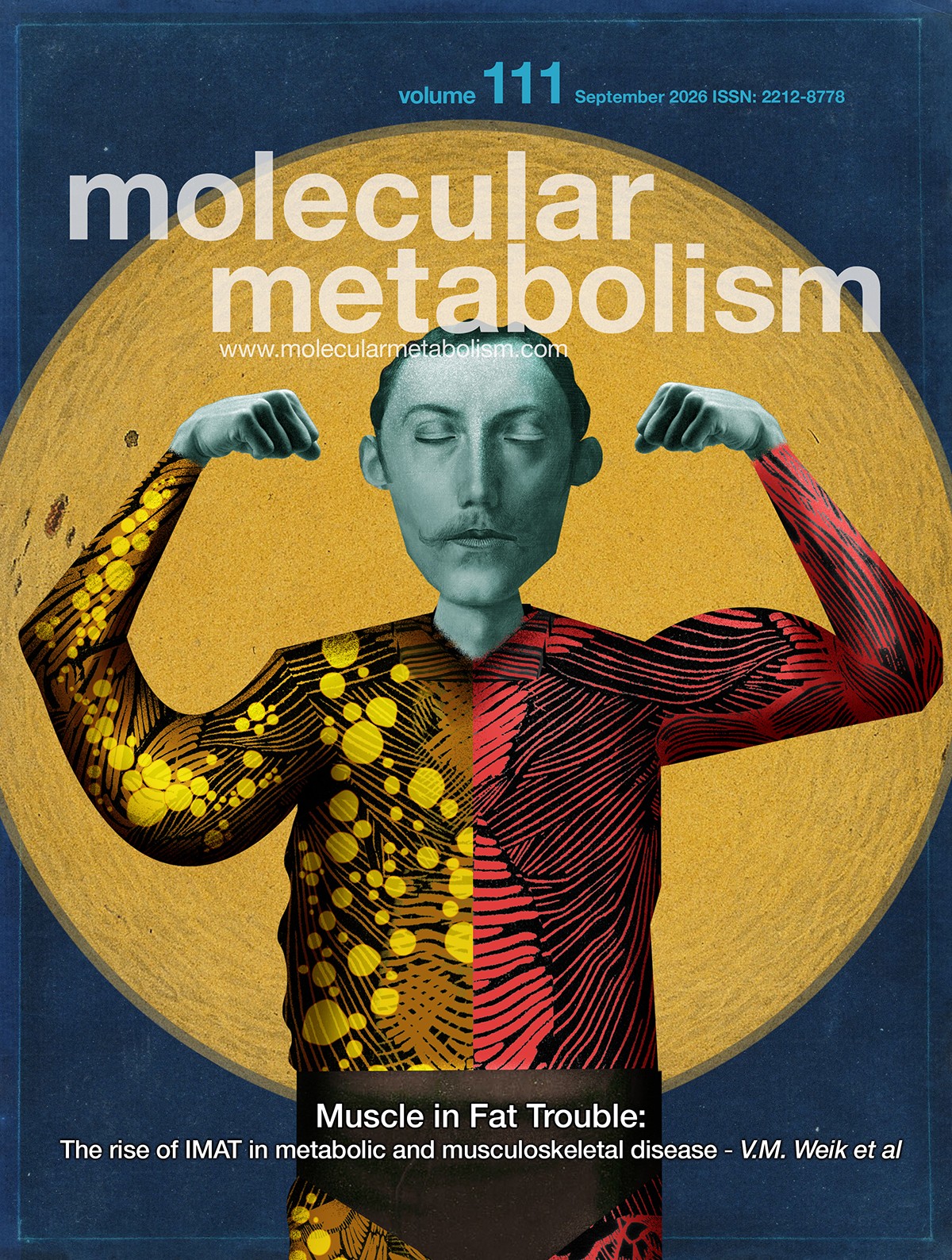
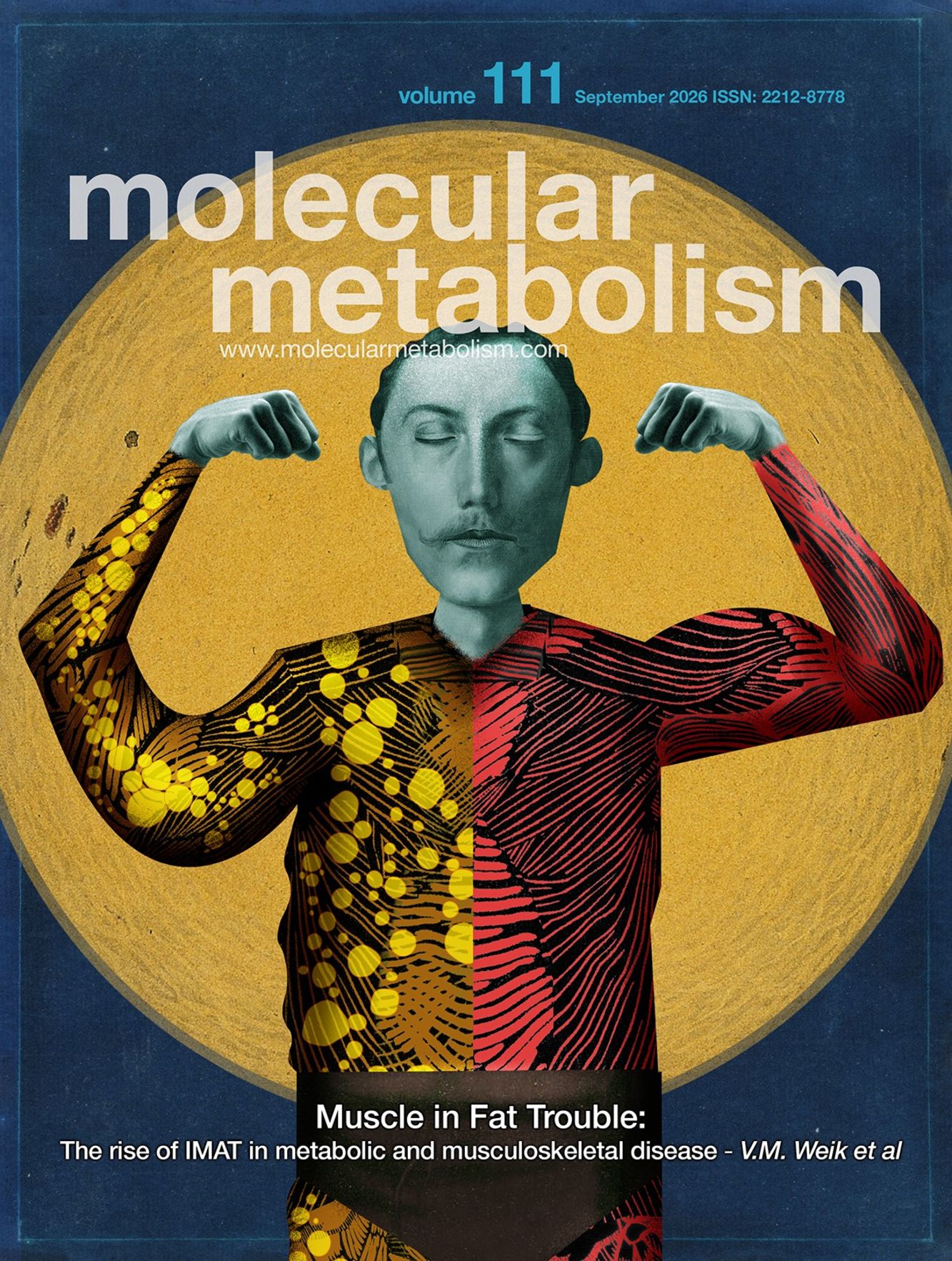
Skeletal muscle is the largest organ in the human body by mass, making up approximately 40 % of total body weight. Furthermore, it accounts for the majority of insulin-stimulated glucose uptake and is also highly involved in lipid metabolism. Lipids can accumulate in muscle through different distinct depots: as intramyocellular lipids (IMCL), stored as triglyceride-containing droplets within muscle cells and as intermuscular adipose tissue (IMAT), located between muscle fiber bundles beneath the deep muscle fascia. The muscular fat depots have been positively correlated with an increased body fat content in obesity, just like subcutaneous and visceral adipose tissue (SAT and VAT, respectively). IMCL, IMAT, VAT and SAT have additionally been linked to insulin resistance and type 2 diabetes mellitus (T2D).
Current Issue
GPR180 deficiency impairs mitochondrial function and insulin secretion in pancreatic β-cells
GPR180 deficiency impairs mitochondrial function and insulin secretion in pancreatic β-cells
Objectives
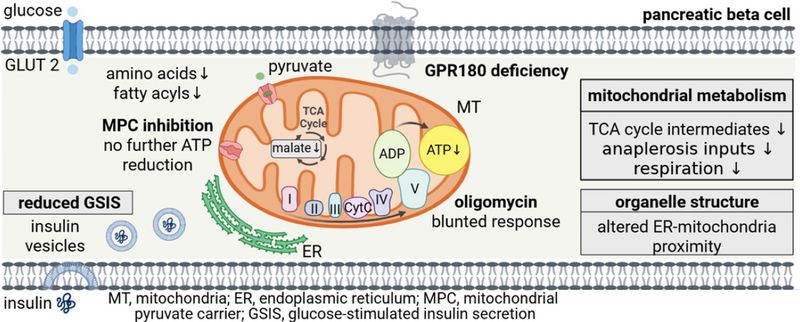
G protein-coupled receptor 180 (GPR180) has been implicated in systemic energy metabolism, primarily in adipose tissue and the liver. Given impaired whole-body glucose tolerance following GPR180 dysfunction, we aimed to determine whether GPR180 regulates pancreatic β-cell function. We investigated whether GPR180 contributes to β-cell insulin secretion by modulating metabolic processes that couple glucose sensing to mitochondrial energy production.
Methods
Phenotyping of whole-body (Gpr180 −/−) and β cell-specific Gpr180 (bGpr180-KO) knockout mice was combined with gain- and loss-of-function studies in MIN6 cells. Glucose-stimulated insulin secretion, pancreatic endocrine architecture and identity, transcriptomic and metabolic profiles, as well as mitochondrial function were assessed using in vivo and in vitro approaches, including metabolic challenge tests, histology, RNA sequencing, targeted metabolomics, respirometry, and transmission electron microscopy.
Results
Loss of GPR180 impaired first-phase insulin secretion and glucose tolerance without affecting insulin sensitivity. These defects were β-cell-autonomous, as confirmed in the bGpr180-KO mice and in MIN6 cells. Functional studies revealed that GPR180 regulates mitochondrial substrate utilization, anaplerotic support of the TCA cycle, and ATP generation without affecting glucose uptake or mitochondrial biogenesis. In particular, Gpr180-deficient β cells showed mitochondrial membrane depolarization, reduced oxygen consumption, and endoplasmic reticulum remodeling, altering the local mitochondrial microenvironment. In vivo, Gpr180 deletion in β cells led to downregulation of mitochondrial gene programs in islets, along with altered endocrine cell identity.
Conclusions
GPR180 is a previously unrecognized regulator of pancreatic β-cell metabolic competence and identity, linking defects in insulin secretion with alterations in mitochondrial function and endocrine cell identity.
Articles in Press
GPR180 deficiency impairs mitochondrial function and insulin secretion in pancreatic β-cells
GPR180 deficiency impairs mitochondrial function and insulin secretion in pancreatic β-cells
Objectives
G protein-coupled receptor 180 (GPR180) has been implicated in systemic energy metabolism, primarily in adipose tissue and the liver. Given impaired whole-body glucose tolerance following GPR180 dysfunction, we aimed to determine whether GPR180 regulates pancreatic β-cell function. We investigated whether GPR180 contributes to β-cell insulin secretion by modulating metabolic processes that couple glucose sensing to mitochondrial energy production.
Methods
Phenotyping of whole-body (Gpr180 −/−) and β cell-specific Gpr180 (bGpr180-KO) knockout mice was combined with gain- and loss-of-function studies in MIN6 cells. Glucose-stimulated insulin secretion, pancreatic endocrine architecture and identity, transcriptomic and metabolic profiles, as well as mitochondrial function were assessed using in vivo and in vitro approaches, including metabolic challenge tests, histology, RNA sequencing, targeted metabolomics, respirometry, and transmission electron microscopy.
Results
Loss of GPR180 impaired first-phase insulin secretion and glucose tolerance without affecting insulin sensitivity. These defects were β-cell-autonomous, as confirmed in the bGpr180-KO mice and in MIN6 cells. Functional studies revealed that GPR180 regulates mitochondrial substrate utilization, anaplerotic support of the TCA cycle, and ATP generation without affecting glucose uptake or mitochondrial biogenesis. In particular, Gpr180-deficient β cells showed mitochondrial membrane depolarization, reduced oxygen consumption, and endoplasmic reticulum remodeling, altering the local mitochondrial microenvironment. In vivo, Gpr180 deletion in β cells led to downregulation of mitochondrial gene programs in islets, along with altered endocrine cell identity.
Conclusions
GPR180 is a previously unrecognized regulator of pancreatic β-cell metabolic competence and identity, linking defects in insulin secretion with alterations in mitochondrial function and endocrine cell identity.
Registration still open - sign up now!

13th
Helmholtz Diabetes Conference
Munich, 21-23. Sep 2026

2024 impact factor: 6.6
You are what you eat
Here is a video of Vimeo. When the iframes is activated, a connection to Vimeo is established and, if necessary, cookies from Vimeo are also used. For further information on cookies policy click here.