
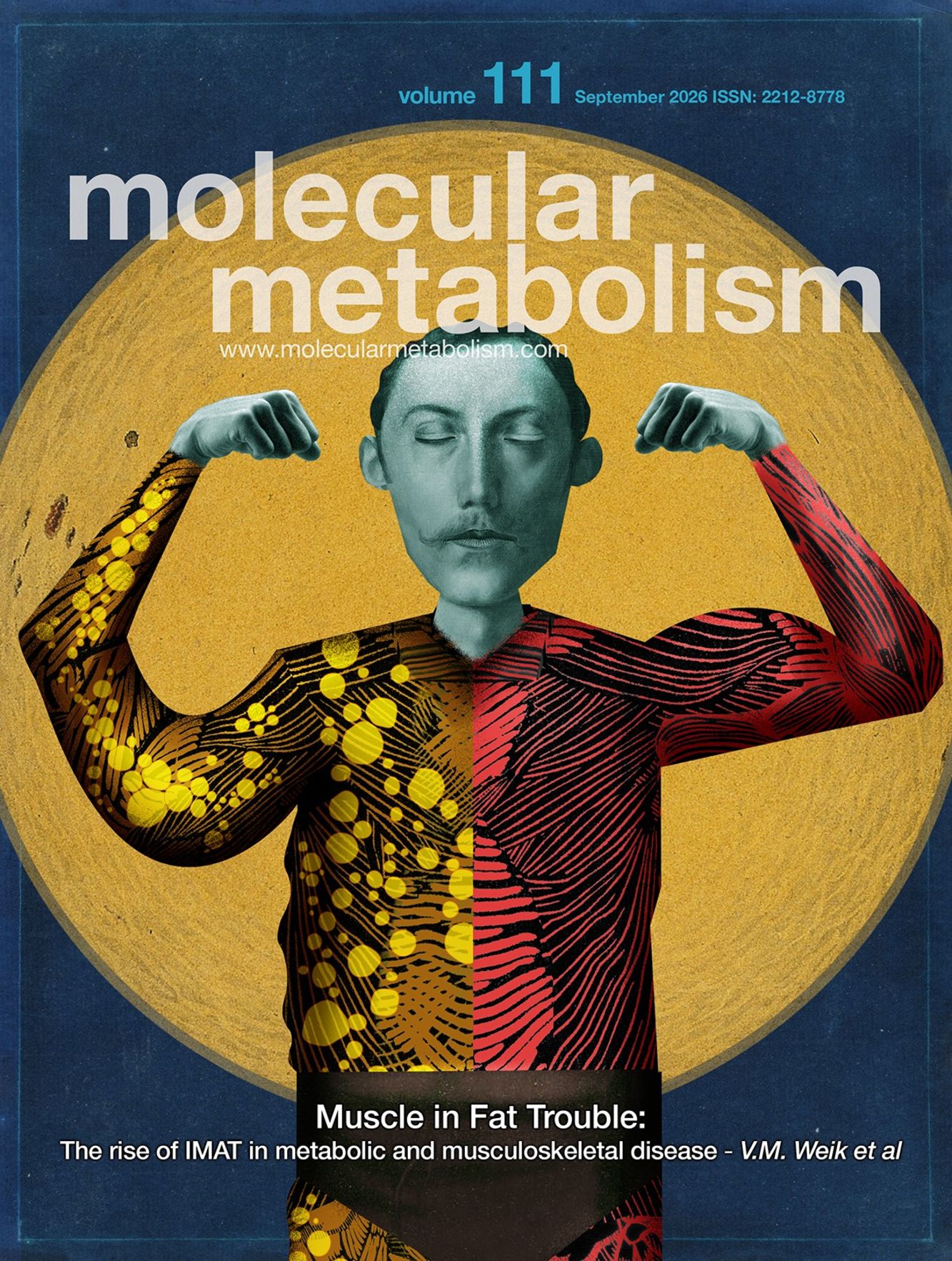


Cover Story Current Issue
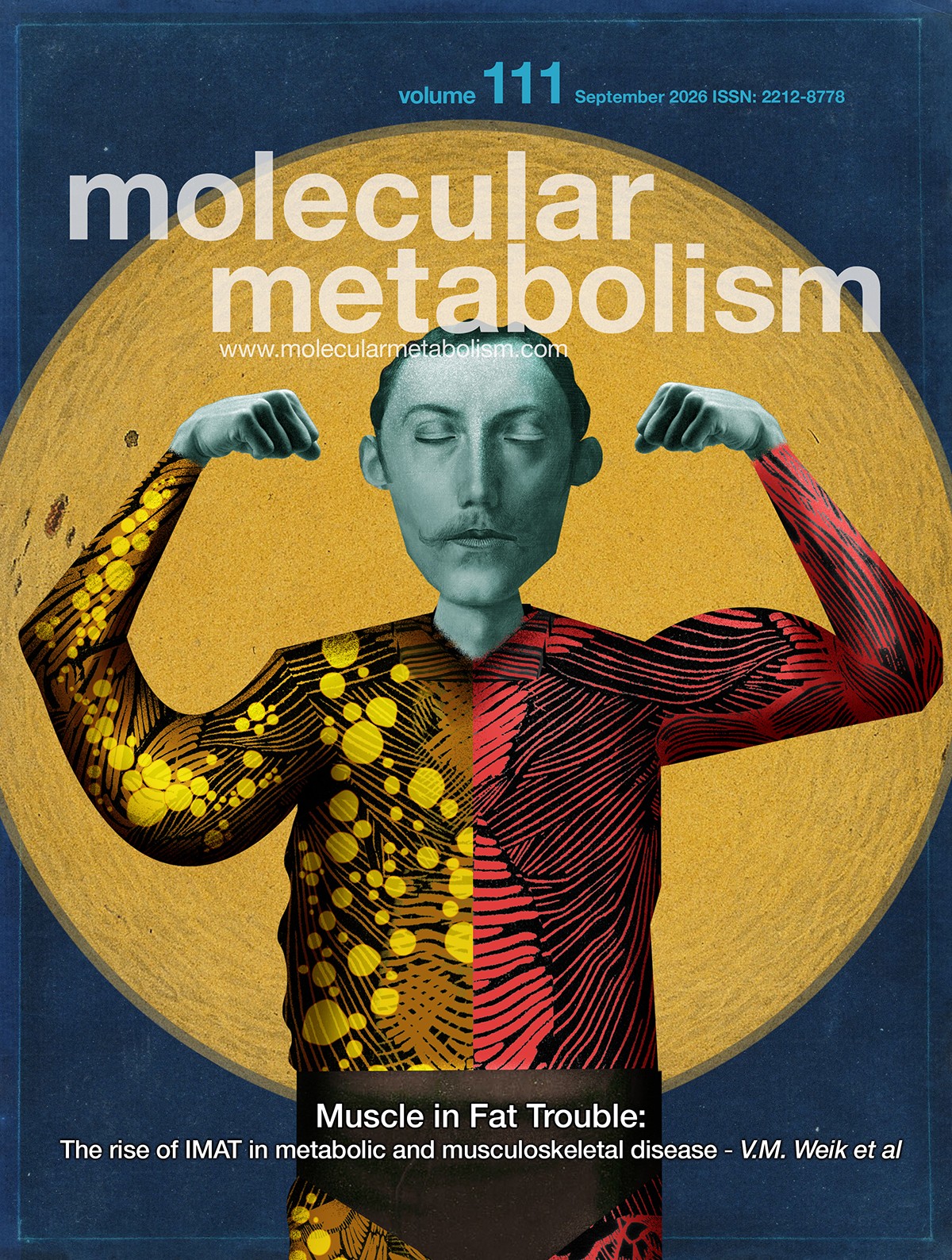
Skeletal muscle is the largest organ in the human body by mass, making up approximately 40 % of total body weight. Furthermore, it accounts for the majority of insulin-stimulated glucose uptake and is also highly involved in lipid metabolism. Lipids can accumulate in muscle through different distinct depots: as intramyocellular lipids (IMCL), stored as triglyceride-containing droplets within muscle cells and as intermuscular adipose tissue (IMAT), located between muscle fiber bundles beneath the deep muscle fascia. The muscular fat depots have been positively correlated with an increased body fat content in obesity, just like subcutaneous and visceral adipose tissue (SAT and VAT, respectively). IMCL, IMAT, VAT and SAT have additionally been linked to insulin resistance and type 2 diabetes mellitus (T2D).
Current Issue
CaMKIIγ/δ contributes to mitochondrial metabolic adaptation in skeletal muscle during endurance training
CaMKIIγ/δ contributes to mitochondrial metabolic adaptation in skeletal muscle during endurance training
Background
Calcium/calmodulin-dependent protein kinase II (CaMKII) is activated in skeletal muscle with exercise, yet its physiological role in endurance training adaptation remains unclear. This study determined whether endogenous CaMKIIγ/δ in skeletal muscle is required for endurance training–induced metabolic remodeling and exercise adaptation.
Methods
We generated male skeletal muscle-specific CaMKIIγ/δ knockout (CaMKII mKO) mice and assessed muscle phenotype, exercise capacity, and training adaptation. Acute exercise–induced CaMKII activation was evaluated by phosphorylation status. Transcriptomic changes were analyzed by RNA sequencing before and after 4 weeks of treadmill endurance training. Mitochondrial protein abundance, ultrastructure, and bioenergetics were examined by immunoblotting, transmission electron microscopy, and Seahorse extracellular flux analysis in myotubes with acute CaMKIIγ/δ deletion.
Results
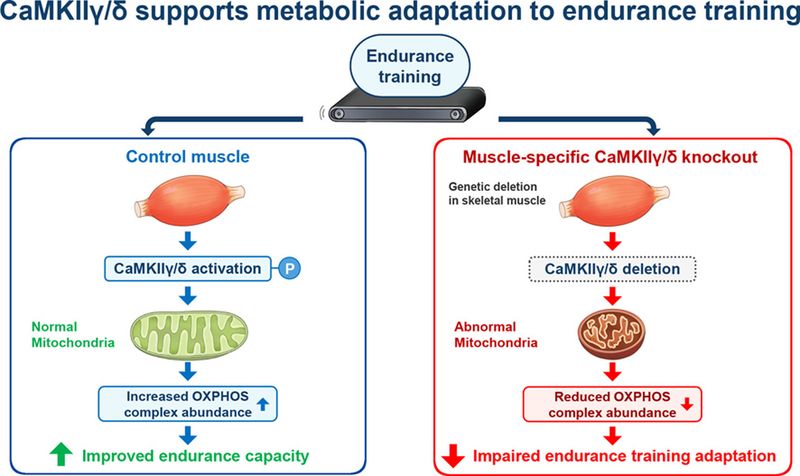
Acute treadmill exercise induced CaMKII phosphorylation in muscle without altering total CaMKII abundance. CaMKII mKO mice showed normal muscle mass, grip strength, and baseline performance. However, endurance training–induced improvement in running capacity was significantly blunted. Transcriptomic analyses revealed downregulation of oxidative phosphorylation and glycolytic gene programs in CaMKII-deficient muscle at baseline and after training. OXPHOS complex protein abundance was partially reduced at baseline and markedly reduced across complexes I–V after training. CaMKII deficiency increased ultrastructurally abnormal mitochondria without reducing mitochondrial number. Consistently, CaMKII-deficient myotubes showed lower absolute per-well oxygen consumption and extracellular acidification rate.
Conclusions
In male mice, endogenous CaMKIIγ/δ in muscle is dispensable for baseline locomotor performance but essential for endurance training-induced metabolic remodeling and mitochondrial integrity. These findings support a role for CaMKII in linking contraction-induced calcium signaling to metabolic adaptation in muscle.
Articles in Press
CaMKIIγ/δ contributes to mitochondrial metabolic adaptation in skeletal muscle during endurance training
CaMKIIγ/δ contributes to mitochondrial metabolic adaptation in skeletal muscle during endurance training
Background
Calcium/calmodulin-dependent protein kinase II (CaMKII) is activated in skeletal muscle with exercise, yet its physiological role in endurance training adaptation remains unclear. This study determined whether endogenous CaMKIIγ/δ in skeletal muscle is required for endurance training–induced metabolic remodeling and exercise adaptation.
Methods
We generated male skeletal muscle-specific CaMKIIγ/δ knockout (CaMKII mKO) mice and assessed muscle phenotype, exercise capacity, and training adaptation. Acute exercise–induced CaMKII activation was evaluated by phosphorylation status. Transcriptomic changes were analyzed by RNA sequencing before and after 4 weeks of treadmill endurance training. Mitochondrial protein abundance, ultrastructure, and bioenergetics were examined by immunoblotting, transmission electron microscopy, and Seahorse extracellular flux analysis in myotubes with acute CaMKIIγ/δ deletion.
Results
Acute treadmill exercise induced CaMKII phosphorylation in muscle without altering total CaMKII abundance. CaMKII mKO mice showed normal muscle mass, grip strength, and baseline performance. However, endurance training–induced improvement in running capacity was significantly blunted. Transcriptomic analyses revealed downregulation of oxidative phosphorylation and glycolytic gene programs in CaMKII-deficient muscle at baseline and after training. OXPHOS complex protein abundance was partially reduced at baseline and markedly reduced across complexes I–V after training. CaMKII deficiency increased ultrastructurally abnormal mitochondria without reducing mitochondrial number. Consistently, CaMKII-deficient myotubes showed lower absolute per-well oxygen consumption and extracellular acidification rate.
Conclusions
In male mice, endogenous CaMKIIγ/δ in muscle is dispensable for baseline locomotor performance but essential for endurance training-induced metabolic remodeling and mitochondrial integrity. These findings support a role for CaMKII in linking contraction-induced calcium signaling to metabolic adaptation in muscle.
Registration still open - sign up now!

13th
Helmholtz Diabetes Conference
Munich, 21-23. Sep 2026

2024 impact factor: 6.6
You are what you eat
Here is a video of Vimeo. When the iframes is activated, a connection to Vimeo is established and, if necessary, cookies from Vimeo are also used. For further information on cookies policy click here.