
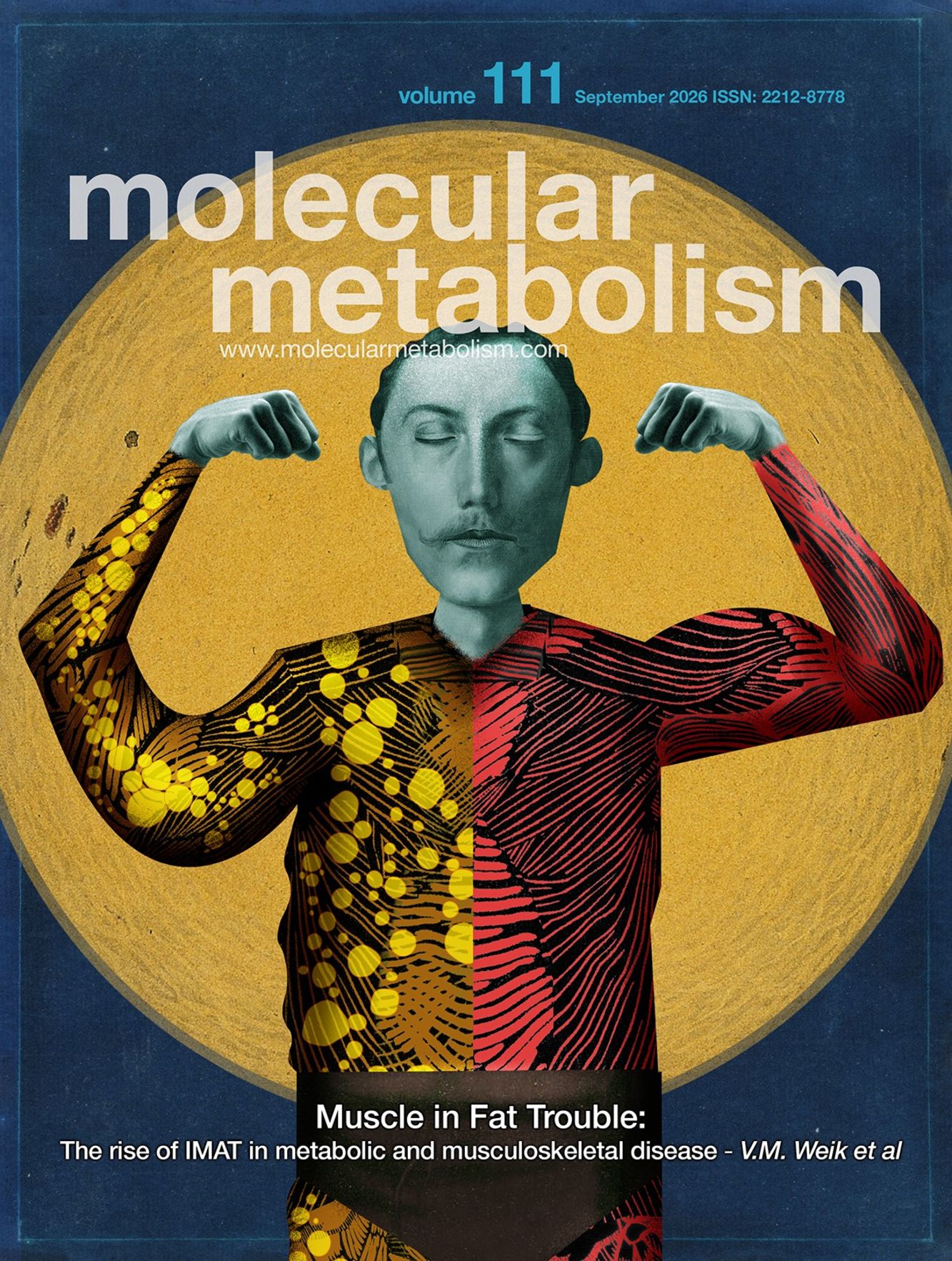




Cover Story Current Issue
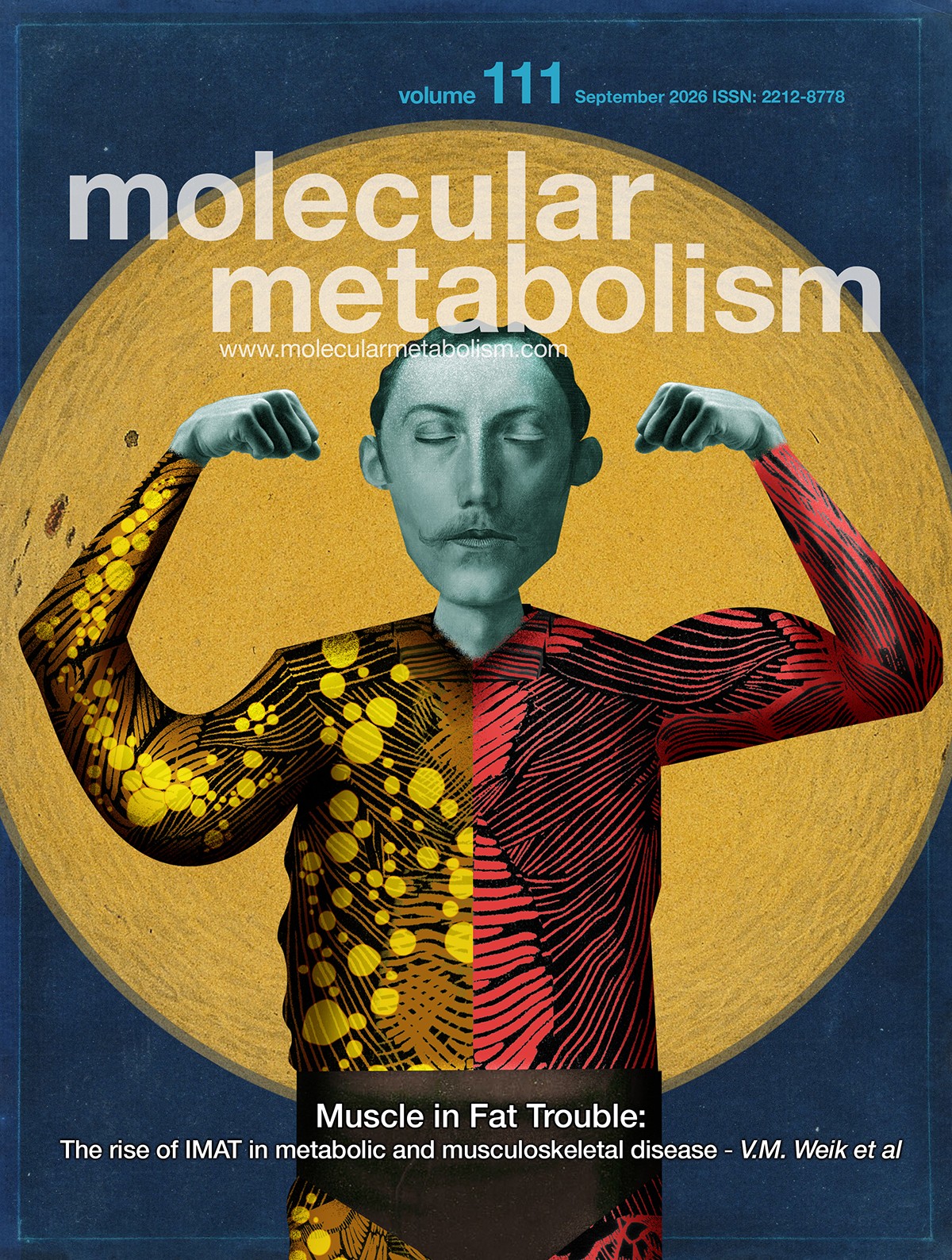
Skeletal muscle is the largest organ in the human body by mass, making up approximately 40 % of total body weight. Furthermore, it accounts for the majority of insulin-stimulated glucose uptake and is also highly involved in lipid metabolism. Lipids can accumulate in muscle through different distinct depots: as intramyocellular lipids (IMCL), stored as triglyceride-containing droplets within muscle cells and as intermuscular adipose tissue (IMAT), located between muscle fiber bundles beneath the deep muscle fascia. The muscular fat depots have been positively correlated with an increased body fat content in obesity, just like subcutaneous and visceral adipose tissue (SAT and VAT, respectively). IMCL, IMAT, VAT and SAT have additionally been linked to insulin resistance and type 2 diabetes mellitus (T2D).
Current Issue
Pik3ip1 mediates thyroid hormone-dependent regulation of the PI3K/Akt/mTOR axis in muscle atrophy
Pik3ip1 mediates thyroid hormone-dependent regulation of the PI3K/Akt/mTOR axis in muscle atrophy
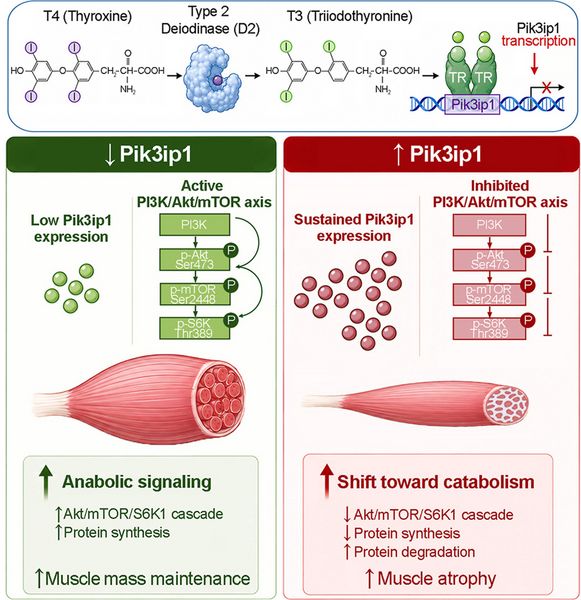
Skeletal muscle atrophy is driven by an imbalance between anabolic and catabolic signaling pathways, often involving suppression of the PI3K/Akt/mTOR axis. Thyroid Hormones (THs) are key endocrine regulators of skeletal muscle metabolism and adaptation, exerting context-dependent effects that promote either muscle atrophy or hypertrophy. Here, we identify Phosphoinositide-3-kinase interacting protein 1, Pik3ip1, as a critical regulator of TH-dependent muscle homeostasis. Transcriptomic profiling of skeletal muscle from muscle-specific D2 knockout (mD2KO) and TH Receptor knockout (TRKO) mice revealed a catabolic transcriptional program associated with increased Pik3ip1 expression. Consistently, Pik3ip1 expression negatively correlated with TH signaling in vivo and in vitro. Functional studies in C2C12 myotubes showed that Pik3ip1 overexpression suppresses Akt/mTOR signaling, indicating that its induction is sufficient to impair anabolic pathway activation. In vivo, Pik3ip1 expression was rapidly induced during denervation-induced muscle atrophy and remained persistently elevated in mD2KO and TRKO muscles, characterized by altered TH signaling. Sustained Pik3ip1 expression was associated with impaired activation of the Akt/mTOR pathway and enhanced muscle wasting. Conversely, TH treatment reduced Pik3ip1 levels, restored Akt/mTOR signaling, and promoted anabolic responses. Forced Pik3ip1 expression attenuated TH-induced Akt/mTOR phosphorylation, confirming its role as a mediator of TH-dependent anabolic regulation. Collectively, these findings identify Pik3ip1 as a key negative regulator of PI3K/Akt/mTOR signaling in skeletal muscle and establish the TH-Pik3ip1 axis as an important mechanism controlling muscle mass maintenance during atrophic conditions.
Articles in Press
Pik3ip1 mediates thyroid hormone-dependent regulation of the PI3K/Akt/mTOR axis in muscle atrophy
Pik3ip1 mediates thyroid hormone-dependent regulation of the PI3K/Akt/mTOR axis in muscle atrophy
Skeletal muscle atrophy is driven by an imbalance between anabolic and catabolic signaling pathways, often involving suppression of the PI3K/Akt/mTOR axis. Thyroid Hormones (THs) are key endocrine regulators of skeletal muscle metabolism and adaptation, exerting context-dependent effects that promote either muscle atrophy or hypertrophy. Here, we identify Phosphoinositide-3-kinase interacting protein 1, Pik3ip1, as a critical regulator of TH-dependent muscle homeostasis. Transcriptomic profiling of skeletal muscle from muscle-specific D2 knockout (mD2KO) and TH Receptor knockout (TRKO) mice revealed a catabolic transcriptional program associated with increased Pik3ip1 expression. Consistently, Pik3ip1 expression negatively correlated with TH signaling in vivo and in vitro. Functional studies in C2C12 myotubes showed that Pik3ip1 overexpression suppresses Akt/mTOR signaling, indicating that its induction is sufficient to impair anabolic pathway activation. In vivo, Pik3ip1 expression was rapidly induced during denervation-induced muscle atrophy and remained persistently elevated in mD2KO and TRKO muscles, characterized by altered TH signaling. Sustained Pik3ip1 expression was associated with impaired activation of the Akt/mTOR pathway and enhanced muscle wasting. Conversely, TH treatment reduced Pik3ip1 levels, restored Akt/mTOR signaling, and promoted anabolic responses. Forced Pik3ip1 expression attenuated TH-induced Akt/mTOR phosphorylation, confirming its role as a mediator of TH-dependent anabolic regulation. Collectively, these findings identify Pik3ip1 as a key negative regulator of PI3K/Akt/mTOR signaling in skeletal muscle and establish the TH-Pik3ip1 axis as an important mechanism controlling muscle mass maintenance during atrophic conditions.
Registration still open - sign up now!

13th
Helmholtz Diabetes Conference
Munich, 21-23. Sep 2026

2024 impact factor: 6.6
You are what you eat
Here is a video of Vimeo. When the iframes is activated, a connection to Vimeo is established and, if necessary, cookies from Vimeo are also used. For further information on cookies policy click here.