Cover Story Current Issue

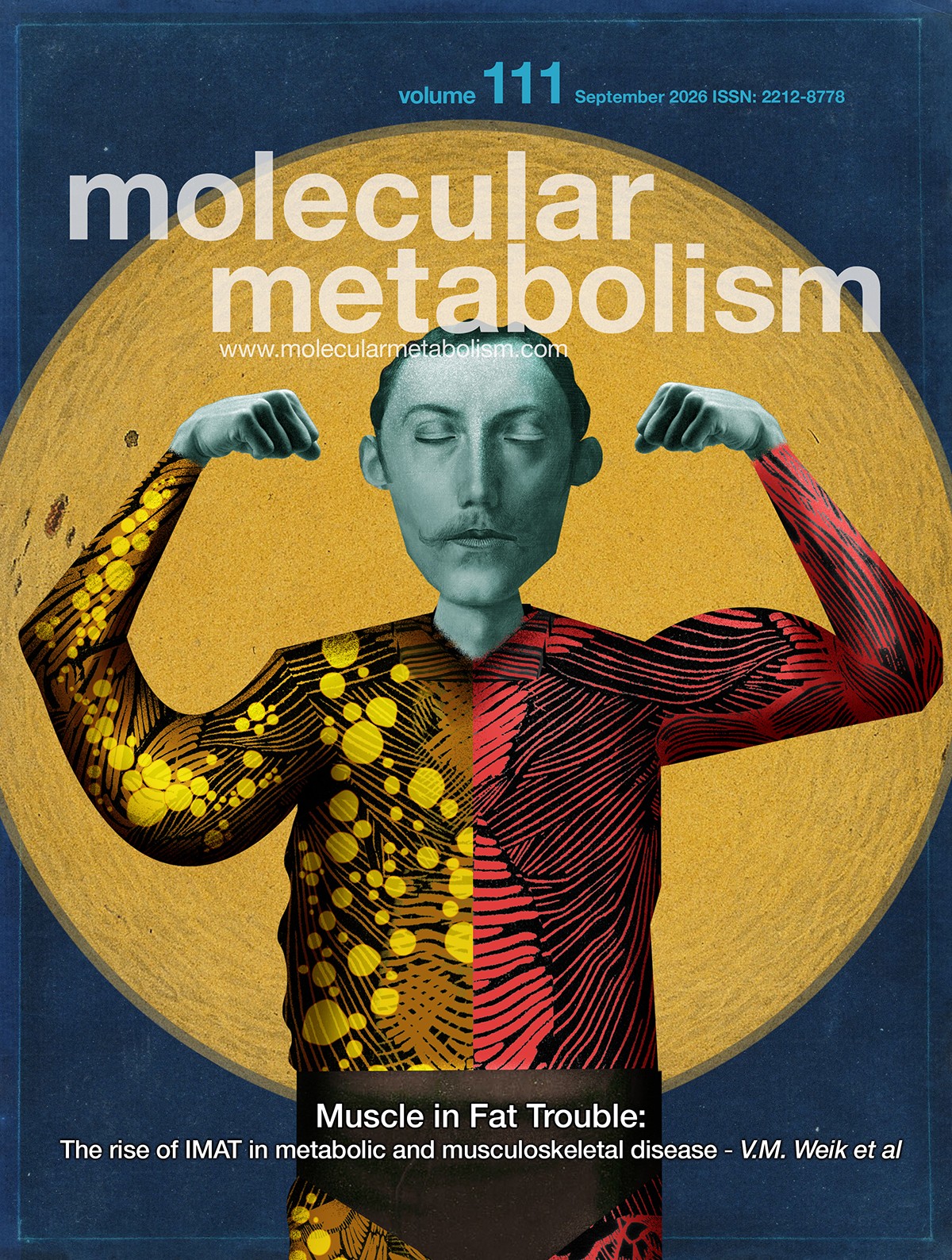
Skeletal muscle is the largest organ in the human body by mass, making up approximately 40 % of total body weight. Furthermore, it accounts for the majority of insulin-stimulated glucose uptake and is also highly involved in lipid metabolism. Lipids can accumulate in muscle through different distinct depots: as intramyocellular lipids (IMCL), stored as triglyceride-containing droplets within muscle cells and as intermuscular adipose tissue (IMAT), located between muscle fiber bundles beneath the deep muscle fascia. The muscular fat depots have been positively correlated with an increased body fat content in obesity, just like subcutaneous and visceral adipose tissue (SAT and VAT, respectively). IMCL, IMAT, VAT and SAT have additionally been linked to insulin resistance and type 2 diabetes mellitus (T2D).

Full text


Current Issue

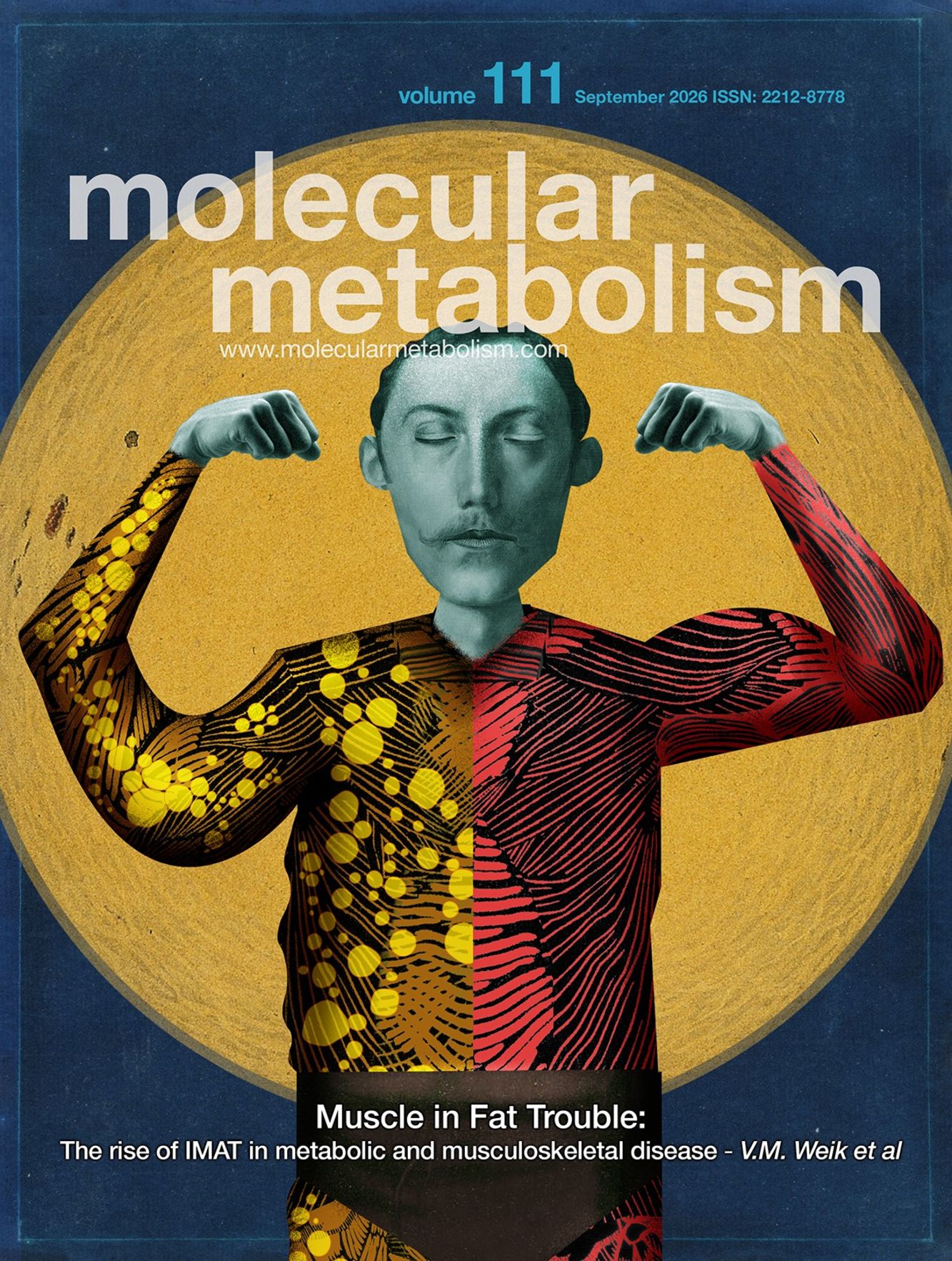
Muscle in fat trouble: The rise of IMAT in metabolic and musculoskeletal disease

Vanessa M. Weik, Andreas L. Birkenfeld, Andreas Peter, Cora Weigert, Simon I. Dreher

Muscle in fat trouble: The rise of IMAT in metabolic and musculoskeletal disease

Intermuscular adipose tissue (IMAT) is increasingly recognized as a contributor to insulin resistance and metabolic dysfunction in type 2 diabetes (T2D). Accumulation of IMAT was found to correlate with impaired skeletal muscle insulin sensitivity, as well as a generally reduced muscle strength and physical performance in humans. Beyond serving as an energy depot at physiological levels, increased IMAT is thought to actively impair muscle metabolism through secretion of adipokines, cytokines and lipid intermediates that create an inflammatory environment and modulate insulin signaling pathways. This review discusses current evidence on the pathophysiological role of IMAT based on clinical studies, including interventions, and current mechanistic insight from biopsied human IMAT. We further explore traditional and emerging methods to investigate IMAT that could expand mechanistic understanding of IMAT-muscle-crosstalk, highlighting their strengths and limitations. Human in vitro co-culture-models are valuable future tools for dissecting cellular and molecular responses. Despite growing interest in IMAT as a potential key player in metabolic disease, uncertainty remains about its origin, regulation and functionality. We suggest further research to integrate and intertwine traditional imaging techniques, multi-omics characterization of IMAT biopsies and advanced, physiologically relevant human in vitro systems to close these knowledge gaps to develop therapeutic strategies targeting metabolic disease.

Articles in Press

Muscle in fat trouble: The rise of IMAT in metabolic and musculoskeletal disease

Vanessa M. Weik, Andreas L. Birkenfeld, Andreas Peter, Cora Weigert, Simon I. Dreher

Muscle in fat trouble: The rise of IMAT in metabolic and musculoskeletal disease

Intermuscular adipose tissue (IMAT) is increasingly recognized as a contributor to insulin resistance and metabolic dysfunction in type 2 diabetes (T2D). Accumulation of IMAT was found to correlate with impaired skeletal muscle insulin sensitivity, as well as a generally reduced muscle strength and physical performance in humans. Beyond serving as an energy depot at physiological levels, increased IMAT is thought to actively impair muscle metabolism through secretion of adipokines, cytokines and lipid intermediates that create an inflammatory environment and modulate insulin signaling pathways. This review discusses current evidence on the pathophysiological role of IMAT based on clinical studies, including interventions, and current mechanistic insight from biopsied human IMAT. We further explore traditional and emerging methods to investigate IMAT that could expand mechanistic understanding of IMAT-muscle-crosstalk, highlighting their strengths and limitations. Human in vitro co-culture-models are valuable future tools for dissecting cellular and molecular responses. Despite growing interest in IMAT as a potential key player in metabolic disease, uncertainty remains about its origin, regulation and functionality. We suggest further research to integrate and intertwine traditional imaging techniques, multi-omics characterization of IMAT biopsies and advanced, physiologically relevant human in vitro systems to close these knowledge gaps to develop therapeutic strategies targeting metabolic disease.

Registration still open - sign up now!

13th
Helmholtz Diabetes Conference 

Munich, 21-23. Sep 2026                                                                                                                             

2024 impact factor: 6.6

You are what you eat

Here is a video of Vimeo. When the iframes is activated, a connection to Vimeo is established and, if necessary, cookies from Vimeo are also used. For further information on cookies policy click here.

Auf Werbeinhalte, die vor, während oder nach Videos von WEBSITE-URL eingeblendet werden, hat WEBSITE-URL keinen Einfluss. Wir übernehmen keine Gewähr für diese Inhalte. Weitere Informationen finden Sie hier.