Cover Story Current Issue

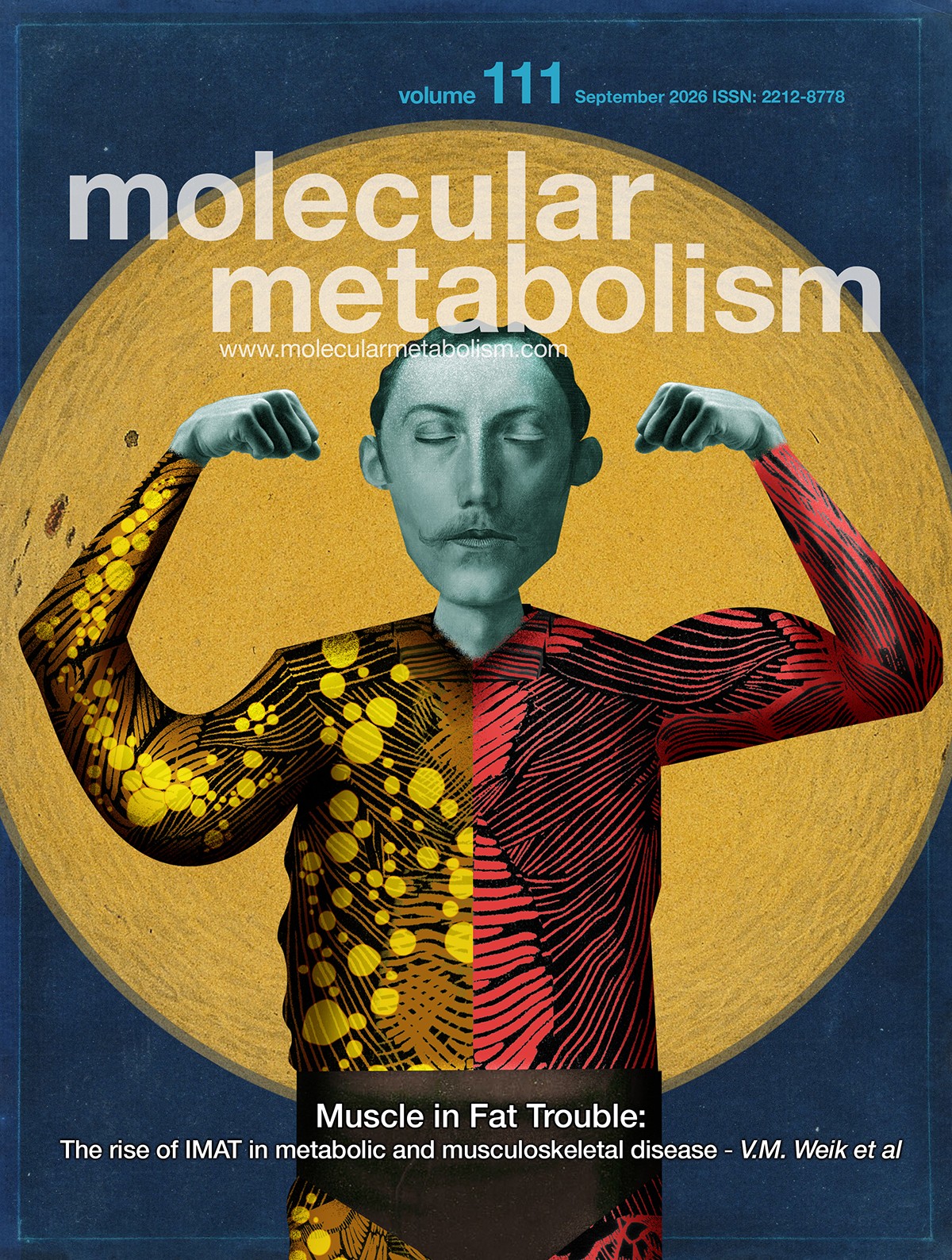
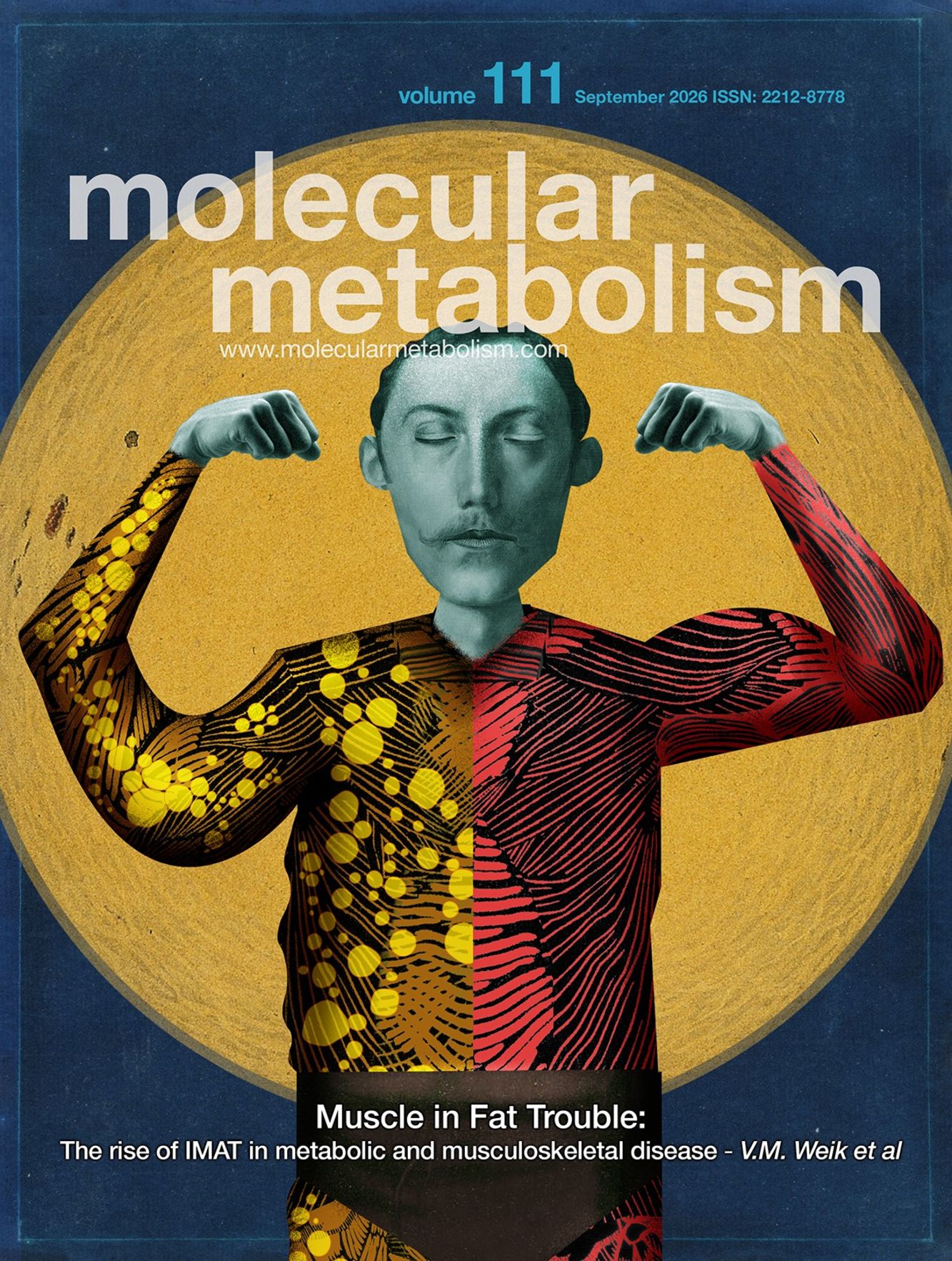
Skeletal muscle is the largest organ in the human body by mass, making up approximately 40 % of total body weight. Furthermore, it accounts for the majority of insulin-stimulated glucose uptake and is also highly involved in lipid metabolism. Lipids can accumulate in muscle through different distinct depots: as intramyocellular lipids (IMCL), stored as triglyceride-containing droplets within muscle cells and as intermuscular adipose tissue (IMAT), located between muscle fiber bundles beneath the deep muscle fascia. The muscular fat depots have been positively correlated with an increased body fat content in obesity, just like subcutaneous and visceral adipose tissue (SAT and VAT, respectively). IMCL, IMAT, VAT and SAT have additionally been linked to insulin resistance and type 2 diabetes mellitus (T2D).

Full text


Current Issue

N-acetylated amino acids: An overlooked layer of metabolic regulation

Dirk Weber, Achim Bub

N-acetylated amino acids: An overlooked layer of metabolic regulation

N-acetylated amino acids (Ac-AAs) have been repeatedly reported in metabolomics studies of high-intensity exercise, cold-exposed brown adipose tissue (BAT), and various pathological conditions. Despite their recurrent detection, the origins and physiological functions of Ac-AAs remain poorly understood, and evidence is fragmented across diverse scientific disciplines. While Ac-AAs have traditionally been attributed to the degradation of N-terminally acetylated proteins, this mechanism alone cannot fully account for their diversity and context-dependent regulation. Instead, accumulating evidence supports a model in which Ac-AA formation is driven by elevated intracellular acetyl-CoA and amino acid availability. Under these conditions, Ac-AA formation may represent a previously unrecognized metabolic mechanism involved in acetyl-CoA and amino acid homeostasis. In this review, we provide an overview of Ac-AA alterations across physiological contexts, synthesize current evidence on their origins, regulation, and physiological functions, and propose a mechanistic framework for the role of Ac-AAs in metabolic regulation. By integrating findings across diverse scientific disciplines, this review establishes a foundation for a more consistent interpretation of Ac-AAs across physiological and pathological contexts.

Articles in Press

N-acetylated amino acids: An overlooked layer of metabolic regulation

Dirk Weber, Achim Bub

N-acetylated amino acids: An overlooked layer of metabolic regulation

N-acetylated amino acids (Ac-AAs) have been repeatedly reported in metabolomics studies of high-intensity exercise, cold-exposed brown adipose tissue (BAT), and various pathological conditions. Despite their recurrent detection, the origins and physiological functions of Ac-AAs remain poorly understood, and evidence is fragmented across diverse scientific disciplines. While Ac-AAs have traditionally been attributed to the degradation of N-terminally acetylated proteins, this mechanism alone cannot fully account for their diversity and context-dependent regulation. Instead, accumulating evidence supports a model in which Ac-AA formation is driven by elevated intracellular acetyl-CoA and amino acid availability. Under these conditions, Ac-AA formation may represent a previously unrecognized metabolic mechanism involved in acetyl-CoA and amino acid homeostasis. In this review, we provide an overview of Ac-AA alterations across physiological contexts, synthesize current evidence on their origins, regulation, and physiological functions, and propose a mechanistic framework for the role of Ac-AAs in metabolic regulation. By integrating findings across diverse scientific disciplines, this review establishes a foundation for a more consistent interpretation of Ac-AAs across physiological and pathological contexts.

Registration still open - sign up now!

13th
Helmholtz Diabetes Conference 

Munich, 21-23. Sep 2026                                                                                                                             

2024 impact factor: 6.6

You are what you eat

Here is a video of Vimeo. When the iframes is activated, a connection to Vimeo is established and, if necessary, cookies from Vimeo are also used. For further information on cookies policy click here.

Auf Werbeinhalte, die vor, während oder nach Videos von WEBSITE-URL eingeblendet werden, hat WEBSITE-URL keinen Einfluss. Wir übernehmen keine Gewähr für diese Inhalte. Weitere Informationen finden Sie hier.