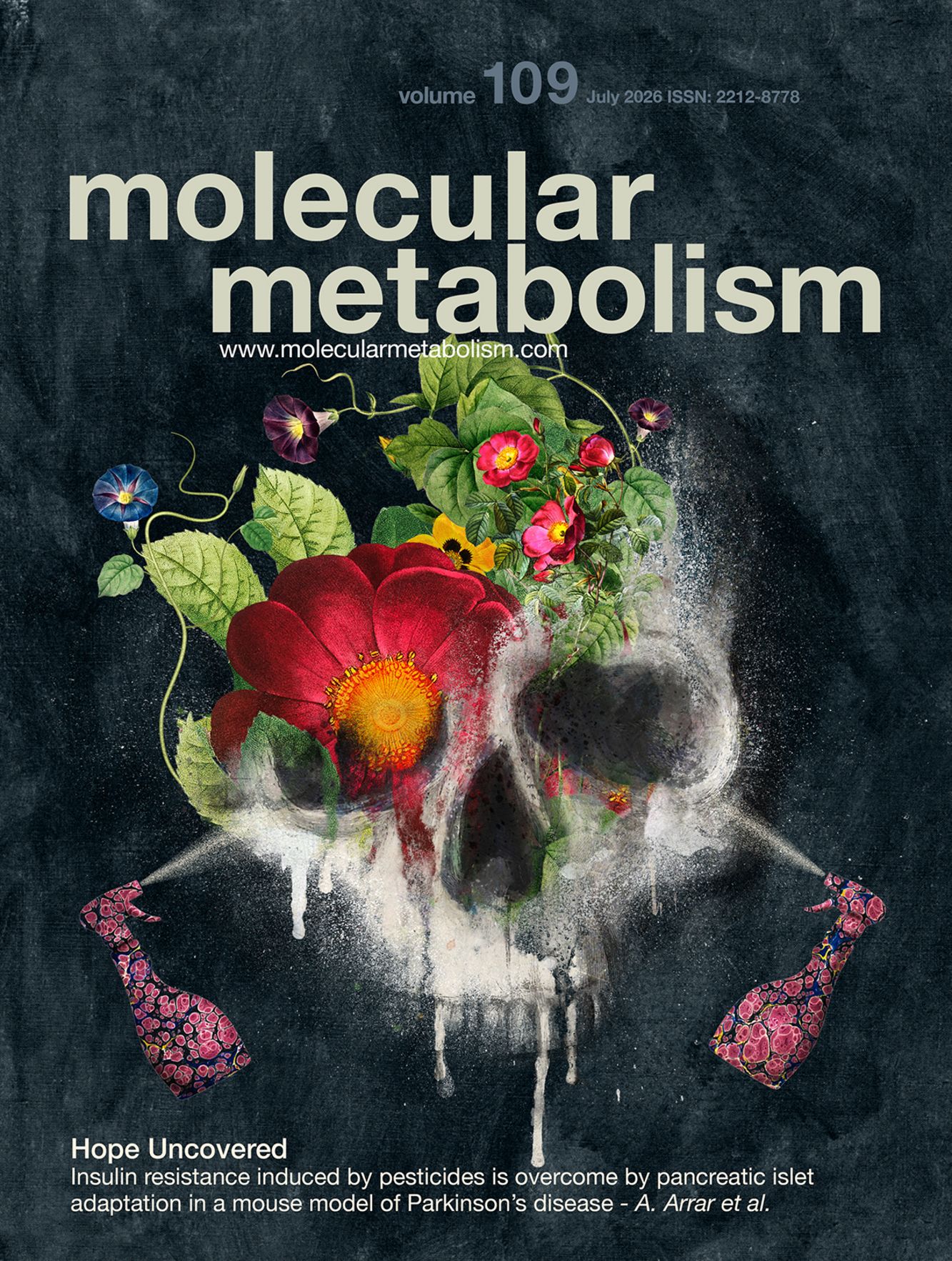
Cover Story Current Issue

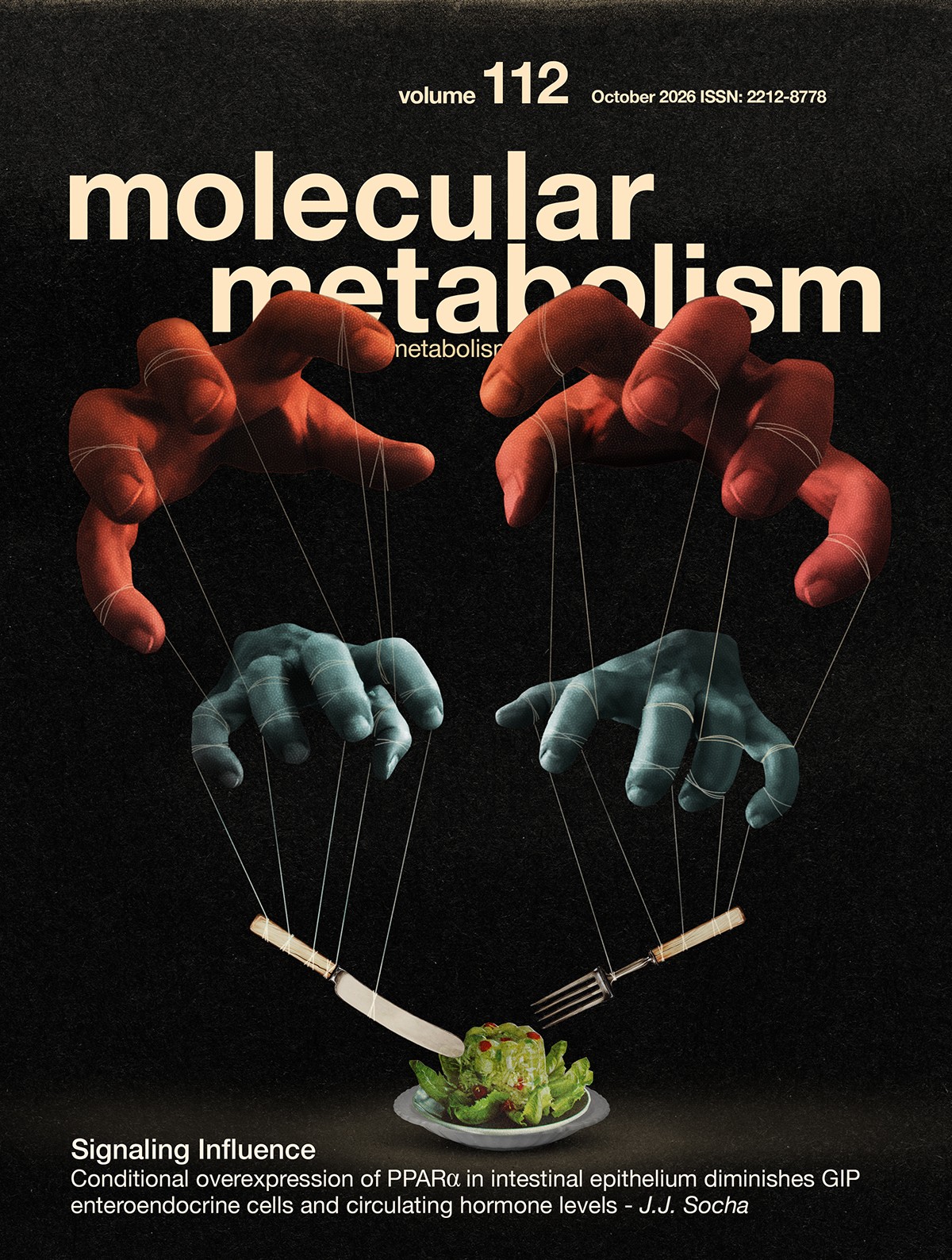
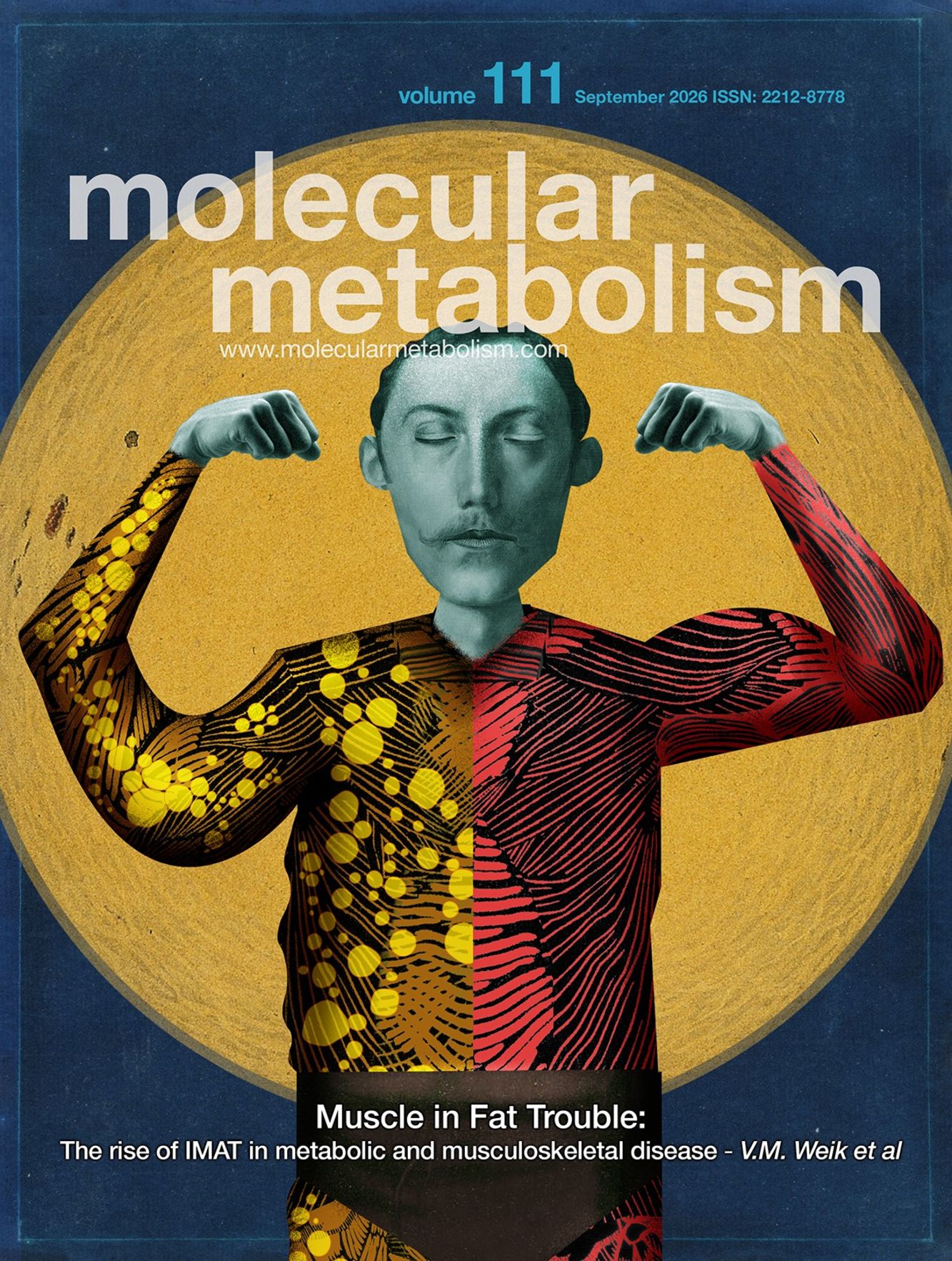
Skeletal muscle is the largest organ in the human body by mass, making up approximately 40 % of total body weight. Furthermore, it accounts for the majority of insulin-stimulated glucose uptake and is also highly involved in lipid metabolism. Lipids can accumulate in muscle through different distinct depots: as intramyocellular lipids (IMCL), stored as triglyceride-containing droplets within muscle cells and as intermuscular adipose tissue (IMAT), located between muscle fiber bundles beneath the deep muscle fascia. The muscular fat depots have been positively correlated with an increased body fat content in obesity, just like subcutaneous and visceral adipose tissue (SAT and VAT, respectively). IMCL, IMAT, VAT and SAT have additionally been linked to insulin resistance and type 2 diabetes mellitus (T2D).

Full text


Current Issue

Mitochondrial NCLX Couples Glucagon- and PDE2A-Dependent Signals to Regulate Hepatic Lipid Metabolism

Essam A. Assali, Mahmoud Taha, Ahmad Salhab, Johnny Amer, ... Israel Sekler

Mitochondrial calcium signaling, particularly its glucagon-mediated oscillatory dynamics, plays a pivotal role in regulating hepatic metabolism and is known to be disrupted in steatotic liver disease. We recently identified the mitochondrial Na+/Ca2+ exchanger NCLX as a key mediator of glucagon-induced mitochondrial calcium oscillations, essential for proper gluconeogenic function. Here, using hepatocyte-specific NCLX knockout (cKO) mice, we demonstrate that NCLX is critical for intrahepatic lipolysis and fatty acid oxidation (FAO); its loss impairs glucagon-stimulated lipid droplet catabolism and blunts FAO. Mechanistically, we find that NCLX deficiency disrupts allosteric activation of lipolytic enzymes and increases CPT1 sensitivity to malonyl-CoA–mediated inhibition, resulting in defective lipolysis and FAO. We further show that glucagon regulates hepatic NCLX via cAMP/PKA-dependent phosphorylation at NCLX Ser258. Notably, PDE2A acts as a negative regulator of this pathway by degrading mitochondrial cAMP. Hepatic mitochondrial PDE2A abundance and cAMP-degrading activity are elevated in HFD, and in vivo BAY 60-7550 treatment suppresses mitochondrial cAMP degradation and augments PKA signaling in steatosic livers. Pharmacologic inhibition of PDE2A with BAY 60-7550 enhances NCLX phosphorylation, restores mitochondrial calcium efflux and oscillations, and stimulates FAO in an NCLX-dependent manner. Importantly, we uncover that cAMP/PKA-dependent phosphorylation of NCLX at Ser258 is suppressed in human steatotic livers, and that pharmacologic inhibition of PDE2A ameliorates hepatic FAO and steatosis in both dietary and genetic MASLD models. Collectively, our findings establish the glucagon–PKA–PDE2A–NCLX signaling axis as a key metabolic rheostat integrating mitochondrial calcium dynamics with lipid homeostasis, providing a promising therapeutic target for MASLD.

Articles in Press

Mitochondrial NCLX Couples Glucagon- and PDE2A-Dependent Signals to Regulate Hepatic Lipid Metabolism

Essam A. Assali, Mahmoud Taha, Ahmad Salhab, Johnny Amer, ... Israel Sekler

Mitochondrial calcium signaling, particularly its glucagon-mediated oscillatory dynamics, plays a pivotal role in regulating hepatic metabolism and is known to be disrupted in steatotic liver disease. We recently identified the mitochondrial Na+/Ca2+ exchanger NCLX as a key mediator of glucagon-induced mitochondrial calcium oscillations, essential for proper gluconeogenic function. Here, using hepatocyte-specific NCLX knockout (cKO) mice, we demonstrate that NCLX is critical for intrahepatic lipolysis and fatty acid oxidation (FAO); its loss impairs glucagon-stimulated lipid droplet catabolism and blunts FAO. Mechanistically, we find that NCLX deficiency disrupts allosteric activation of lipolytic enzymes and increases CPT1 sensitivity to malonyl-CoA–mediated inhibition, resulting in defective lipolysis and FAO. We further show that glucagon regulates hepatic NCLX via cAMP/PKA-dependent phosphorylation at NCLX Ser258. Notably, PDE2A acts as a negative regulator of this pathway by degrading mitochondrial cAMP. Hepatic mitochondrial PDE2A abundance and cAMP-degrading activity are elevated in HFD, and in vivo BAY 60-7550 treatment suppresses mitochondrial cAMP degradation and augments PKA signaling in steatosic livers. Pharmacologic inhibition of PDE2A with BAY 60-7550 enhances NCLX phosphorylation, restores mitochondrial calcium efflux and oscillations, and stimulates FAO in an NCLX-dependent manner. Importantly, we uncover that cAMP/PKA-dependent phosphorylation of NCLX at Ser258 is suppressed in human steatotic livers, and that pharmacologic inhibition of PDE2A ameliorates hepatic FAO and steatosis in both dietary and genetic MASLD models. Collectively, our findings establish the glucagon–PKA–PDE2A–NCLX signaling axis as a key metabolic rheostat integrating mitochondrial calcium dynamics with lipid homeostasis, providing a promising therapeutic target for MASLD.

Registration still open - sign up now!

13th
Helmholtz Diabetes Conference 

Munich, 21-23. Sep 2026                                                                                                                             

2024 impact factor: 6.6

You are what you eat

Here is a video of Vimeo. When the iframes is activated, a connection to Vimeo is established and, if necessary, cookies from Vimeo are also used. For further information on cookies policy click here.

Auf Werbeinhalte, die vor, während oder nach Videos von WEBSITE-URL eingeblendet werden, hat WEBSITE-URL keinen Einfluss. Wir übernehmen keine Gewähr für diese Inhalte. Weitere Informationen finden Sie hier.