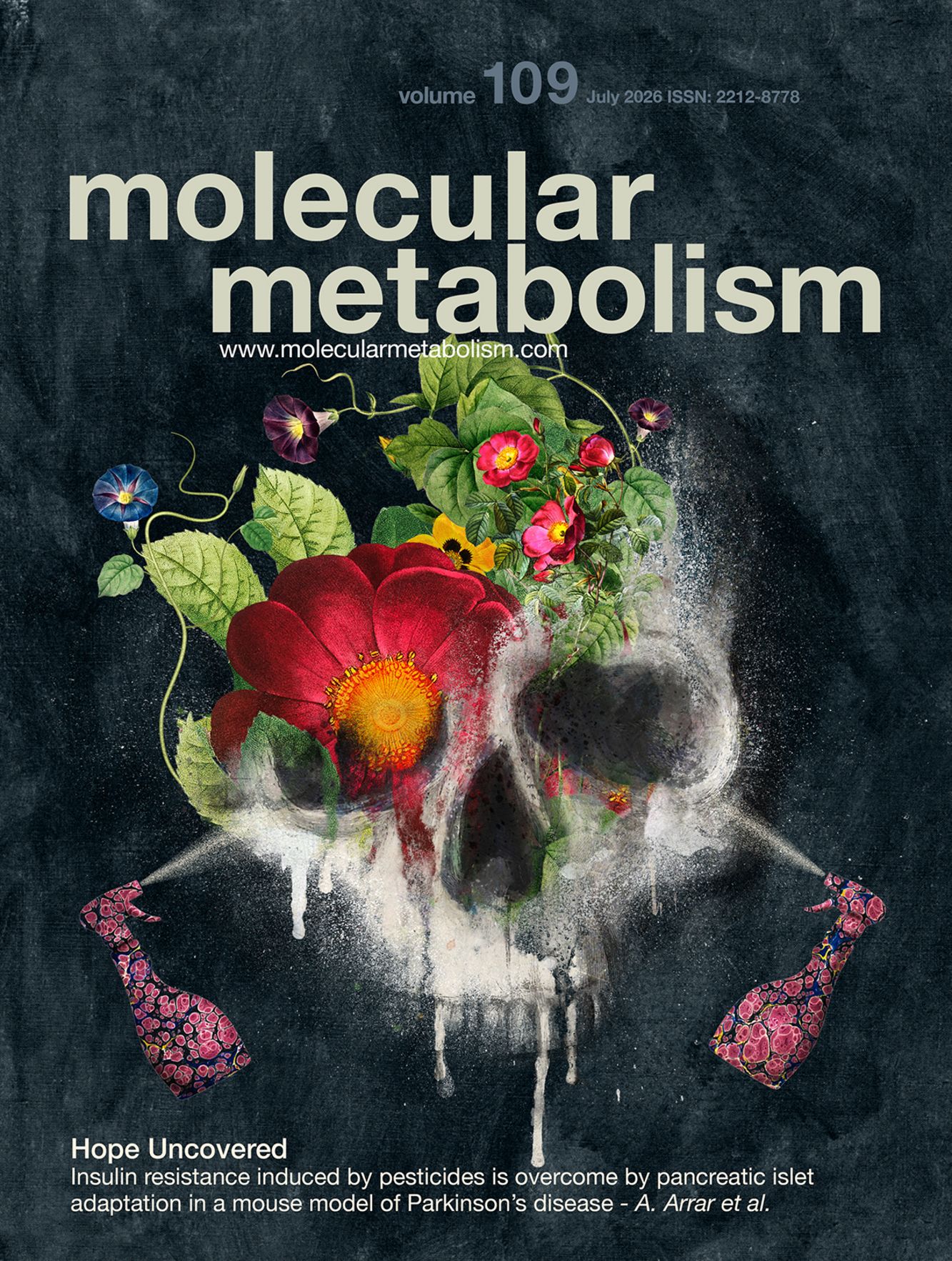
Cover Story Current Issue

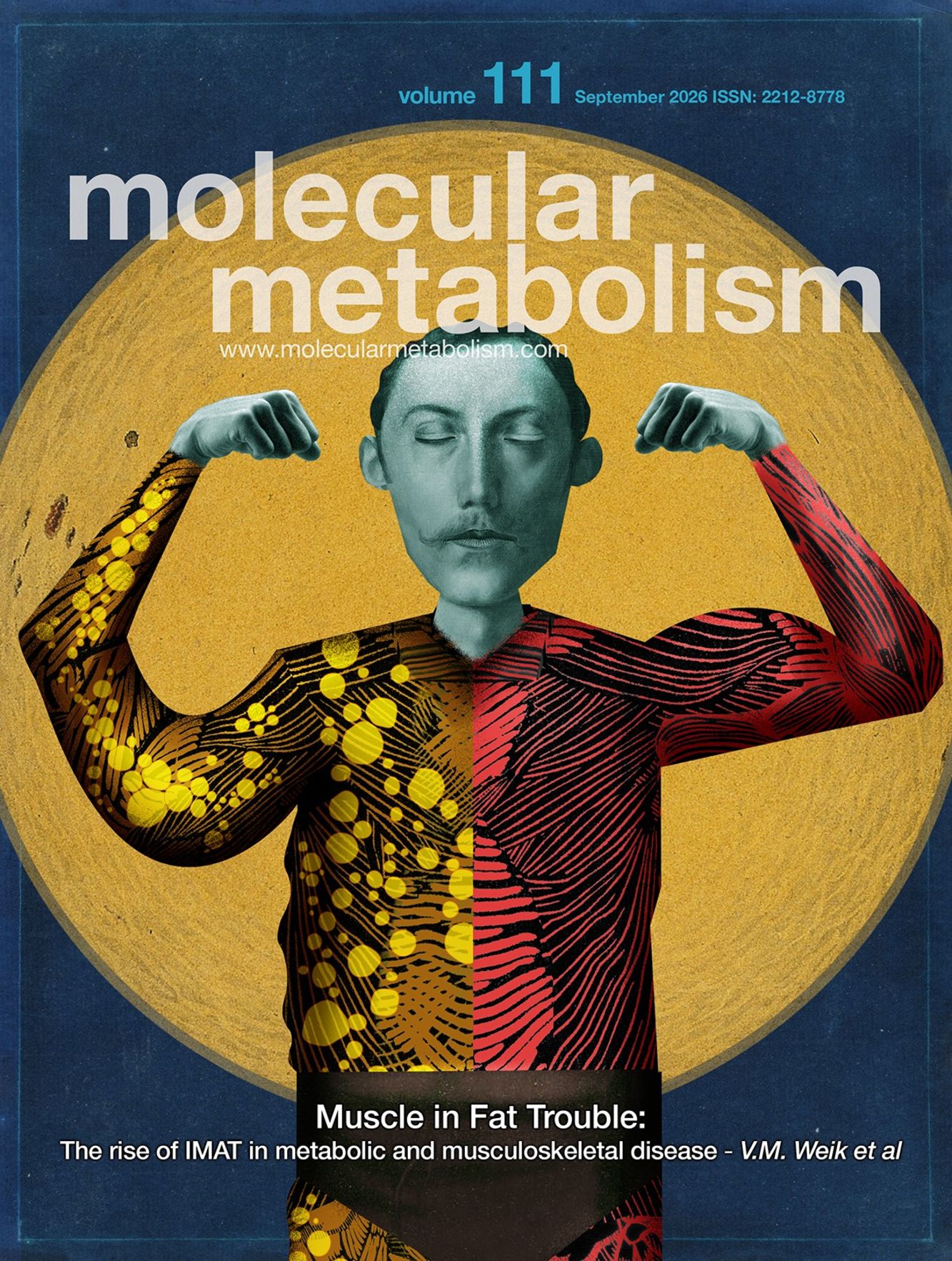
Skeletal muscle is the largest organ in the human body by mass, making up approximately 40 % of total body weight. Furthermore, it accounts for the majority of insulin-stimulated glucose uptake and is also highly involved in lipid metabolism. Lipids can accumulate in muscle through different distinct depots: as intramyocellular lipids (IMCL), stored as triglyceride-containing droplets within muscle cells and as intermuscular adipose tissue (IMAT), located between muscle fiber bundles beneath the deep muscle fascia. The muscular fat depots have been positively correlated with an increased body fat content in obesity, just like subcutaneous and visceral adipose tissue (SAT and VAT, respectively). IMCL, IMAT, VAT and SAT have additionally been linked to insulin resistance and type 2 diabetes mellitus (T2D).

Full text


Current Issue

Human Brown Fat Metabolism Associates with Systemic Branched-Chain Amino Acids Homeostasis

Mueez U-Din, Francisco M. Acosta, Teemu Saari, Vanessa D. de Mello Laaksonen, ... Kirsi A. Virtanen

Circulating branched-chain amino acids (BCAAs) are linked with insulin resistance, but the human tissues contributing to systemic BCAA homeostasis remain incompletely defined. Brown adipose tissue (BAT) is a metabolically active adipose depot associated with favourable insulin sensitivity, yet its role in BCAA metabolism in humans remains unclear. We tested whether human BAT metabolism is associated with circulating BCAA levels, BAT-resident BCAA-catabolic signatures, and longitudinal changes in systemic BCAA homeostasis. We studied 83 adults who underwent metabolic phenotyping, PET-CT assessment of cold-stimulated BAT metabolism, and serum metabolomic profiling at room temperature and during acute mild cold exposure. Supraclavicular BAT biopsies from 25 participants were analysed by transcriptomics and metabolomics, and 40 participants were re-examined for circulating BCAA profiles after approximately five years. Participants with high BAT metabolism had lower circulating BCAA levels than those with low BAT metabolism. Within BAT, metabolically active individuals exhibited lower relative BCAA abundance together with higher expression of genes involved in BCAA catabolism. These BAT BCAA-catabolic signatures aligned with thermogenic capacity and indices of systemic insulin sensitivity. In contrast, individuals with low BAT metabolism showed increases in circulating BCAAs over five years. Integrative analyses further linked circulating lipopolysaccharide, a marker of metabolic endotoxemia, with higher BAT BCAA and aminomalonate abundance, together with transcriptional patterns involving inflammatory and mitochondrial pathways. Together, these findings identify human BAT metabolism as a tissue phenotype linked to systemic BCAA homeostasis and extend the role of human BAT beyond thermogenesis, suggesting that BAT-associated BCAA handling may contribute to systemic metabolic health.

Articles in Press

Human Brown Fat Metabolism Associates with Systemic Branched-Chain Amino Acids Homeostasis

Mueez U-Din, Francisco M. Acosta, Teemu Saari, Vanessa D. de Mello Laaksonen, ... Kirsi A. Virtanen

Circulating branched-chain amino acids (BCAAs) are linked with insulin resistance, but the human tissues contributing to systemic BCAA homeostasis remain incompletely defined. Brown adipose tissue (BAT) is a metabolically active adipose depot associated with favourable insulin sensitivity, yet its role in BCAA metabolism in humans remains unclear. We tested whether human BAT metabolism is associated with circulating BCAA levels, BAT-resident BCAA-catabolic signatures, and longitudinal changes in systemic BCAA homeostasis. We studied 83 adults who underwent metabolic phenotyping, PET-CT assessment of cold-stimulated BAT metabolism, and serum metabolomic profiling at room temperature and during acute mild cold exposure. Supraclavicular BAT biopsies from 25 participants were analysed by transcriptomics and metabolomics, and 40 participants were re-examined for circulating BCAA profiles after approximately five years. Participants with high BAT metabolism had lower circulating BCAA levels than those with low BAT metabolism. Within BAT, metabolically active individuals exhibited lower relative BCAA abundance together with higher expression of genes involved in BCAA catabolism. These BAT BCAA-catabolic signatures aligned with thermogenic capacity and indices of systemic insulin sensitivity. In contrast, individuals with low BAT metabolism showed increases in circulating BCAAs over five years. Integrative analyses further linked circulating lipopolysaccharide, a marker of metabolic endotoxemia, with higher BAT BCAA and aminomalonate abundance, together with transcriptional patterns involving inflammatory and mitochondrial pathways. Together, these findings identify human BAT metabolism as a tissue phenotype linked to systemic BCAA homeostasis and extend the role of human BAT beyond thermogenesis, suggesting that BAT-associated BCAA handling may contribute to systemic metabolic health.

Registration still open - sign up now!

13th
Helmholtz Diabetes Conference 

Munich, 21-23. Sep 2026                                                                                                                             

2024 impact factor: 6.6

You are what you eat

Here is a video of Vimeo. When the iframes is activated, a connection to Vimeo is established and, if necessary, cookies from Vimeo are also used. For further information on cookies policy click here.

Auf Werbeinhalte, die vor, während oder nach Videos von WEBSITE-URL eingeblendet werden, hat WEBSITE-URL keinen Einfluss. Wir übernehmen keine Gewähr für diese Inhalte. Weitere Informationen finden Sie hier.