


Cover Story Current Issue
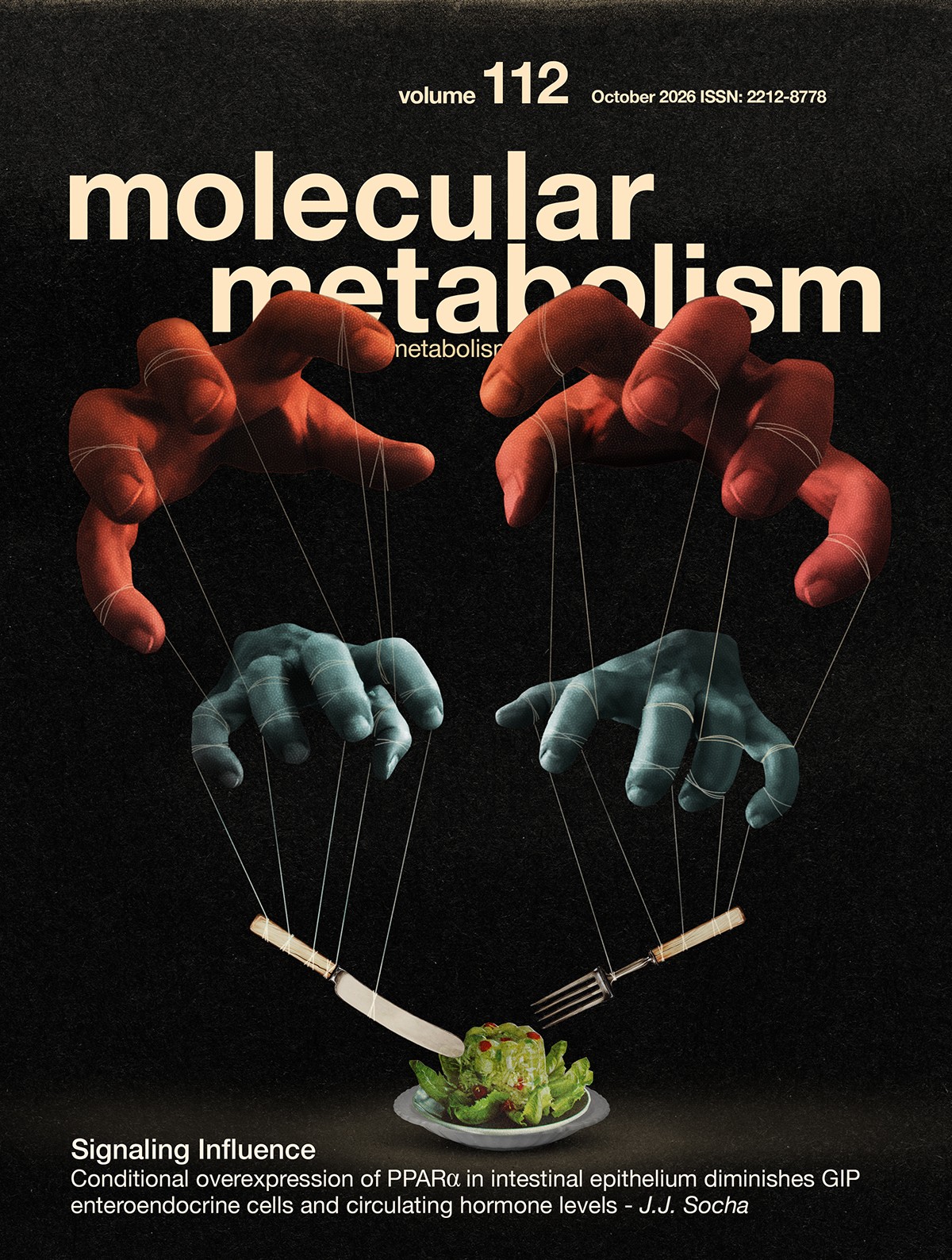
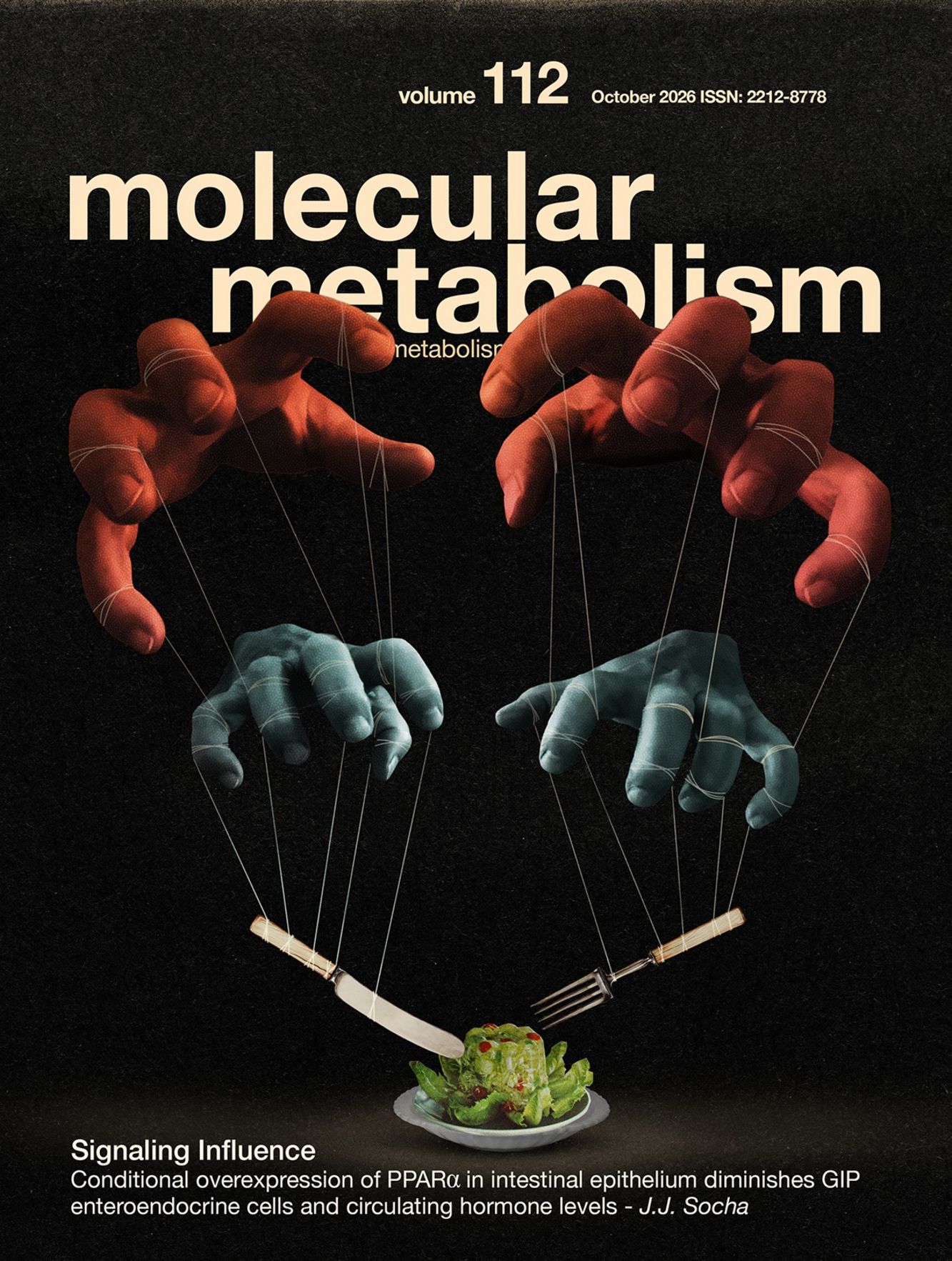
The small intestine, as the primary site of nutrient absorption, integrates signals from dietary components and gut microbiota to coordinate systemic energy balance, metabolism, and glucose homeostasis alongside other tissues such as the pancreas, liver, and brain. Nuclear receptors represent one mechanism by which the intestinal epithelium senses and respond to dietary signals via transcriptional regulation of metabolic programs. The Peroxisome Proliferator Activated Receptors (PPARs), including PPARα, PPARδ, and PPARγ, are lipid-responsive nuclear hormone receptors. PPAR transcriptional activity is highly context-dependent, shaped by the availability and affinity of their lipid ligands and co-regulators as well as by cell and tissue types. Whereas PPARγ and PPARδ are established regulators of glucose homeostasis, acting in white adipose tissue, skeletal muscle, and liver to improve insulin sensitivity, PPARα has been primarily associated with hepatic lipid metabolism, where it promotes fatty acid transport, β-oxidation, and ketogenesis. Due to their roles in lipid metabolism and anti-inflammatory processes, selective PPAR agonists are being actively pursued as therapies in clinical and pre-clinical studies for metabolic diseases. Thus, it is critical to improve our understanding of the context-specific and tissue-specific effects of PPAR signaling.
Current Issue
Conditional overexpression of PPARα in intestinal epithelium diminishes GIP enteroendocrine cells and circulating hormone levels
Conditional overexpression of PPARα in intestinal epithelium diminishes GIP enteroendocrine cells and circulating hormone levels
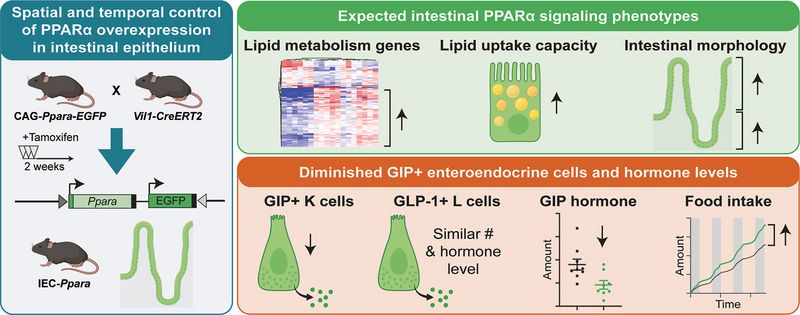
Agonists of the lipid-sensing PPAR nuclear receptors, including PPARα, are being explored as therapies for metabolic disorders due to their roles in metabolic and anti-inflammatory processes. PPARα transcriptional programs have tissue-dependent features, yet there is a lack of genetic tools to study tissue-specific signaling activation without the addition of a systemic agonist. We aimed to investigate intestinal epithelial cell (IEC)-specific roles of PPARα signaling using a novel transgenic mouse that enables spatial and temporal control of Ppara overexpression. CAG-Ppara,-EGFP mice were bred to Villin-CreERT2 to establish the IEC-Ppara mouse, which was compared to littermate controls 2 weeks after tamoxifen exposure. IEC-Ppara mice had increased Ppara mRNA and PPARα protein in the intestinal epithelium. Transcriptional analysis of intestinal tissue from IEC-Ppara mice showed upregulation of PPARα target genes and functional enrichment for fatty acid catabolic processes. As expected, the enterocytes of IEC-Ppara mice were primed to absorb lipids following oral administration of an olive oil bolus. Unexpectedly, the enteroendocrine hormone Gip was among the most downregulated genes. GIP-positive cells were reduced in the intestines of IEC-Ppara mice and in mice treated with PPARα agonist WY-14643. Circulating GIP hormone was reduced in IEC-Ppara mice. GLP-1-positive cells and hormone were unchanged. Consistent with reduced GIP function, IEC-Ppara mice consumed more food. These findings reveal PPARα as a regulator of GIP and support a new framework in which PPARα signaling influences systemic energy balance via a gut hormone axis. This study could have future impact on understanding responses to therapies targeting PPAR or incretin signaling.
Articles in Press
Conditional overexpression of PPARα in intestinal epithelium diminishes GIP enteroendocrine cells and circulating hormone levels
Conditional overexpression of PPARα in intestinal epithelium diminishes GIP enteroendocrine cells and circulating hormone levels
Agonists of the lipid-sensing PPAR nuclear receptors, including PPARα, are being explored as therapies for metabolic disorders due to their roles in metabolic and anti-inflammatory processes. PPARα transcriptional programs have tissue-dependent features, yet there is a lack of genetic tools to study tissue-specific signaling activation without the addition of a systemic agonist. We aimed to investigate intestinal epithelial cell (IEC)-specific roles of PPARα signaling using a novel transgenic mouse that enables spatial and temporal control of Ppara overexpression. CAG-Ppara,-EGFP mice were bred to Villin-CreERT2 to establish the IEC-Ppara mouse, which was compared to littermate controls 2 weeks after tamoxifen exposure. IEC-Ppara mice had increased Ppara mRNA and PPARα protein in the intestinal epithelium. Transcriptional analysis of intestinal tissue from IEC-Ppara mice showed upregulation of PPARα target genes and functional enrichment for fatty acid catabolic processes. As expected, the enterocytes of IEC-Ppara mice were primed to absorb lipids following oral administration of an olive oil bolus. Unexpectedly, the enteroendocrine hormone Gip was among the most downregulated genes. GIP-positive cells were reduced in the intestines of IEC-Ppara mice and in mice treated with PPARα agonist WY-14643. Circulating GIP hormone was reduced in IEC-Ppara mice. GLP-1-positive cells and hormone were unchanged. Consistent with reduced GIP function, IEC-Ppara mice consumed more food. These findings reveal PPARα as a regulator of GIP and support a new framework in which PPARα signaling influences systemic energy balance via a gut hormone axis. This study could have future impact on understanding responses to therapies targeting PPAR or incretin signaling.

2025 Impact Factor: 6.3
You are what you eat
Here is a video of Vimeo. When the iframes is activated, a connection to Vimeo is established and, if necessary, cookies from Vimeo are also used. For further information on cookies policy click here.