



Cover Story Current Issue
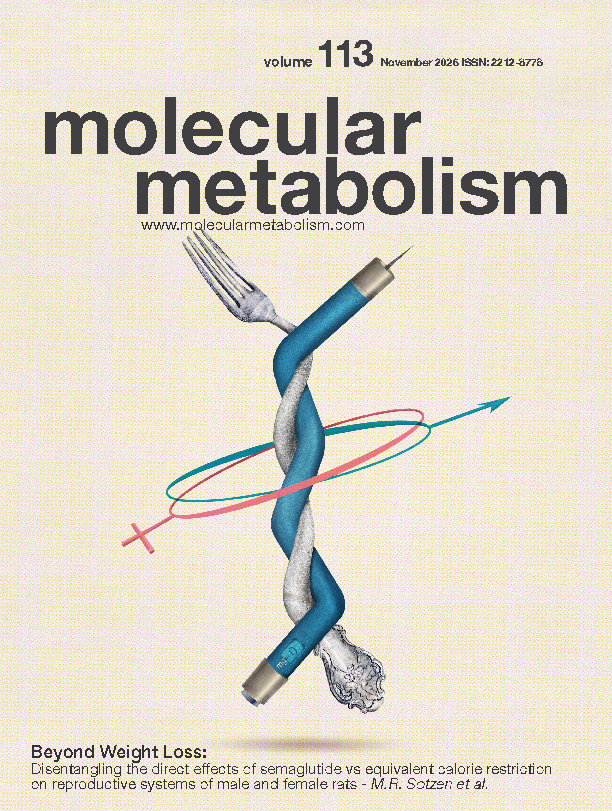
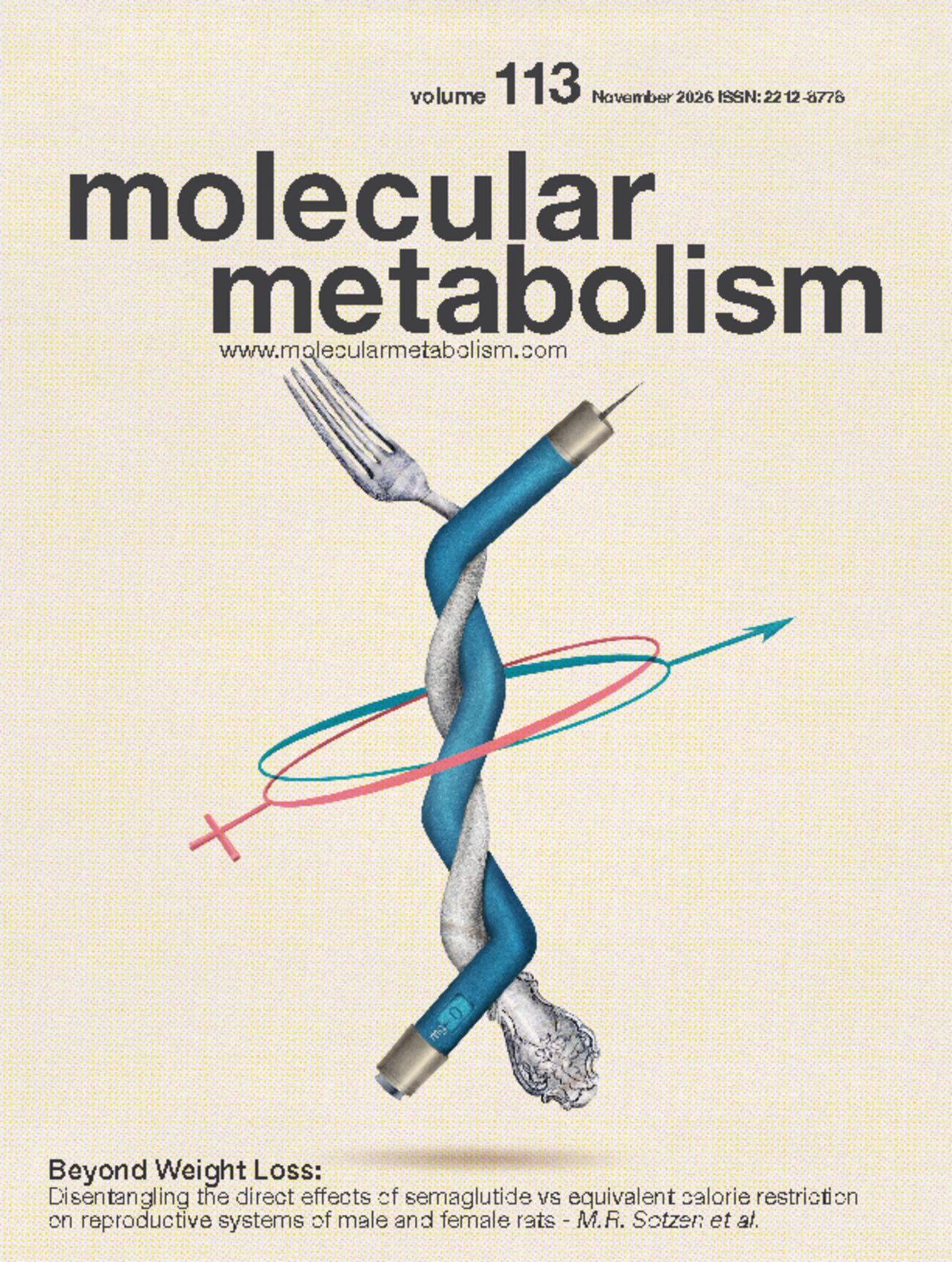
Obesity affects a significant fraction of the world population, with some states or countries reporting overwhelming majority of the population as obese or overweight. Effective treatments were not readily available until the recent approval of glucagon-like peptide-1 (GLP-1) -based pharmacotherapeutics for weight loss. Since then, the use of GLP-1-based pharmacotherapies for the treatment of obesity has skyrocketed. In addition to or because of the effective weight loss, these medications affect many different organs in the body. Many of these effects, including the degree of weight loss achieved, show significant sex differences. Moreover, recent analysis of online patient communities identified a range of self-reported reproductive and endocrine side effects of GLP-1 based therapies including menstrual irregularities, reduced libido, and hot-flashes that have not been systematically captured in clinical trials. Some of these reports contrast with recent data indicating that in Polyendocrine Metabolic Ovarian Syndrome (PMOS; formerly Polycystic Ovary Syndrome) patients semaglutide-associated weight loss normalizes menstrual cycles in most patients, leaving this issue unresolved. While it has been established that sex and sex hormones affect the action of GLP-1 analogues, whether these medications affect the levels of sex hormones and reproductive organs is less well understood, especially in a chronic and clinically relevant drug application setting.
Current Issue
Autocrine signaling may regulate exercise-induced interleukin-6 release from human skeletal muscle
Autocrine signaling may regulate exercise-induced interleukin-6 release from human skeletal muscle
Background
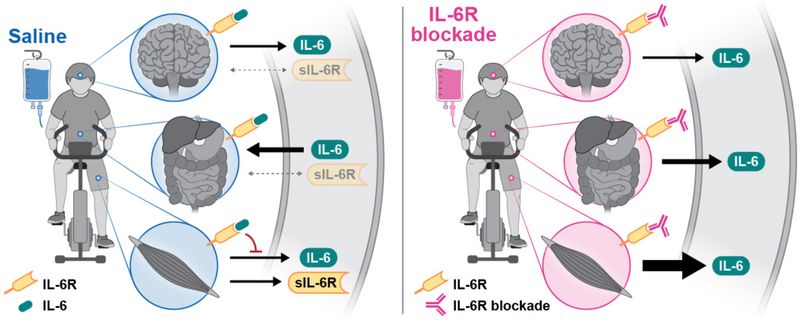
Contracting skeletal muscle releases interleukin-6 (IL-6) which is primarily cleared by the liver. The tissue-specific regulation of IL-6 and soluble IL-6 receptor (sIL-6R) kinetics remains, however, poorly understood. To characterize tissue-specific IL-6 and sIL-6R exchange during exercise, we combined simultaneous arteriovenous measurements across the contracting leg, splanchnic region, and the brain with, or without, pharmacological IL-6 receptor (IL-6R) blockade.
Methods
Thirty young, well-trained men were randomized in a double-blind, placebo-controlled design to receive either tocilizumab (IL-6R blockade) or placebo before performing moderate-intensity cycling exercise. Net tissue flux of IL-6 and sIL-6R was determined from arteriovenous concentration differences across the femoral, hepatic, and internal jugular circulation.
Results
During exercise, leg IL-6 release increased with both placebo and IL-6R blockade but was significantly augmented by IL-6R blockade, suggesting a potential role for autocrine regulation of local IL-6 release. Under control conditions, the splanchnic bed was the predominant site of IL-6 clearance; however, IL-6R blockade shifted splanchnic IL-6 net balance from uptake to release. In addition, the exercising leg was identified as the source of circulating sIL-6R during exercise, whereas no consistent sIL-6R exchange occurred across the splanchnic bed or brain.
Conclusions
These findings suggest a potential role for IL-6 signaling in the autocrine regulation of IL-6 release from the contracting leg during exercise. Furthermore, exercise increases leg-derived sIL-6R, thereby contributing to increased circulating sIL-6R concentrations, while receptor-mediated splanchnic clearance appears to be a major determinant of systemic IL-6 availability during exercise in humans.
Clinical trial registration number
Articles in Press
Autocrine signaling may regulate exercise-induced interleukin-6 release from human skeletal muscle
Autocrine signaling may regulate exercise-induced interleukin-6 release from human skeletal muscle
Background
Contracting skeletal muscle releases interleukin-6 (IL-6) which is primarily cleared by the liver. The tissue-specific regulation of IL-6 and soluble IL-6 receptor (sIL-6R) kinetics remains, however, poorly understood. To characterize tissue-specific IL-6 and sIL-6R exchange during exercise, we combined simultaneous arteriovenous measurements across the contracting leg, splanchnic region, and the brain with, or without, pharmacological IL-6 receptor (IL-6R) blockade.
Methods
Thirty young, well-trained men were randomized in a double-blind, placebo-controlled design to receive either tocilizumab (IL-6R blockade) or placebo before performing moderate-intensity cycling exercise. Net tissue flux of IL-6 and sIL-6R was determined from arteriovenous concentration differences across the femoral, hepatic, and internal jugular circulation.
Results
During exercise, leg IL-6 release increased with both placebo and IL-6R blockade but was significantly augmented by IL-6R blockade, suggesting a potential role for autocrine regulation of local IL-6 release. Under control conditions, the splanchnic bed was the predominant site of IL-6 clearance; however, IL-6R blockade shifted splanchnic IL-6 net balance from uptake to release. In addition, the exercising leg was identified as the source of circulating sIL-6R during exercise, whereas no consistent sIL-6R exchange occurred across the splanchnic bed or brain.
Conclusions
These findings suggest a potential role for IL-6 signaling in the autocrine regulation of IL-6 release from the contracting leg during exercise. Furthermore, exercise increases leg-derived sIL-6R, thereby contributing to increased circulating sIL-6R concentrations, while receptor-mediated splanchnic clearance appears to be a major determinant of systemic IL-6 availability during exercise in humans.
Clinical trial registration number

2025 Impact Factor: 6.3
You are what you eat
Here is a video of Vimeo. When the iframes is activated, a connection to Vimeo is established and, if necessary, cookies from Vimeo are also used. For further information on cookies policy click here.